
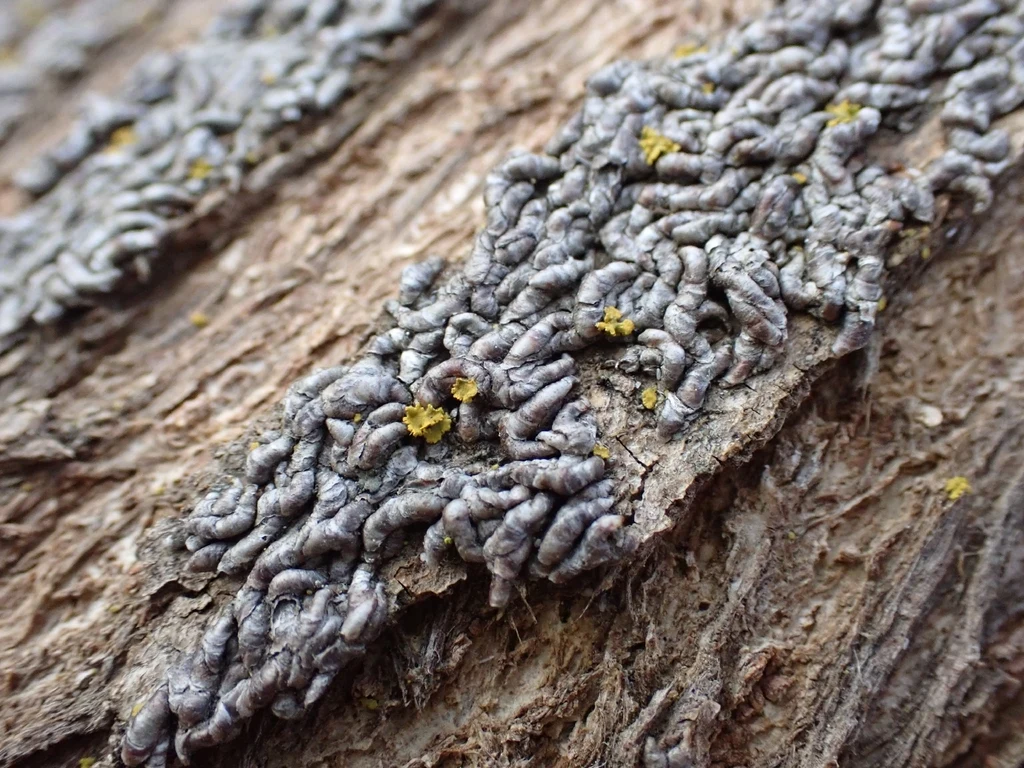
In the landscape.
Plants & places
Many woody plants, including lilac, dogwood, maple, willow, and boxwood.
Recognize the damage
Heavy bark infestations weaken growth and can kill twigs or branches.
Before you act
Examine live and declining twigs with a lens; lift a few covers gently to assess whether insects or eggs remain.
A sensible first response
Prune heavily infested twigs when appropriate and watch for crawlers. Obtain local timing advice before treatment rather than responding to old armor alone.
When to look
Overwintering eggs hatch as weather warms; crawler timing varies by site.
In Western North Carolina
A broad-host scale worth checking on WNC shrubs with unexplained twig dieback.
Identification, lookalikes & further notes
Identification
Small, elongated, curved gray-brown covers resemble miniature oyster shells and may overlap densely.
Lookalikes & limits
Lenticels are part of the bark; other armored scales differ in shape. These scales do not make honeydew.
In the garden
Heavy bark infestations weaken growth and can kill twigs or branches.
What would help next
Record the host plant, date, fresh damage, and a clear photograph of the animal or insect. A damage match narrows the search; it does not establish an identification.