Trees & woodland lore · Western North Carolina field companion
Paperbark maple
Acer griseum
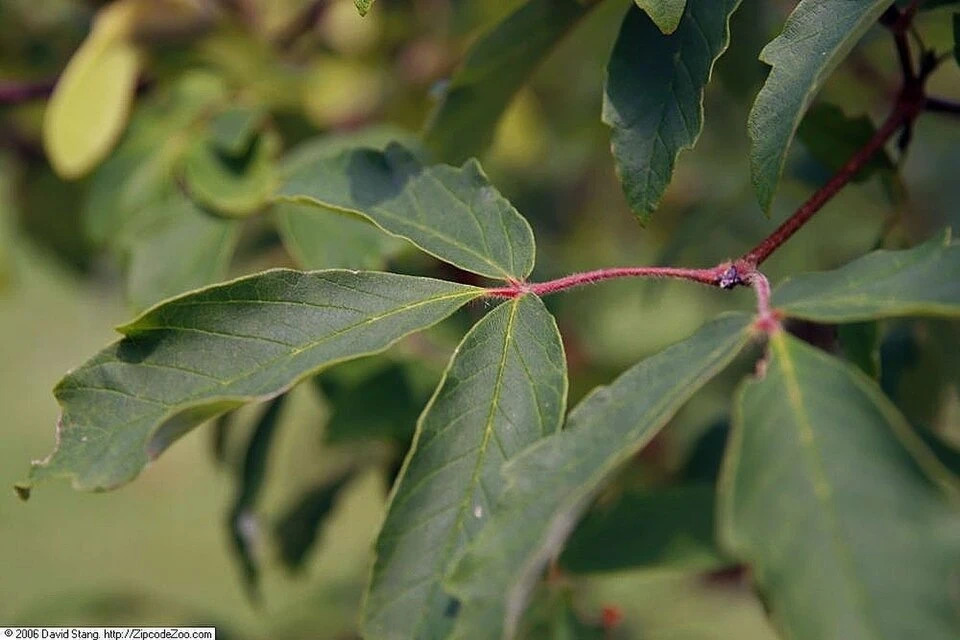
Paperbark maple foliage showing three leaflets joined into a single compound leaf. Trace the whole leaf stalk back to an opposite bud.☀ Full sun · ◐ Part sun or part shadePhoto by David J. Stang ↗ · CC BY-SA 4.0Photo contextResized and converted to WebP; no diagnostic content altered.
Outstanding exfoliating bark and fall color; slow-growing premium specimen.
Find the bud at the base of the entire leaf stalk: each leaf consists of three leaflets. Do not mistake the leaflets for three separate leaves.
More growing details
Read the bark
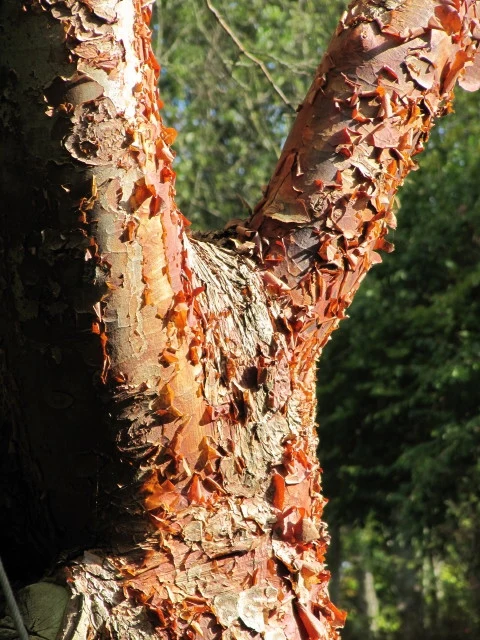
Copper to cinnamon bark exfoliates in thin, papery curls and remains a major identifying feature.
Fruit & seed
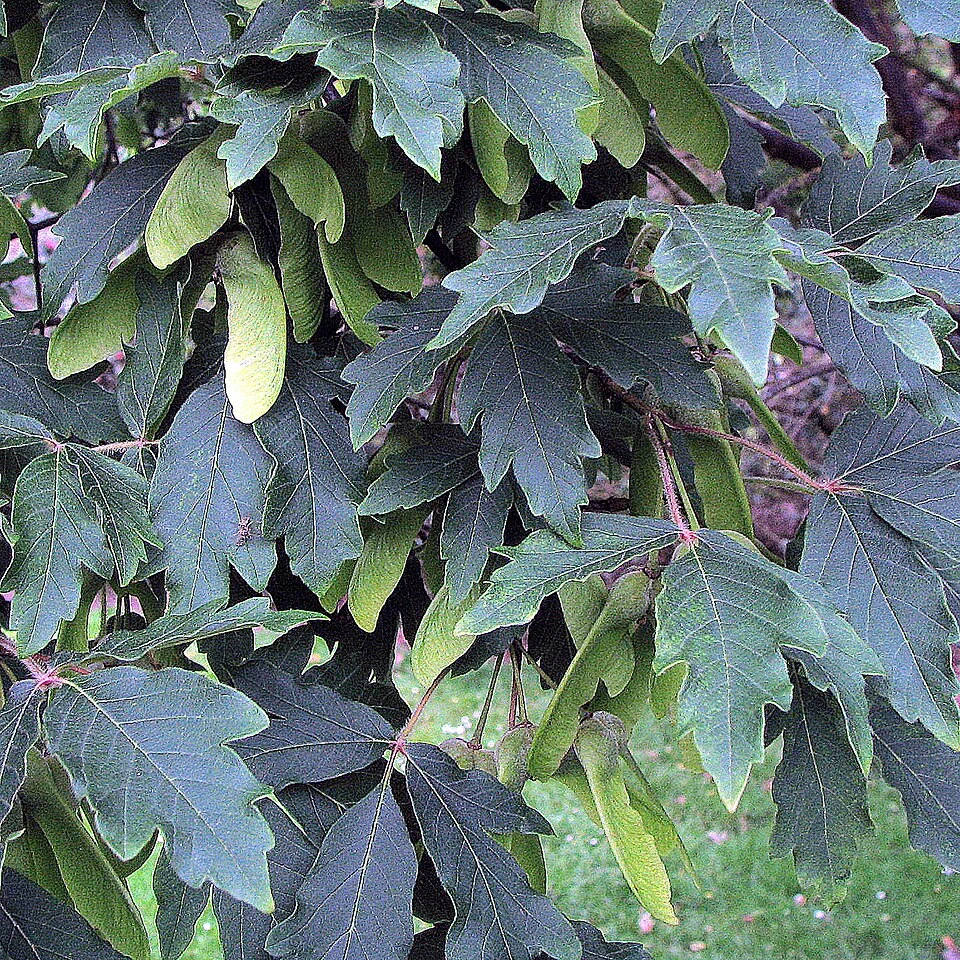
Paired samaras are often conspicuously hairy.
Winter character
Peeling cinnamon bark and opposite buds remain useful all year.
Origin & place
An introduced garden species or horticultural hybrid; study it as part of WNC landscapes rather than assume it belongs to the native mountain flora.
Compare with Boxelder
Boxelder also has compound opposite leaves but lacks the characteristic curling cinnamon bark.
WNC Notes
Outstanding exfoliating bark and fall color; slow-growing premium specimen.
Sun Exposure
Full sun–part shade
MATURE HEIGHT (FT)
20–30
MATURE WIDTH (FT)
15–25
BLOOM SEASON
Spring
BLOOM COLOR
Greenish
FALL / WINTER COLOR
Orange-red
Wet-Soil Tolerance
Moderate
Drought Tolerance
Moderate
LOOK CLOSELY
Two views, a closer look.
Place two photographs beside one another. Compare the overall plant with leaves, flowers, or bark when those views are available. Captions identify what each photograph actually shows. Images are not at the same scale; species references may show different cultivars.
Paperbark maple foliage showing three leaflets joined into a single compound leaf. Trace the whole leaf stalk back to an opposite bud.☀ Full sun · ◐ Part sun or part shadePhoto by David J. Stang ↗ · CC BY-SA 4.0Photo contextResized and converted to WebP; no diagnostic content altered.Extremely ornamental exfoliating bark reddish bark — species reference; cultivar identity not inferred.☀ Full sun · ◐ Part sun or part shadeLeonora (Ellie) Enking ↗ · CC-BY-SA 2.0Photo contextResized and converted to WebP; full original composition retained.Paperbark maple leaves and winged fruits — species reference; named cultivar identity not inferred.☀ Full sun · ◐ Part sun or part shadeGmihail at Serbian Wikipedia ↗ · CC BY-SA 3.0 rsPhoto contextResized and converted to WebP; original composition retained.
Your margin of the garden.
Saved only in this browser on this device. Export your notes from My garden in the library.