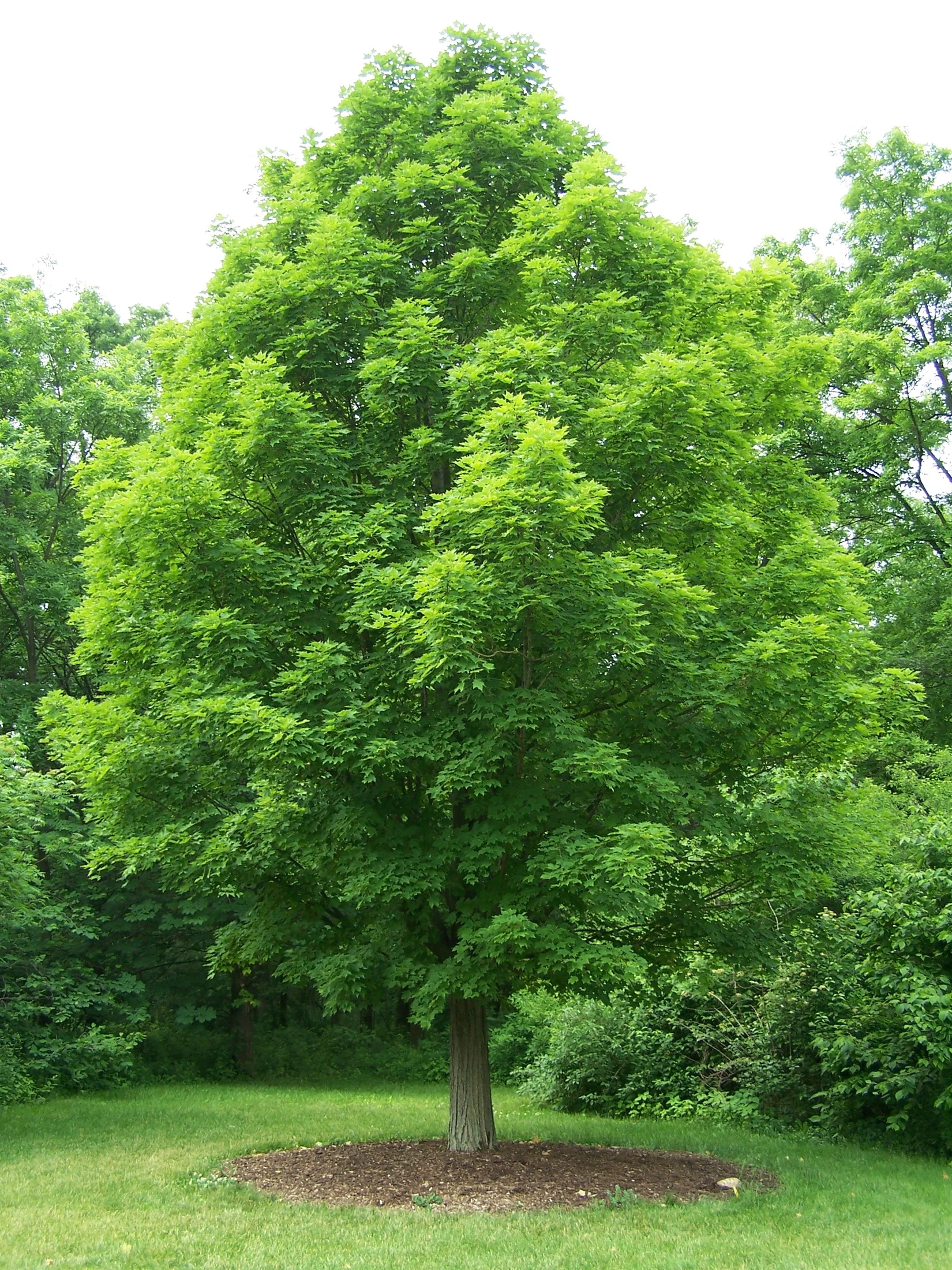
Get to know this plant.
Identification clue 1
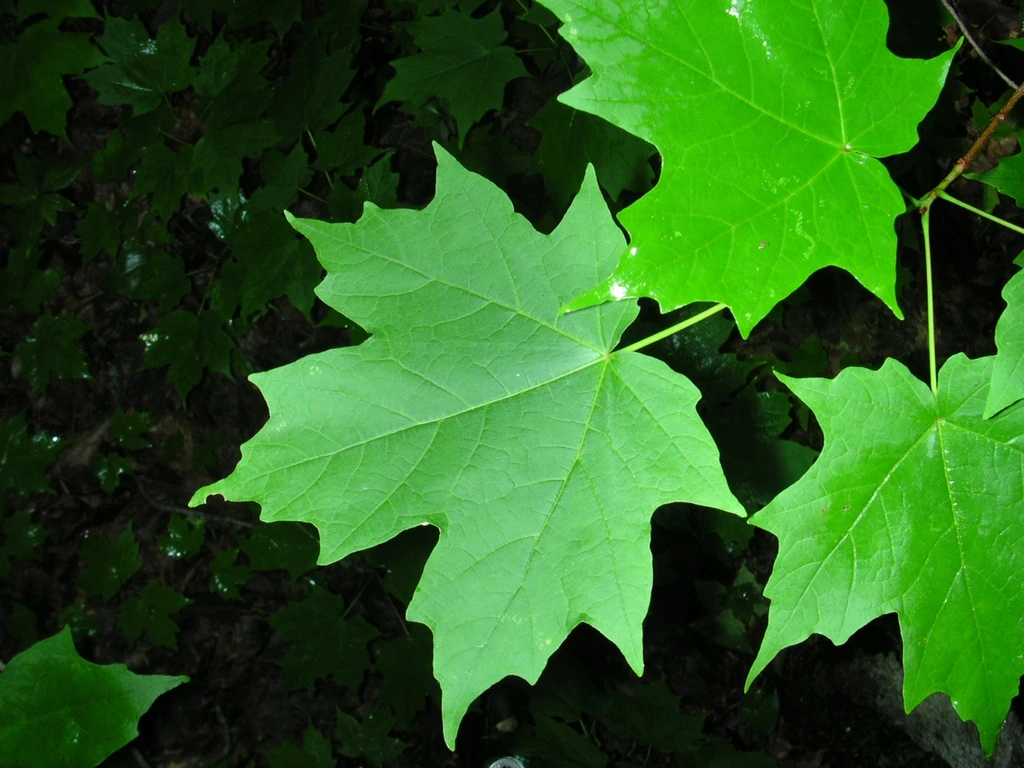
Opposite leaves
Identification clue 2
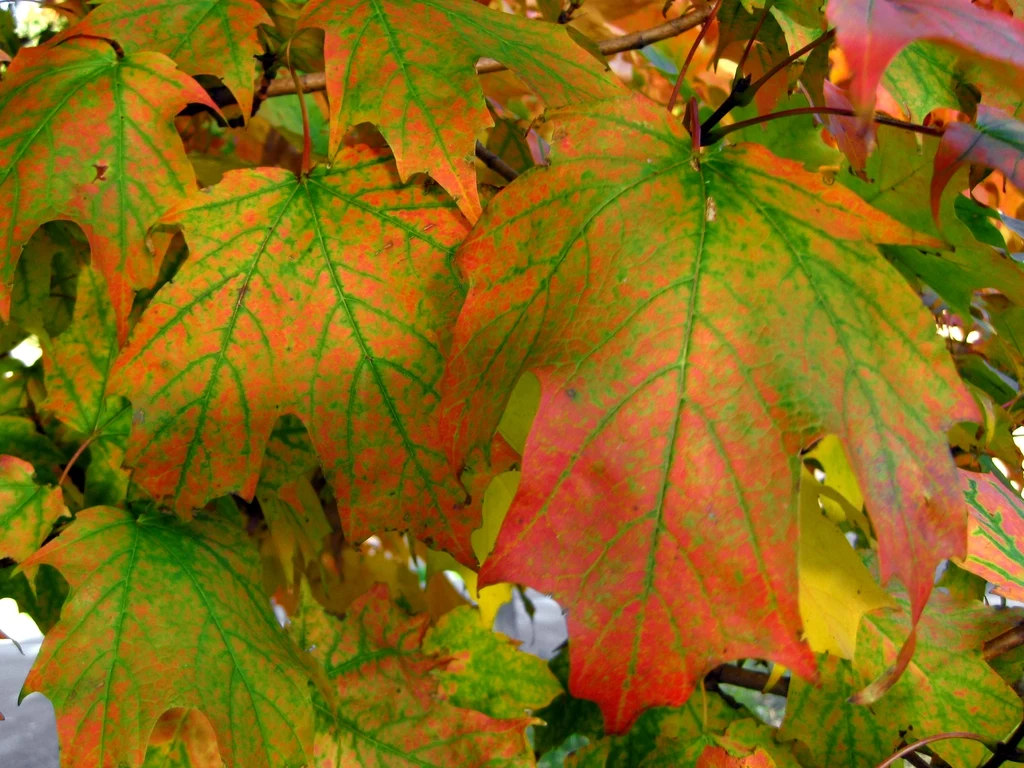
Five lobes with rounded sinuses
Identification clue 3
Paired winged fruit in fall
Diseases & insects in WNC
Problems to recognize in WNC gardens. These are documented susceptibilities, not a local outbreak report or a diagnosis. Weather, elevation and growing conditions change the risk.
Diseases & similar-looking injury
Anthracnose, tar spot and other leaf spots may occur; wilt and cankers are more serious. Drought scorch is not an infection.
Insects to recognize
Aphids, borers and scale may occur.
When to look
Check leaves in spring wet weather and canopy condition during summer drought.
A useful first step
Reduce soil compaction and support moisture during dry spells. Have recurring dieback or sudden branch wilt assessed.
More growing details
Read the leaves
The gaps between principal lobes are broadly U-shaped. Edges have fewer teeth than typical red maple leaves.
Read the bark
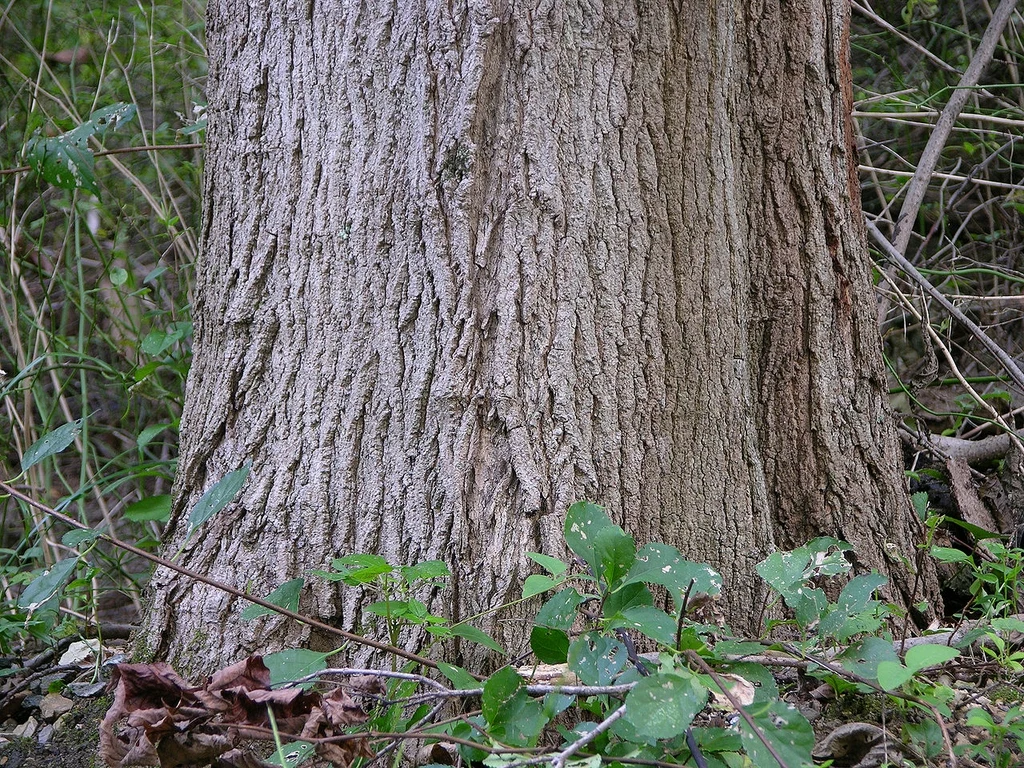
Older bark develops long irregular plates and deep furrows.
Fruit & seed
Paired samaras mature in autumn; timing supports the leaf characters.
Winter character
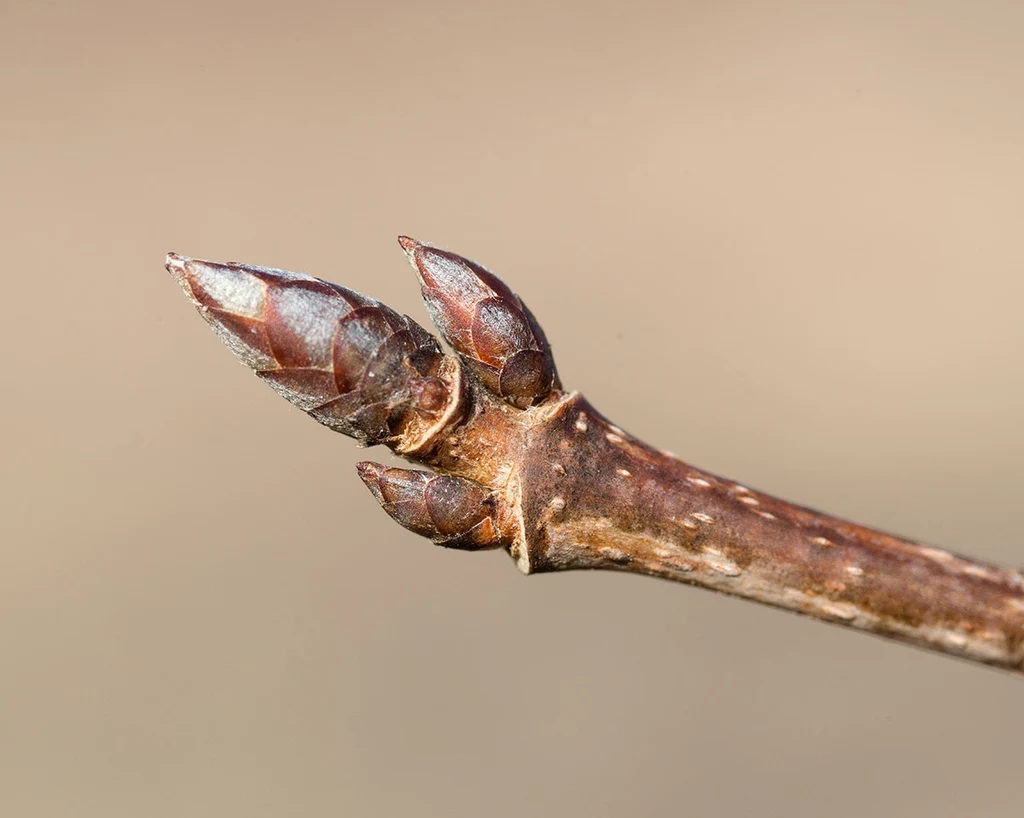
Pointed brown buds occur opposite each other on the twig.
Origin & place
The species occurs naturally in the southern Appalachian region; a planted specimen is not evidence of wild local origin.
WNC Notes
A large shade tree best suited to cool conditions and adequate root space. Heat, drought and compaction can cause stress.
Sun Exposure
Full sun–part shade
MATURE HEIGHT (FT)
40–120
MATURE WIDTH (FT)
30–60
BLOOM SEASON
Spring
BLOOM COLOR
Greenish yellow
FALL / WINTER COLOR
Orange-red
Wet-Soil Tolerance
Moderate
Drought Tolerance
Moderate