Wildlife & landscape pests · Western North Carolina field companion
Forest tent caterpillar
Malacosoma disstria
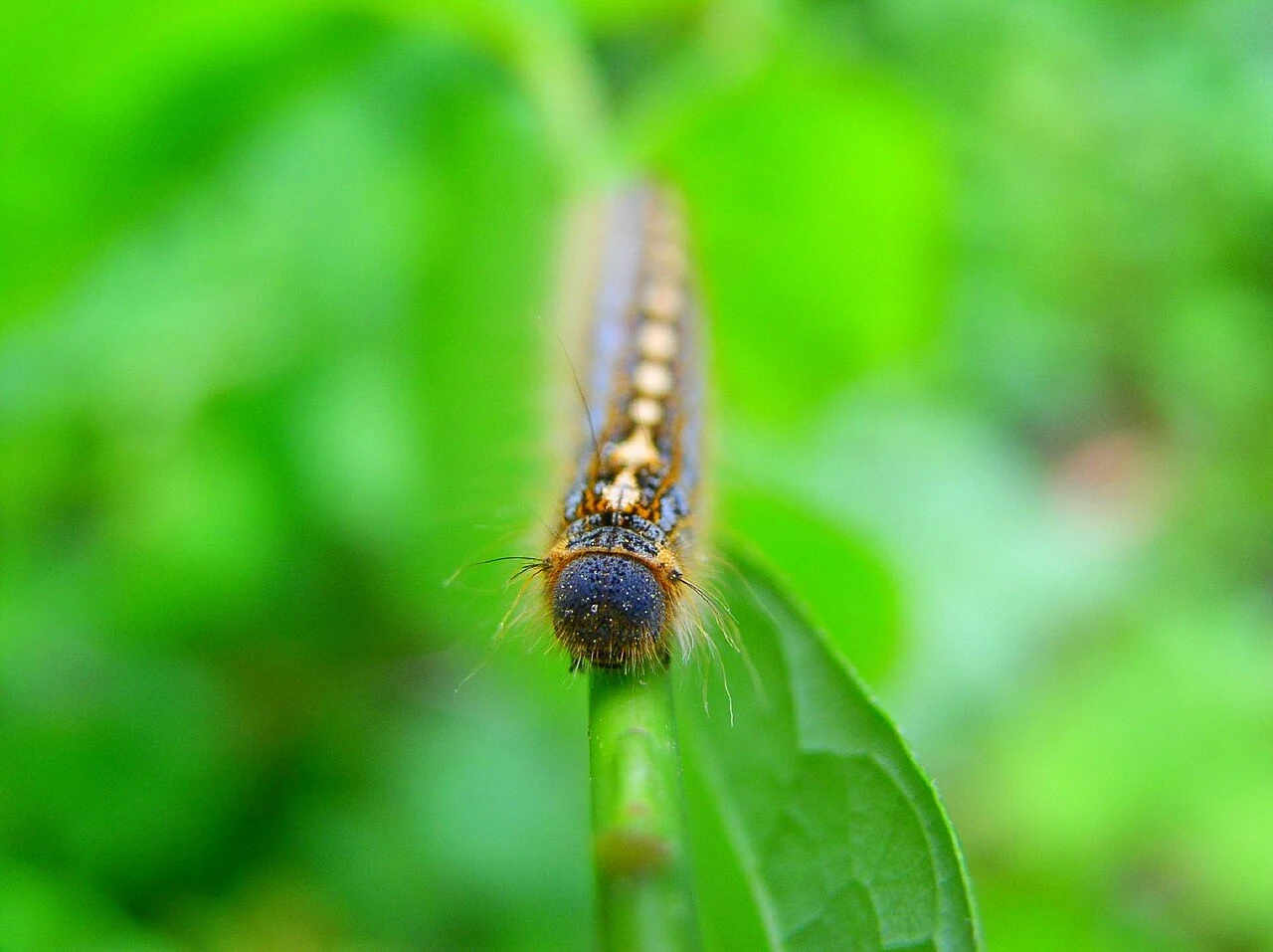
Forest tent caterpillar · pale separate marks on the backAlexander Maier ↗ · CC BY 2.0Photo contextCompare these separated markings with the continuous stripe of eastern tent caterpillar.
Despite its name, this spring leaf feeder does not build the familiar enclosed tent.
Oaks, sweetgum, blackgum, and other deciduous hardwoods.
Recognize the damage
Grouped feeding can strip foliage; larvae gather on silk resting mats rather than enclosed branch tents.
Before you act
Photograph dorsal markings and assess canopy loss; distinguish resting or wandering larvae from active feeding.
A sensible first response
Most established trees tolerate occasional defoliation. Monitor stressed young trees and repeated outbreaks; broad woodland spraying is not a routine garden response.
When to look
Spring feeding; periodic outbreaks are more important than isolated individuals.
In Western North Carolina
Included as a hardwood lookalike and occasional defoliator; regional outbreak patterns vary.
Identification, lookalikes & further notes
Identification
Blue-sided, dark larvae carry a row of pale keyhole- or footprint-shaped marks along the back.
Lookalikes & limits
Eastern tent caterpillars have a continuous white dorsal stripe and a true tent; fall webworms surround leaves with webs.
In the garden
Grouped feeding can strip foliage; larvae gather on silk resting mats rather than enclosed branch tents.
What would help next
Record the host plant, date, fresh damage, and a clear photograph of the animal or insect. A damage match narrows the search; it does not establish an identification.
LOOK CLOSELY
Two views, a closer look.
Place two photographs beside one another. Compare the overall plant with leaves, flowers, or bark when those views are available. Captions identify what each photograph actually shows. Images are not at the same scale; species references may show different cultivars.
Forest tent caterpillar · pale separate marks on the backAlexander Maier ↗ · CC BY 2.0Photo contextCompare these separated markings with the continuous stripe of eastern tent caterpillar.Forest tent caterpillar defoliation in a hardwood standUSDA (USDA Forest Service - Region 8 - Southern , USDA Forest Service, Bugwood.org ) ↗ · Public domainPhoto contextA 1990 Alabama outbreak photographed by the USDA Forest Service. This landscape-scale example does not indicate that a single caterpillar will cause the same extent of injury. Resized and converted to WebP; full composition retained.
Your margin of the garden.
Saved only in this browser on this device. Export your notes from My garden in the library.