Trees & woodland lore · Western North Carolina field companion
Shumard oak
Quercus shumardii
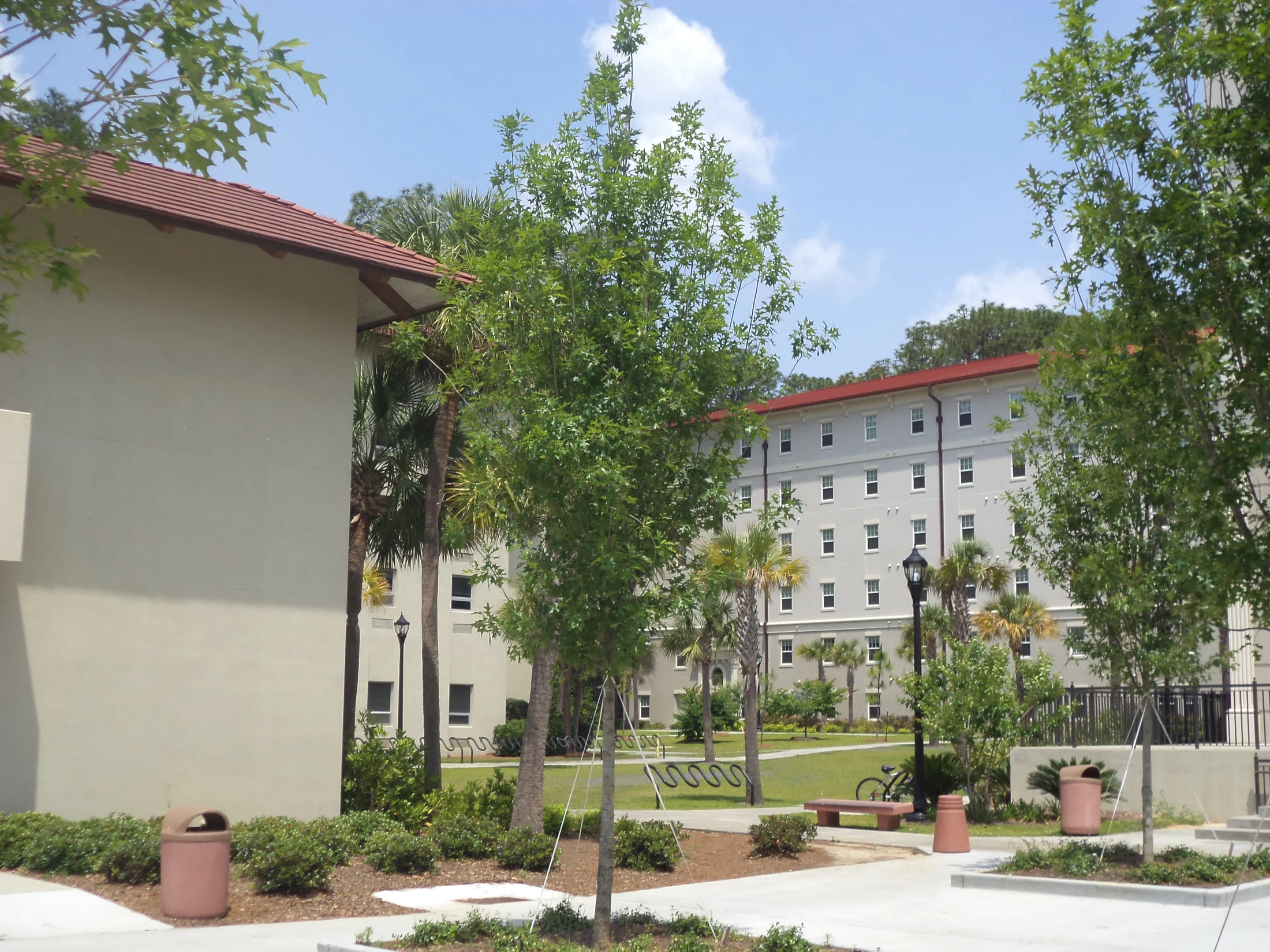
Whole tree — Quercus shumardii. Species reference; the photographed specimen does not confirm the named variety. Age, pruning, and site affect its shape.☀ Full sunMichael Rivera ↗ · CC BY-SA 3.0Photo contextResized and converted to WebP; full original composition retained.
Problems to recognize in WNC gardens. These are documented susceptibilities, not a local outbreak report or a diagnosis. Weather, elevation and growing conditions change the risk.
Diseases & similar-looking injury
Anthracnose, leaf spots and powdery mildew may affect foliage. Cankers and root decay deserve attention when branches decline.
Insects to recognize
Oakworms, leafminers, scale and gall-making insects may occur. Many oak insects also feed birds; galls or a few eaten leaves rarely justify treatment.
When to look
Check unfolding leaves in a wet spring and caterpillar activity through summer.
A useful first step
Compare the amount of damage with overall tree vigor. Repeated heavy defoliation, rapid wilt or structural decay calls for Extension or an arborist.
More growing details
Read the leaves
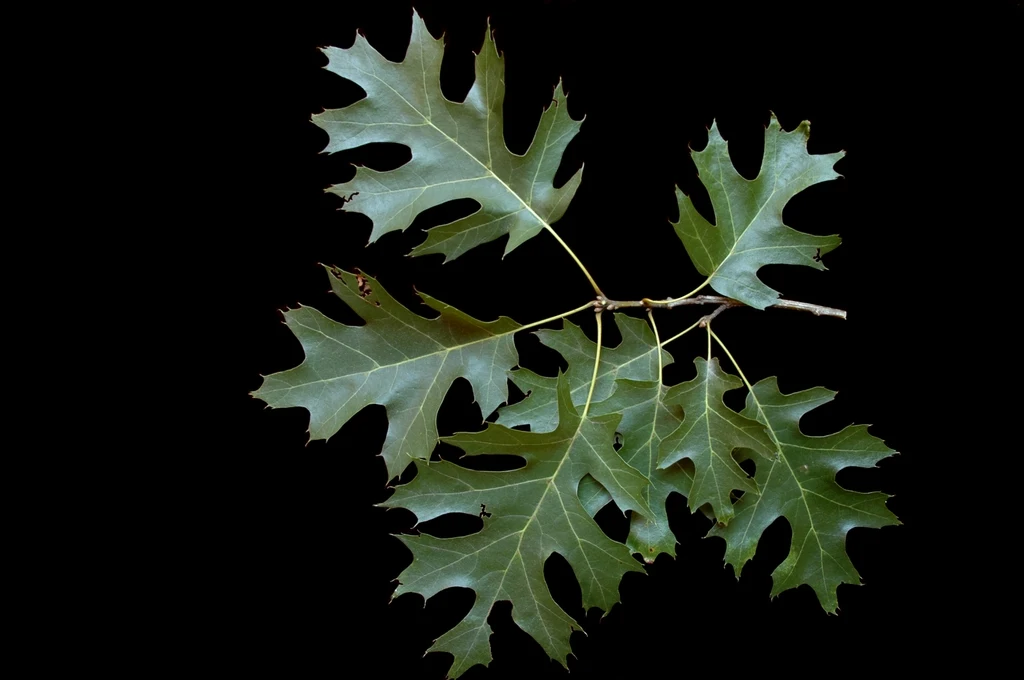
Inspect the lower leaf surface, especially vein junctions, as well as the pointed lobes. Variable leaves overlap other red oaks.
Read the bark
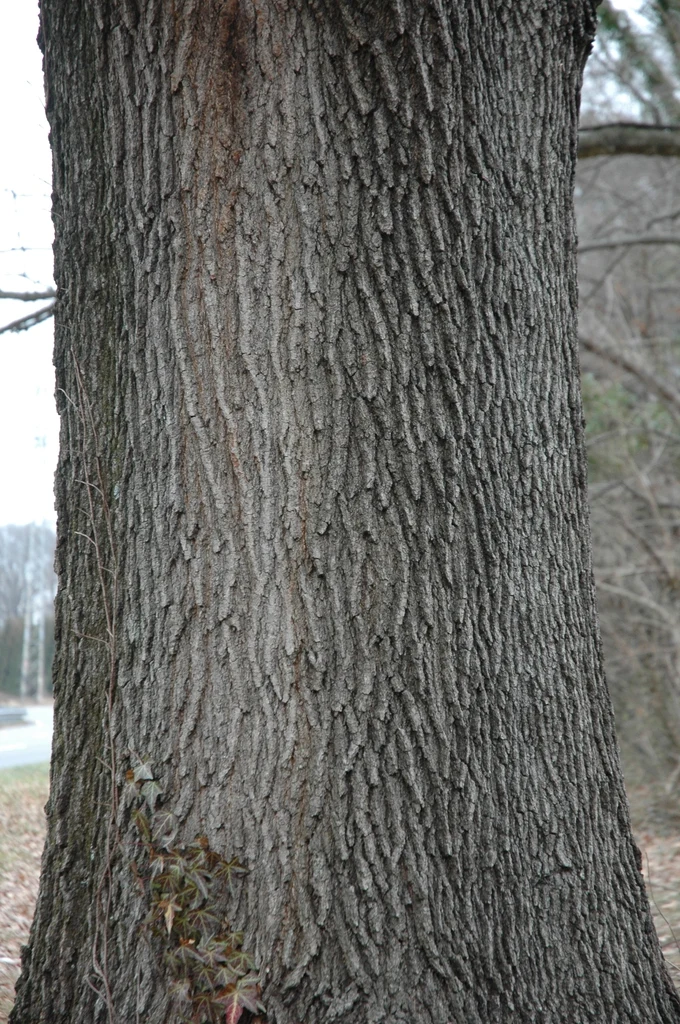
Gray bark becomes darker and furrowed with age.
Fruit & seed
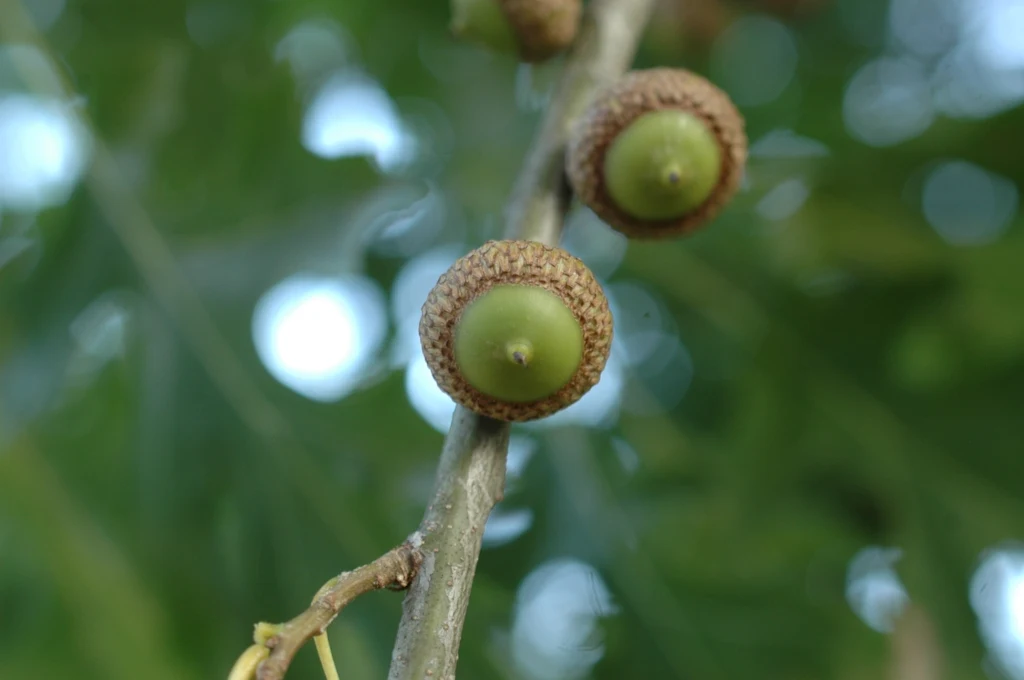
Relatively large acorns sit in shallow cups; acorns plus buds are more useful than red fall color.
Winter character
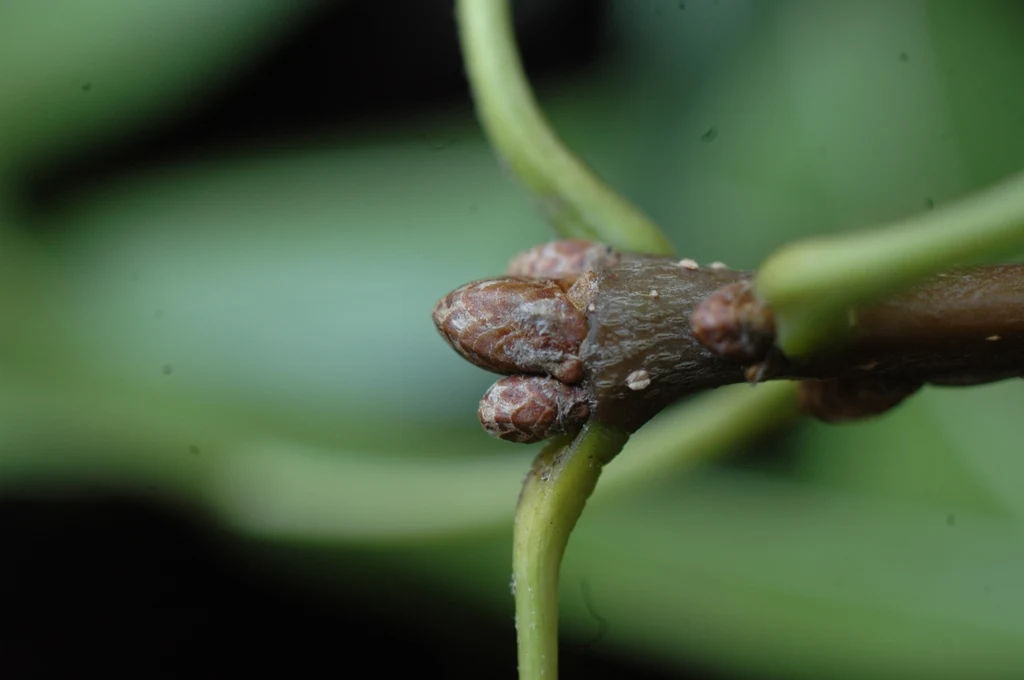
Clustered pale brown terminal buds require close examination against a regional key.
Origin & place
A southeastern native whose occurrence is much more local than common mountain oaks. Verify a wild record with a regional flora and county evidence.
WNC Notes
Large adaptable oak with good color; confirm provenance for cold hardiness.
Sun Exposure
Full sun
MATURE HEIGHT (FT)
50–70
MATURE WIDTH (FT)
30–40
BLOOM SEASON
Spring
BLOOM COLOR
Catkins
FALL / WINTER COLOR
Red
Wet-Soil Tolerance
Moderate
Drought Tolerance
Moderate
LOOK CLOSELY
Two views, a closer look.
Place two photographs beside one another. Compare the overall plant with leaves, flowers, or bark when those views are available. Captions identify what each photograph actually shows. Images are not at the same scale; species references may show different cultivars.
Whole tree — Quercus shumardii. Species reference; the photographed specimen does not confirm the named variety. Age, pruning, and site affect its shape.☀ Full sunMichael Rivera ↗ · CC BY-SA 3.0Photo contextResized and converted to WebP; full original composition retained.Species reference; does not confirm the named variety. Photograph subject: End buds☀ Full sunBruce Kirchoff from Greensboro, NC, USA ↗ · CC BY 2.0Photo contextResized and converted to WebP; full original composition retained.Leaves. Taxon reference; photograph alone does not establish a named cultivar.☀ Full sunBruce Kirchoff from Greensboro, NC, USA ↗ · CC BY 2.0Photo contextResized and converted to WebP; no diagnostic content altered.Bark — species reference; cultivar identity not inferred.☀ Full sunBruce Kirchoff from Greensboro, NC, USA ↗ · CC BY 2.0Photo contextResized and converted to WebP; full original composition retained.Acorns — species reference; cultivar identity not inferred.☀ Full sunBruce Kirchoff from Greensboro, NC, USA ↗ · CC BY 2.0Photo contextResized and converted to WebP; full original composition retained.
Your margin of the garden.
Saved only in this browser on this device. Export your notes from My garden in the library.