
In the landscape.
Plants & places
Oaks, with occasional feeding on other hardwoods.
Recognize the damage
Young larvae feed together; heavy populations can defoliate small trees and produce abundant dry frass.
Before you act
Inspect lower oak branches for clusters, note the amount of canopy loss, and photograph larvae before they wander away to pupate.
A sensible first response
Remove small colonies from young trees where practical. Seek advice for early or repeated severe defoliation; late feeding on a healthy mature tree may be tolerated.
When to look
Most conspicuous in later summer; timing varies among sites.
In Western North Carolina
An episodic mountain-garden and woodland-edge defoliator; wandering larvae are usually seeking soil for pupation.
Identification, lookalikes & further notes
Identification
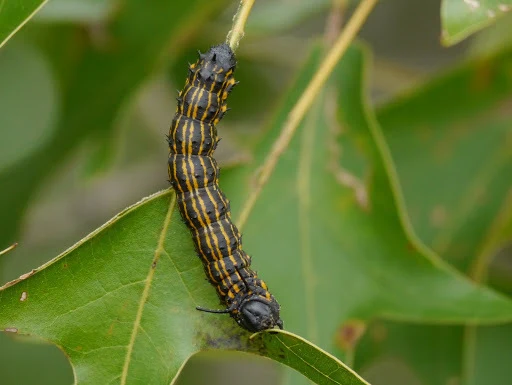
Larger larvae are dark with yellow-orange stripes and a prominent pair of slender horns behind the head.
Lookalikes & limits
Other oakworm species and striped caterpillars differ; confirm host and markings, not the common name alone.
In the garden
Young larvae feed together; heavy populations can defoliate small trees and produce abundant dry frass.
What would help next
Record the host plant, date, fresh damage, and a clear photograph of the animal or insect. A damage match narrows the search; it does not establish an identification.