Trees & woodland lore · Western North Carolina field companion
Bur oak
Quercus macrocarpa
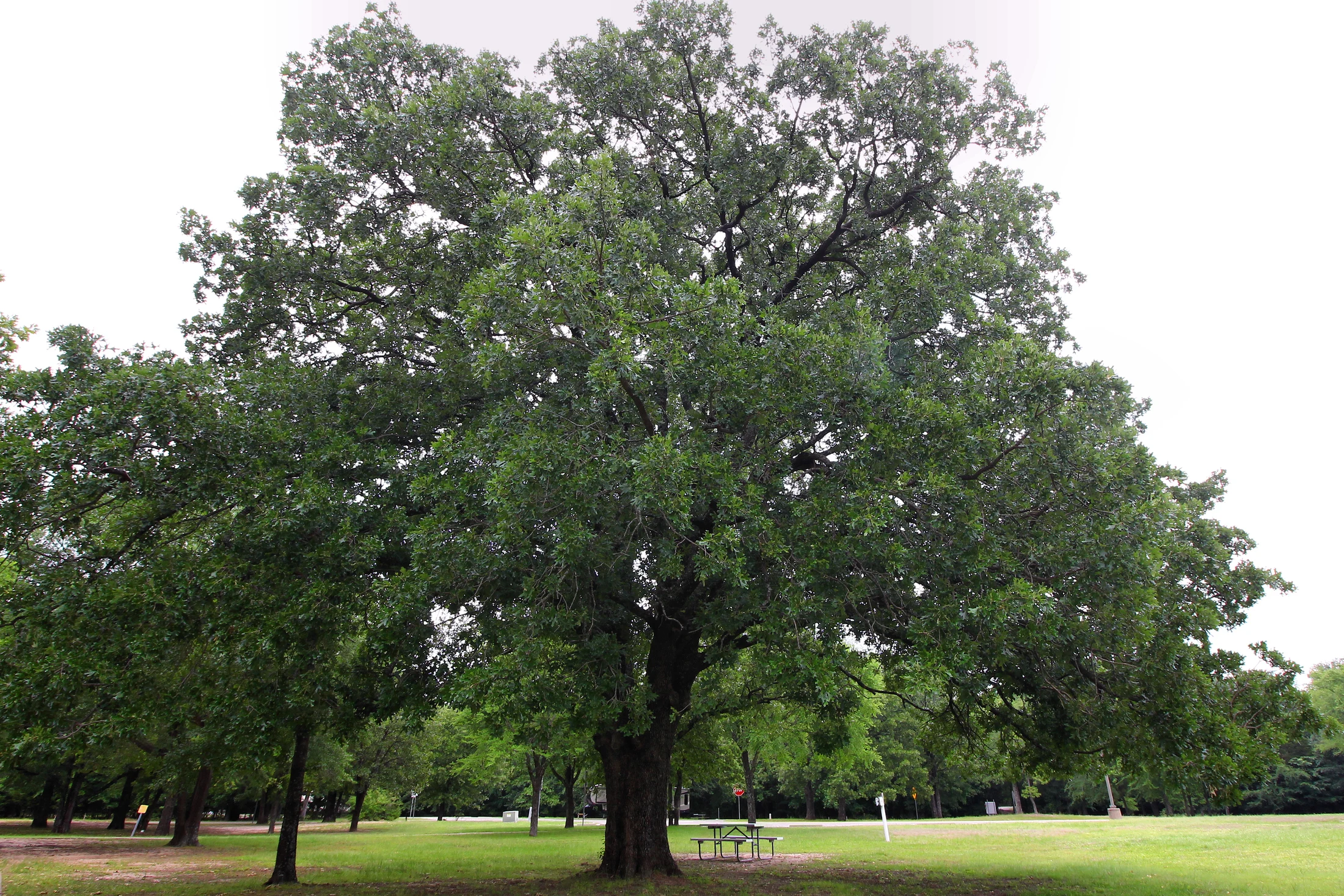
Whole tree — Quercus macrocarpa. Species reference; the photographed specimen does not confirm the named variety. Age, pruning, and site affect its shape.☀ Full sunLarry D. Moore ↗ · CC BY 4.0Photo contextResized and converted to WebP; full original composition retained.
Problems to recognize in WNC gardens. These are documented susceptibilities, not a local outbreak report or a diagnosis. Weather, elevation and growing conditions change the risk.
Diseases & similar-looking injury
Anthracnose, leaf spots and powdery mildew may affect foliage. Cankers and root decay deserve attention when branches decline.
Insects to recognize
Oakworms, leafminers, scale and gall-making insects may occur. Many oak insects also feed birds; galls or a few eaten leaves rarely justify treatment.
When to look
Check unfolding leaves in a wet spring and caterpillar activity through summer.
A useful first step
Compare the amount of damage with overall tree vigor. Repeated heavy defoliation, rapid wilt or structural decay calls for Extension or an arborist.
More growing details
Read the leaves
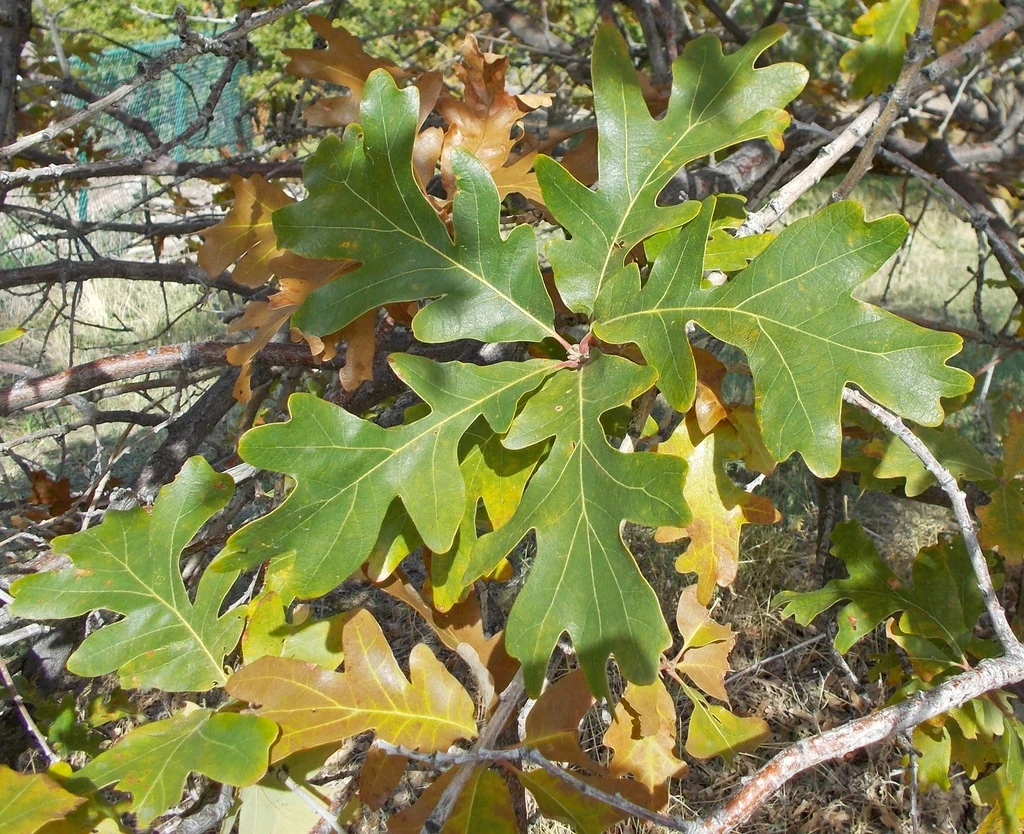
The central sinuses often nearly divide the blade, leaving a broad upper portion. Shape varies widely.
Read the bark
Mature bark is deeply ridged; young branches may develop corky ridges.
Fruit & seed
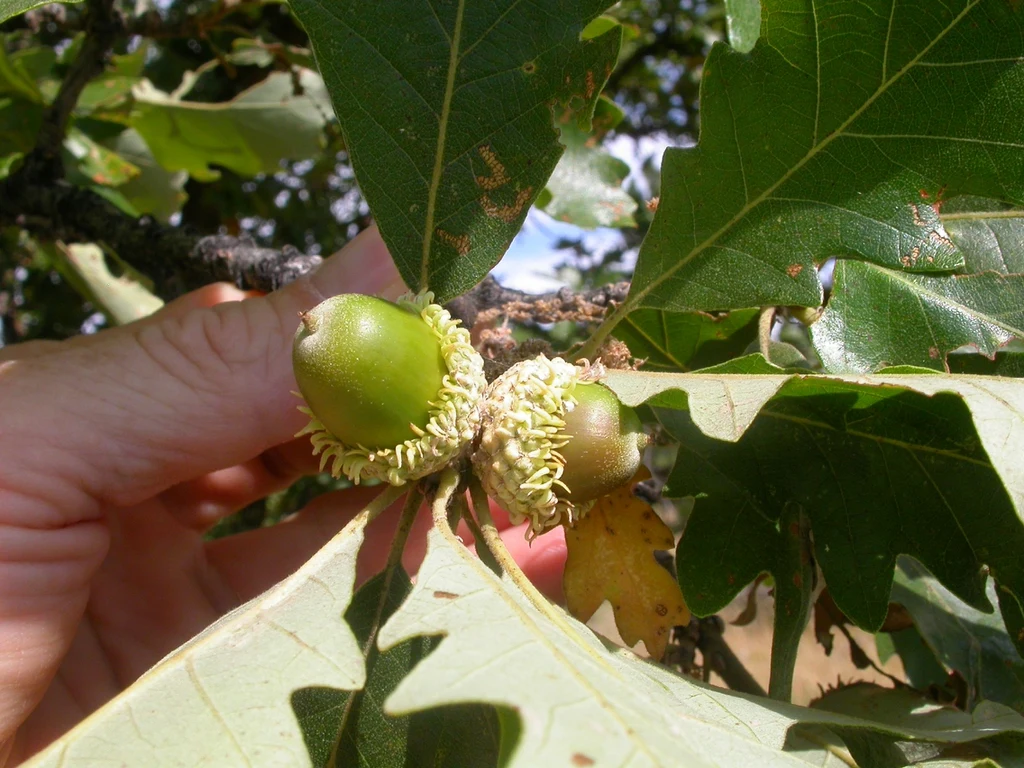
A conspicuously fringed cup wraps much of a large acorn: the strongest field clue.
Winter character
Corky twigs and clustered buds help, especially with fallen fringed cups nearby.
Origin & place
Native to central and eastern North America; NC State notes it as a waif in western NC, not a characteristic native mountain oak.
WNC Notes
Extremely durable long-lived oak for large sites; enormous acorns and canopy require planning.
Sun Exposure
Full sun
MATURE HEIGHT (FT)
70–80
MATURE WIDTH (FT)
70–80
BLOOM SEASON
Spring
BLOOM COLOR
Catkins
FALL / WINTER COLOR
Yellow-brown
Wet-Soil Tolerance
Moderate
Drought Tolerance
High
LOOK CLOSELY
Two views, a closer look.
Place two photographs beside one another. Compare the overall plant with leaves, flowers, or bark when those views are available. Captions identify what each photograph actually shows. Images are not at the same scale; species references may show different cultivars.
Whole tree — Quercus macrocarpa. Species reference; the photographed specimen does not confirm the named variety. Age, pruning, and site affect its shape.☀ Full sunLarry D. Moore ↗ · CC BY 4.0Photo contextResized and converted to WebP; full original composition retained.Lobed leaves. Taxon reference; photograph alone does not establish a named cultivar.☀ Full sunAndrey Zharkikh ↗ · CC BY 2.0Photo contextResized and converted to WebP; no diagnostic content altered.Capped acorns — species reference; cultivar identity not inferred.☀ Full sunMatt Levin ↗ · CC-BY-SA 2.0Photo contextResized and converted to WebP; full original composition retained.
Your margin of the garden.
Saved only in this browser on this device. Export your notes from My garden in the library.