
.jpg)
In the landscape.
Plants & places
Oaks and several other woody plants.
Recognize the damage
Leaf tissue is eaten from shaded foliage; isolated larvae usually cause limited plant injury.
Before you act
Look without touching underneath low leaves; photograph in place with enough detail to compare the body pattern.
A sensible first response
Avoid bare-hand contact because the spines can sting. Leave isolated larvae undisturbed away from contact areas; plant damage rarely calls for broad treatment.
When to look
Larvae can occur through summer into early fall.
In Western North Carolina
Included for recognition in WNC gardens, not as an insect to eliminate whenever encountered.
Identification, lookalikes & further notes
Identification
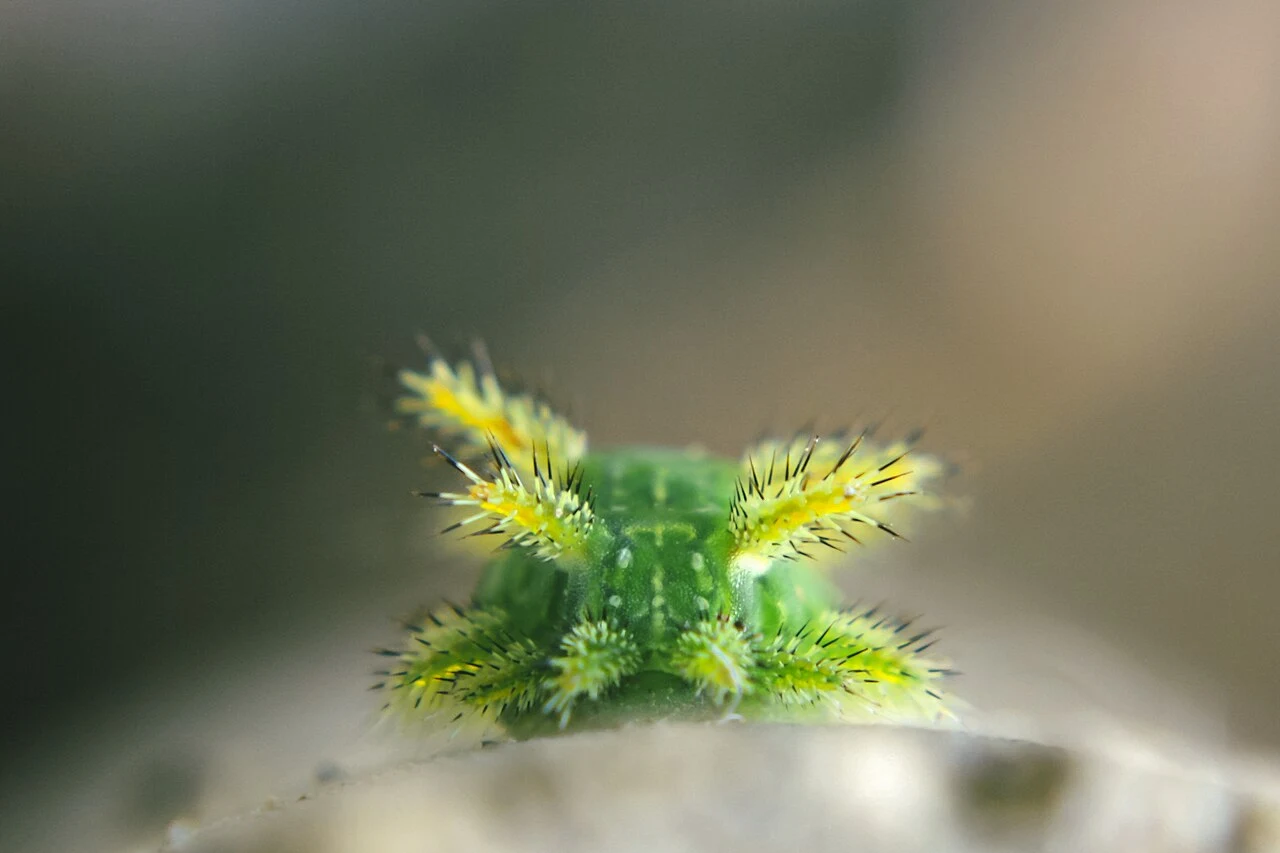
A compact greenish slug-shaped caterpillar carries rows of branching spines, often with red accents.
Lookalikes & limits
Other slug caterpillars have different spine patterns. True slugs lack these raised clusters of spines.
In the garden
Leaf tissue is eaten from shaded foliage; isolated larvae usually cause limited plant injury.
What would help next
Record the host plant, date, fresh damage, and a clear photograph of the animal or insect. A damage match narrows the search; it does not establish an identification.