Wildlife & landscape pests · Western North Carolina field companion
Fall webworm
Hyphantria cunea
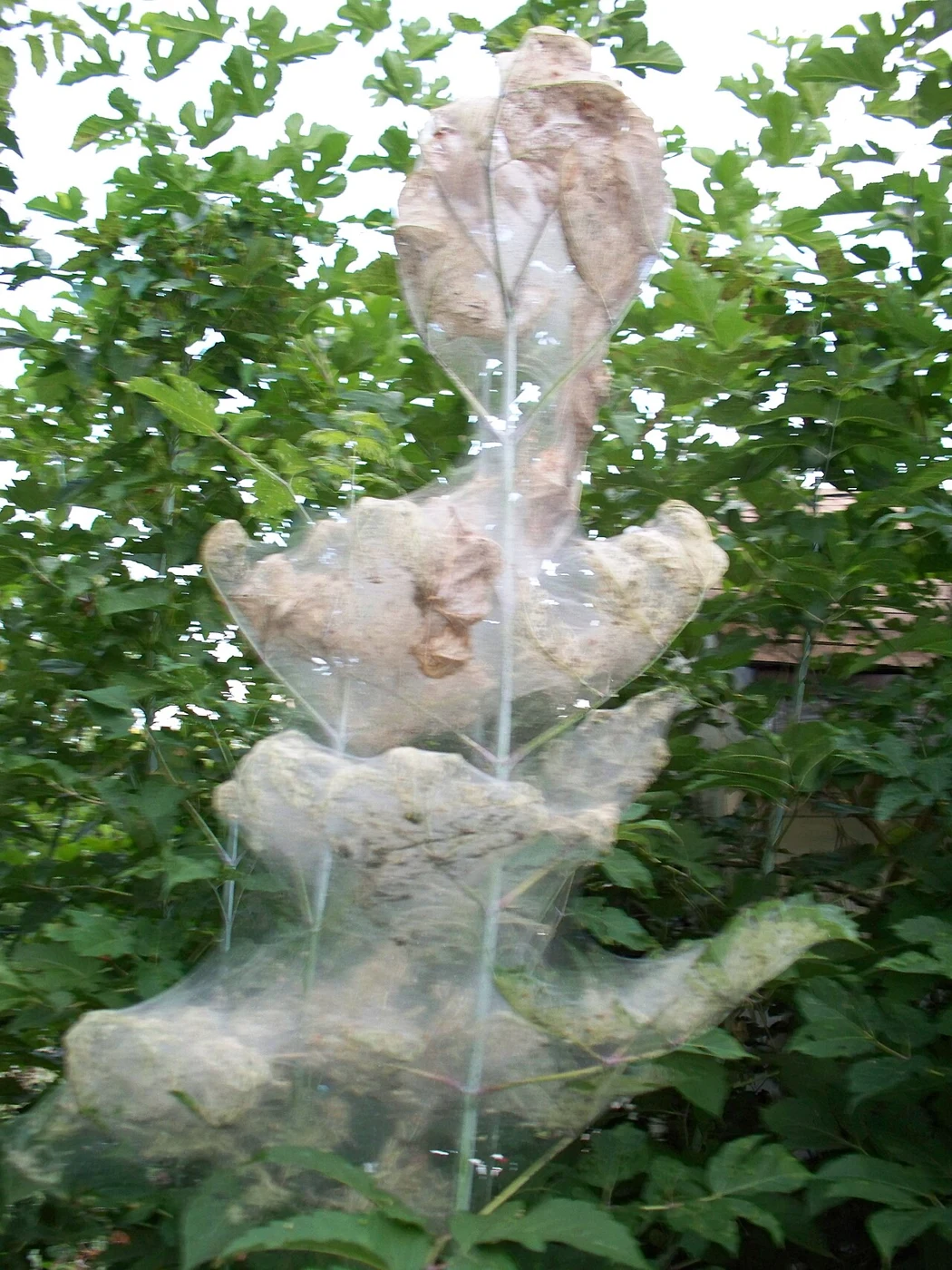
Fall webworm webs enclosing leafy branch tipsEric Vadillo ↗ · CC BY-SA 3.0Photo contextThis image illustrates the nest and feeding location; it is not a close-up identification of a larva.
Loose webs enclosing leafy branch tips are a late-season clue with a reassuringly familiar explanation.
Many deciduous trees, including hickory, walnut, persimmon, and sweetgum.
Recognize the damage
Larvae consume foliage inside enlarging webs at branch ends.
Before you act
Check whether leaves are enclosed and larvae are still feeding; note the season and amount of affected canopy.
A sensible first response
Small reachable webs can be opened or removed where necessary. Usually tolerate late damage on established trees; never burn nests or sacrifice large healthy branches just for appearance.
When to look
Summer into fall; more than one generation can occur in the region.
In Western North Carolina
Usually more of an appearance issue than a threat to a healthy mature WNC shade tree.
Identification, lookalikes & further notes
Identification
Hairy, variable-colored caterpillars share a web that encloses their food; later webs can look untidy and conspicuous.
Lookalikes & limits
Eastern tent caterpillars build in forks during spring. Web-spinning mites leave much finer silk and stippled foliage.
In the garden
Larvae consume foliage inside enlarging webs at branch ends.
What would help next
Record the host plant, date, fresh damage, and a clear photograph of the animal or insect. A damage match narrows the search; it does not establish an identification.
LOOK CLOSELY
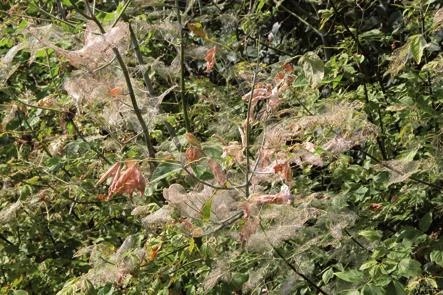
Two views, a closer look.
Place two photographs beside one another. Compare the overall plant with leaves, flowers, or bark when those views are available. Captions identify what each photograph actually shows. Images are not at the same scale; species references may show different cultivars.