Trees & woodland lore · Western North Carolina field companion
Black walnut
Juglans nigra
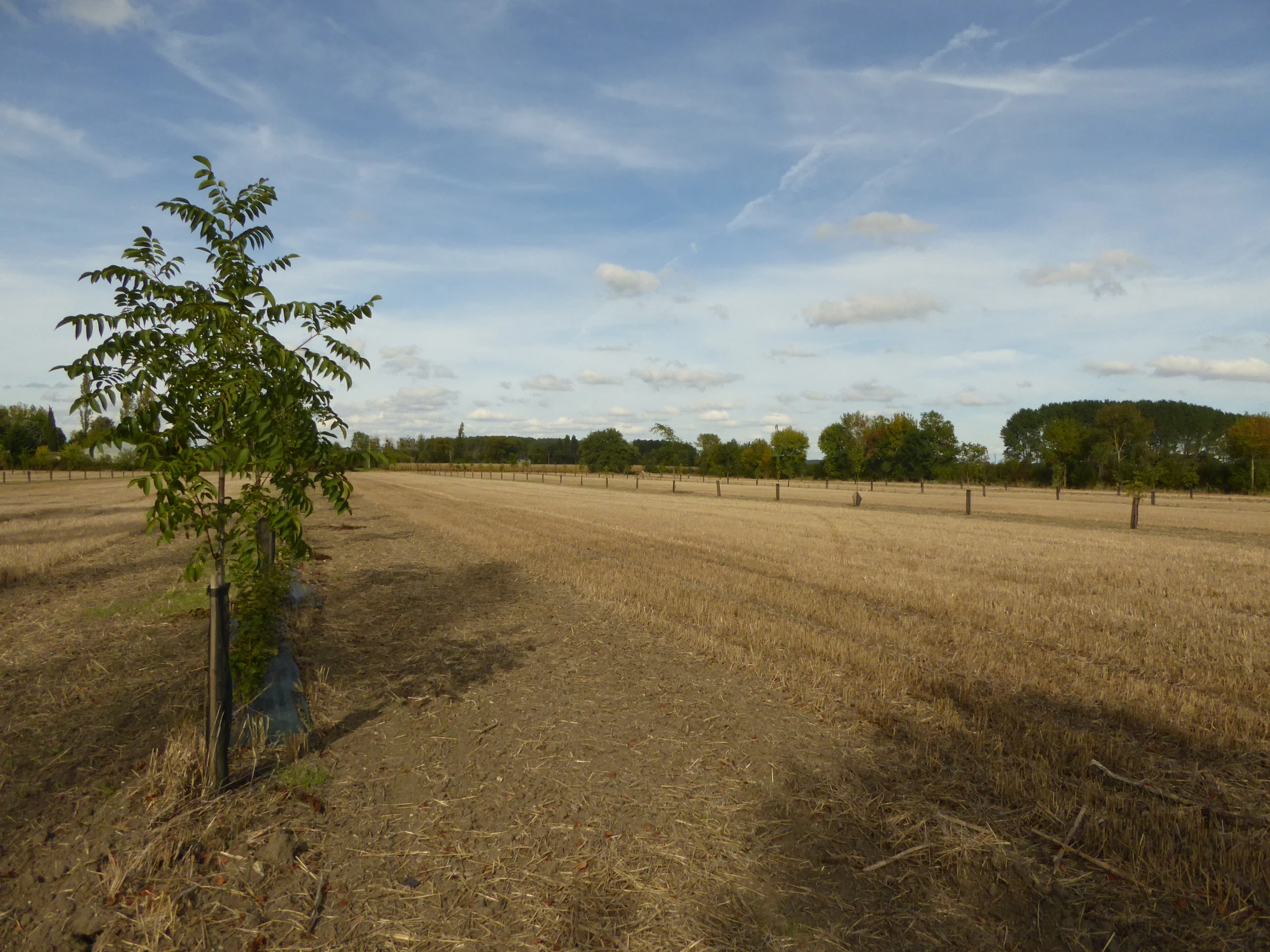
Whole tree — Juglans nigra. Species reference; the photographed specimen does not confirm the named variety. Age, pruning, and site affect its shape.☀ Full sun · ◐ Part sun or part shadeLafossegaude ↗ · CC BY-SA 4.0Photo contextResized and converted to WebP; full original composition retained.
Problems to recognize in WNC gardens. These are documented susceptibilities, not a local outbreak report or a diagnosis. Weather, elevation and growing conditions change the risk.
Diseases & similar-looking injury
Anthracnose can spot leaves and cause early leaf drop. Cankers and progressive dieback need further diagnosis.
Insects to recognize
Fall webworm, aphids and other leaf-feeding caterpillars may occur.
When to look
Inspect leaf spots and branch-tip webs during summer.
A useful first step
Monitor overall vigor and repeated defoliation. Ask Extension about persistent dieback rather than attributing it to a single disease from appearance alone.
More growing details
Read the leaves
A large pinnate leaf carries many toothed leaflets. Inspect the tip: the terminal leaflet is often reduced or missing.
Read the bark
Dark mature bark forms deep furrows and interlacing ridges.
Fruit & seed
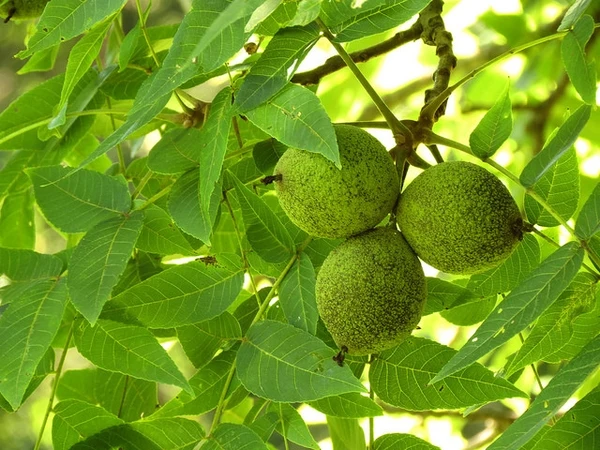
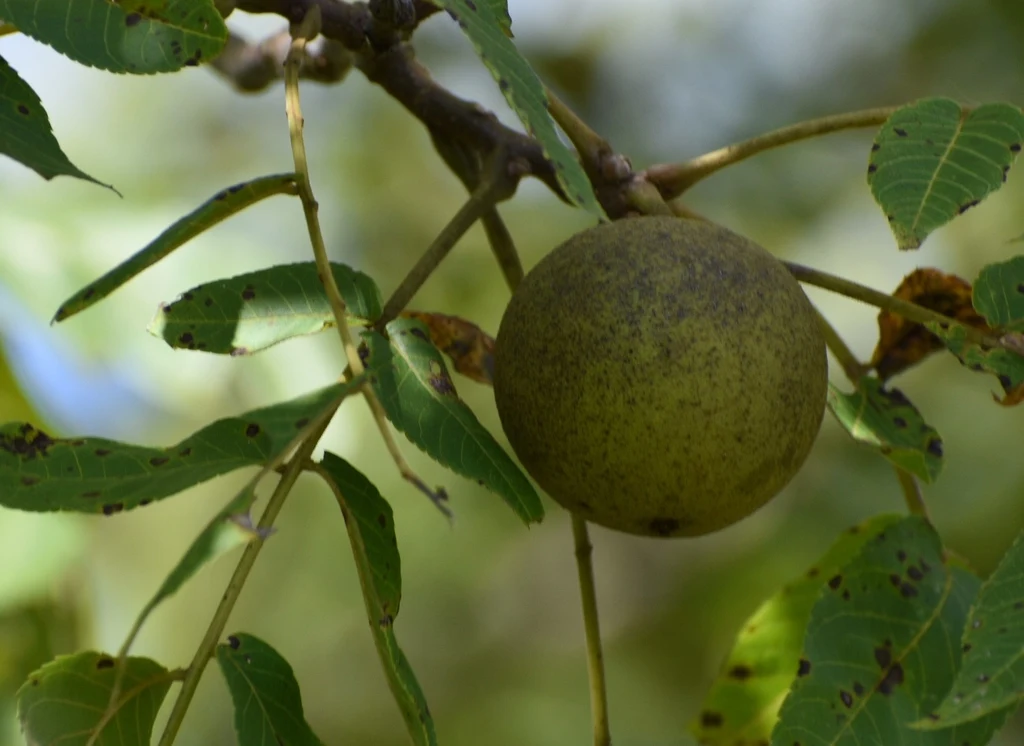
Round green husks enclose hard, deeply ridged nuts; handling husks can stain.
Winter character
Large leaf scars and chambered twig pith are useful; inspect an already-broken twig rather than injuring a tree.
Origin & place
The species occurs naturally in the southern Appalachian region; a planted specimen is not evidence of wild local origin.
WNC Notes
Valuable large native, but nuts, juglone sensitivity, and canopy size constrain landscape placement.
Sun Exposure
Full sun–part shade
MATURE HEIGHT (FT)
50–75
MATURE WIDTH (FT)
50–70
BLOOM SEASON
Spring
BLOOM COLOR
Catkins
FALL / WINTER COLOR
Yellow
Wet-Soil Tolerance
Moderate
Drought Tolerance
Low
LOOK CLOSELY
Two views, a closer look.
Place two photographs beside one another. Compare the overall plant with leaves, flowers, or bark when those views are available. Captions identify what each photograph actually shows. Images are not at the same scale; species references may show different cultivars.
Whole tree — Juglans nigra. Species reference; the photographed specimen does not confirm the named variety. Age, pruning, and site affect its shape.☀ Full sun · ◐ Part sun or part shadeLafossegaude ↗ · CC BY-SA 4.0Photo contextResized and converted to WebP; full original composition retained.Juglans nigra. Taxon reference; photograph alone does not establish a named cultivar.☀ Full sun · ◐ Part sun or part shadeKatja Schulz ↗ · CC BY 4.0Photo contextResized and converted to WebP; no diagnostic content altered.Green outer husk of a black walnut fruit — species reference; cultivar identity not inferred.☀ Full sun · ◐ Part sun or part shadeCathy Dewitt ↗ · CC BY 4.0Photo contextResized and converted to WebP; full original composition retained.
Your margin of the garden.
Saved only in this browser on this device. Export your notes from My garden in the library.