Trees & woodland lore · Western North Carolina field companion
American persimmon
Diospyros virginiana
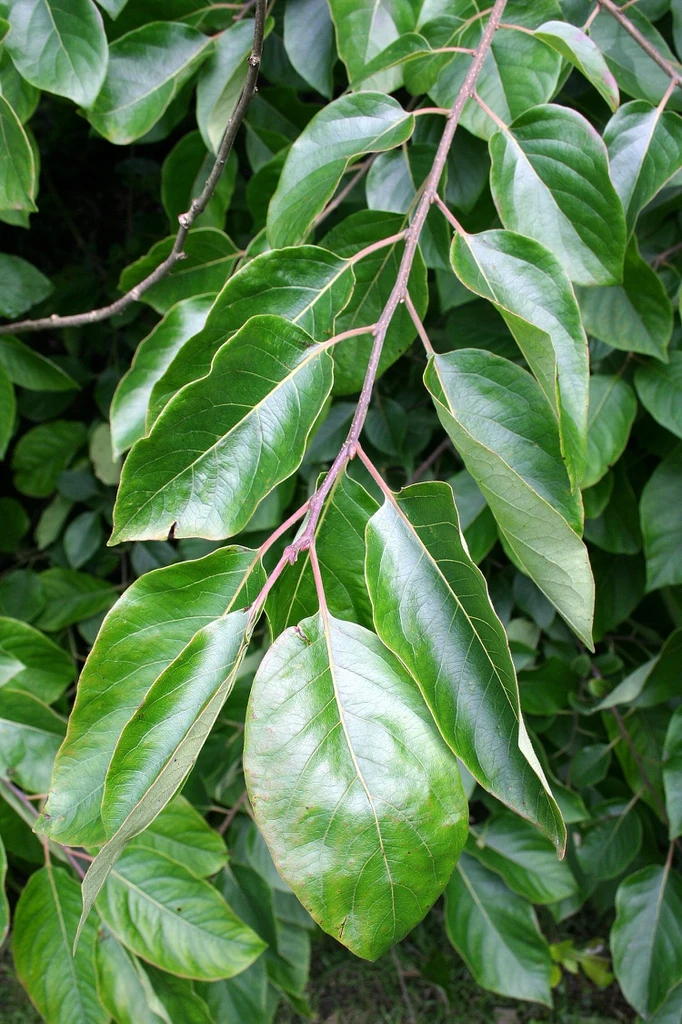
Shoot bearing alternate, ovate leaves with entire margins. Taxon reference; photograph alone does not establish a named cultivar.☀ Full sun · ◐ Part sun or part shadeJean-Pol GRANDMONT ↗ · CC BY 3.0Photo contextResized and converted to WebP; no diagnostic content altered.
Tough native with edible fruit; seedlings are usually dioecious, and dropped fruit affects placement.
Oval blades have smooth edges and alternate attachment. Combine them with bark and fruit rather than using shape alone.
More growing details
Read the bark
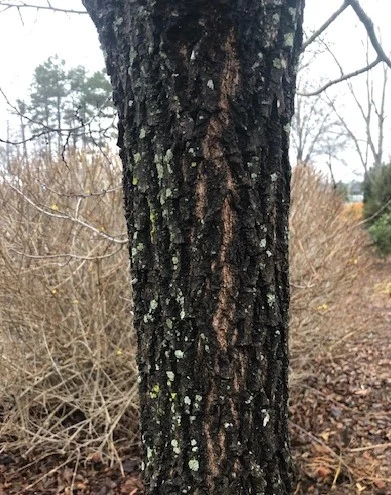
Dark bark becomes divided into thick square blocks, often likened to alligator skin.
Fruit & seed
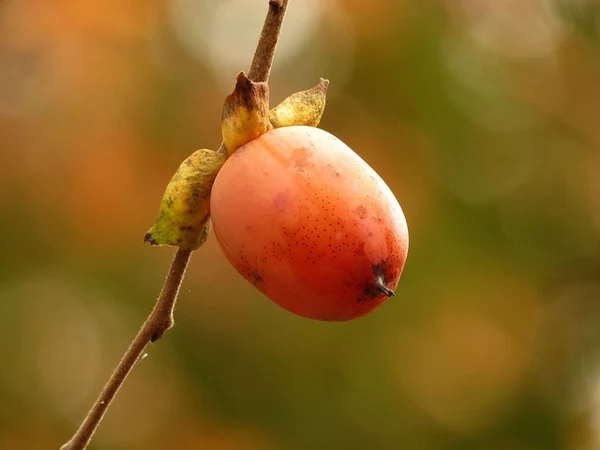
Female trees may bear rounded orange fruits topped by a four-lobed calyx.
Winter character
Blocky bark and dark alternate buds remain useful on bare trees.
Origin & place
The species occurs naturally in the southern Appalachian region; a planted specimen is not evidence of wild local origin.
Compare with Black gum
Black gum has small blue-black fruits; persimmon fruits are much larger and orange.
WNC Notes
Tough native with edible fruit; seedlings are usually dioecious, and dropped fruit affects placement.
Sun Exposure
Full sun–part shade
MATURE HEIGHT (FT)
35–60
MATURE WIDTH (FT)
25–40
BLOOM SEASON
Late spring
BLOOM COLOR
Greenish white
FALL / WINTER COLOR
Yellow-purple
Wet-Soil Tolerance
High
Drought Tolerance
Low
LOOK CLOSELY
Two views, a closer look.
Place two photographs beside one another. Compare the overall plant with leaves, flowers, or bark when those views are available. Captions identify what each photograph actually shows. Images are not at the same scale; species references may show different cultivars.
Shoot bearing alternate, ovate leaves with entire margins. Taxon reference; photograph alone does not establish a named cultivar.☀ Full sun · ◐ Part sun or part shadeJean-Pol GRANDMONT ↗ · CC BY 3.0Photo contextResized and converted to WebP; no diagnostic content altered.Trunks with black, chunky, furrowed bark — species reference; cultivar identity not inferred.☀ Full sun · ◐ Part sun or part shadeMark Robinson ↗ · CC BY 4.0Photo contextResized and converted to WebP; full original composition retained.Single fruit, orange with prominent calyx & persistent style. — species reference; cultivar identity not inferred.☀ Full sun · ◐ Part sun or part shadeKatja Schulz ↗ · CC BY 2.0Photo contextResized and converted to WebP; full original composition retained.
Your margin of the garden.
Saved only in this browser on this device. Export your notes from My garden in the library.