Trees & woodland lore · Western North Carolina field companion
Shagbark hickory
Carya ovata
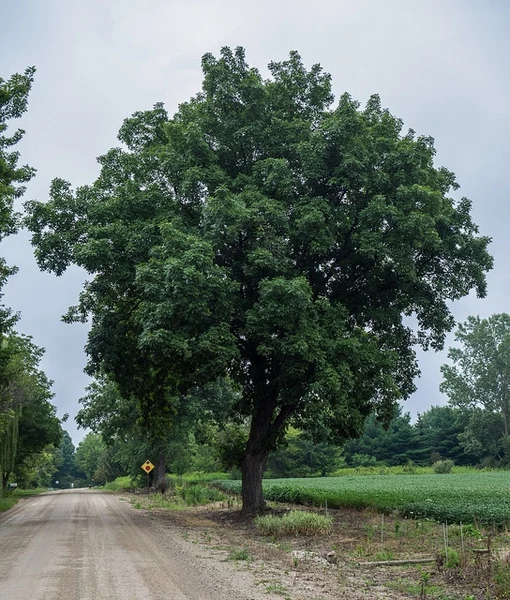
Whole tree — Carya ovata. Species reference; the photographed specimen does not confirm the named variety. Age, pruning, and site affect its shape.☀ Full sun · ◐ Part sun or part shadeF. D. Richards ↗ · CC-BY-SA 2.0Photo contextResized and converted to WebP; full original composition retained.
Problems to recognize in WNC gardens. These are documented susceptibilities, not a local outbreak report or a diagnosis. Weather, elevation and growing conditions change the risk.
Diseases & similar-looking injury
Generally has no serious disease problems.
Insects to recognize
Hickory bark beetles, pecan weevils and twig girdlers can occasionally cause problems.
When to look
Check fallen cut-looking twigs and trunk condition during the growing season.
A useful first step
Investigate repeated twig loss or canopy decline; a few damaged nuts or leaves do not establish a tree-health emergency.
More growing details
Read the leaves
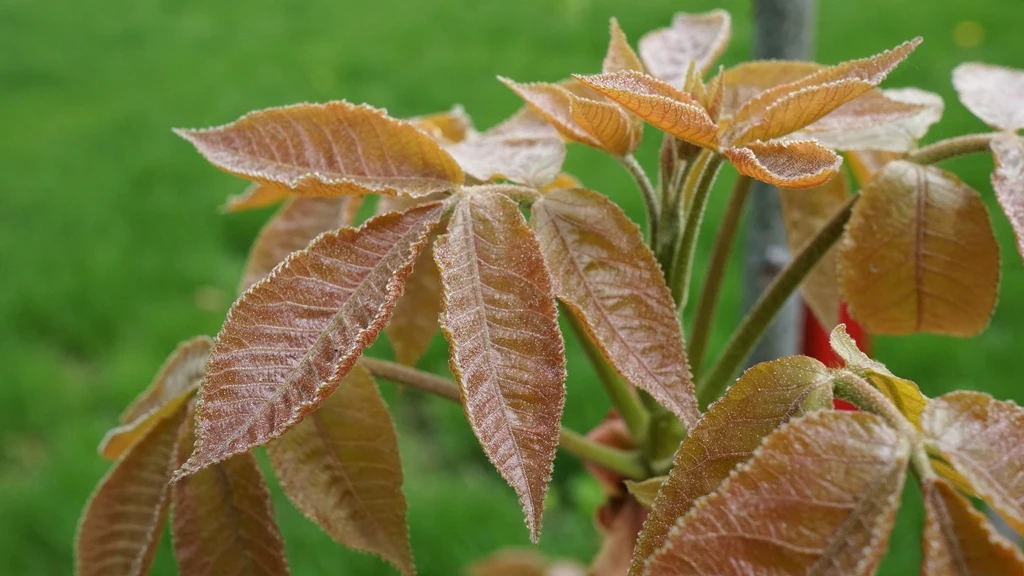
Find a whole compound leaf with usually five, sometimes seven, toothed leaflets. The terminal three are often largest.
Read the bark
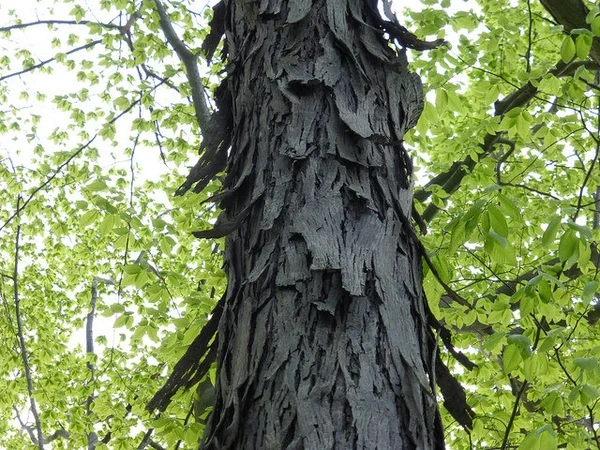
Long gray plates curl away from mature trunks; young trees may not yet be shaggy.
Fruit & seed
A thick husk splits into four sections around the nut.
Winter character
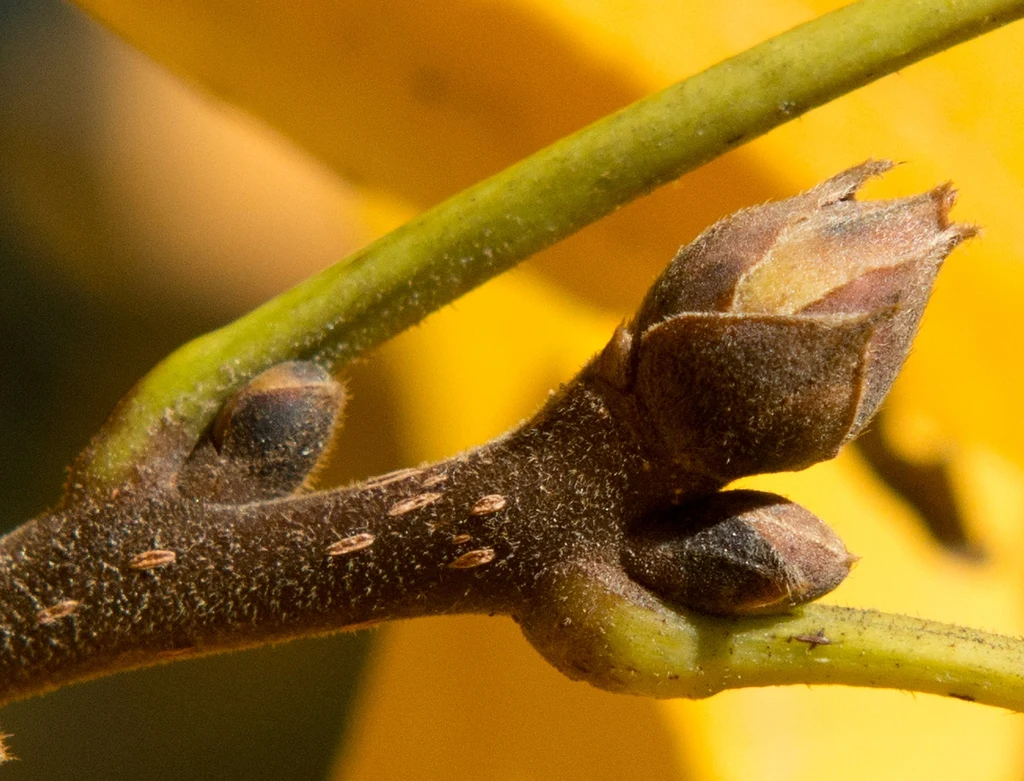
Large buds and loose mature bark plates provide complementary winter clues.
Origin & place
The species occurs naturally in the southern Appalachian region; a planted specimen is not evidence of wild local origin.
WNC Notes
Long-lived wildlife tree with ornamental bark; difficult to transplant when large.
Sun Exposure
Full sun–part shade
MATURE HEIGHT (FT)
70–90
MATURE WIDTH (FT)
50–70
BLOOM SEASON
Spring
BLOOM COLOR
Catkins
FALL / WINTER COLOR
Golden yellow
Wet-Soil Tolerance
Moderate
Drought Tolerance
Low
LOOK CLOSELY
Two views, a closer look.
Place two photographs beside one another. Compare the overall plant with leaves, flowers, or bark when those views are available. Captions identify what each photograph actually shows. Images are not at the same scale; species references may show different cultivars.
Whole tree — Carya ovata. Species reference; the photographed specimen does not confirm the named variety. Age, pruning, and site affect its shape.☀ Full sun · ◐ Part sun or part shadeF. D. Richards ↗ · CC-BY-SA 2.0Photo contextResized and converted to WebP; full original composition retained.Species reference; does not confirm the named variety. Photograph subject: Stem and buds☀ Full sun · ◐ Part sun or part shadePlant Image Library ↗ · CC-BY-SA 2.0Photo contextResized and converted to WebP; full original composition retained.Leaves in May. Taxon reference; photograph alone does not establish a named cultivar.☀ Full sun · ◐ Part sun or part shadePlant Image Library ↗ · CC-BY-SA 2.0Photo contextResized and converted to WebP; no diagnostic content altered.Shaggy bark — species reference; cultivar identity not inferred.☀ Full sun · ◐ Part sun or part shadeKevin Faccenda ↗ · CC BY 2.0Photo contextResized and converted to WebP; full original composition retained.
Your margin of the garden.
Saved only in this browser on this device. Export your notes from My garden in the library.