
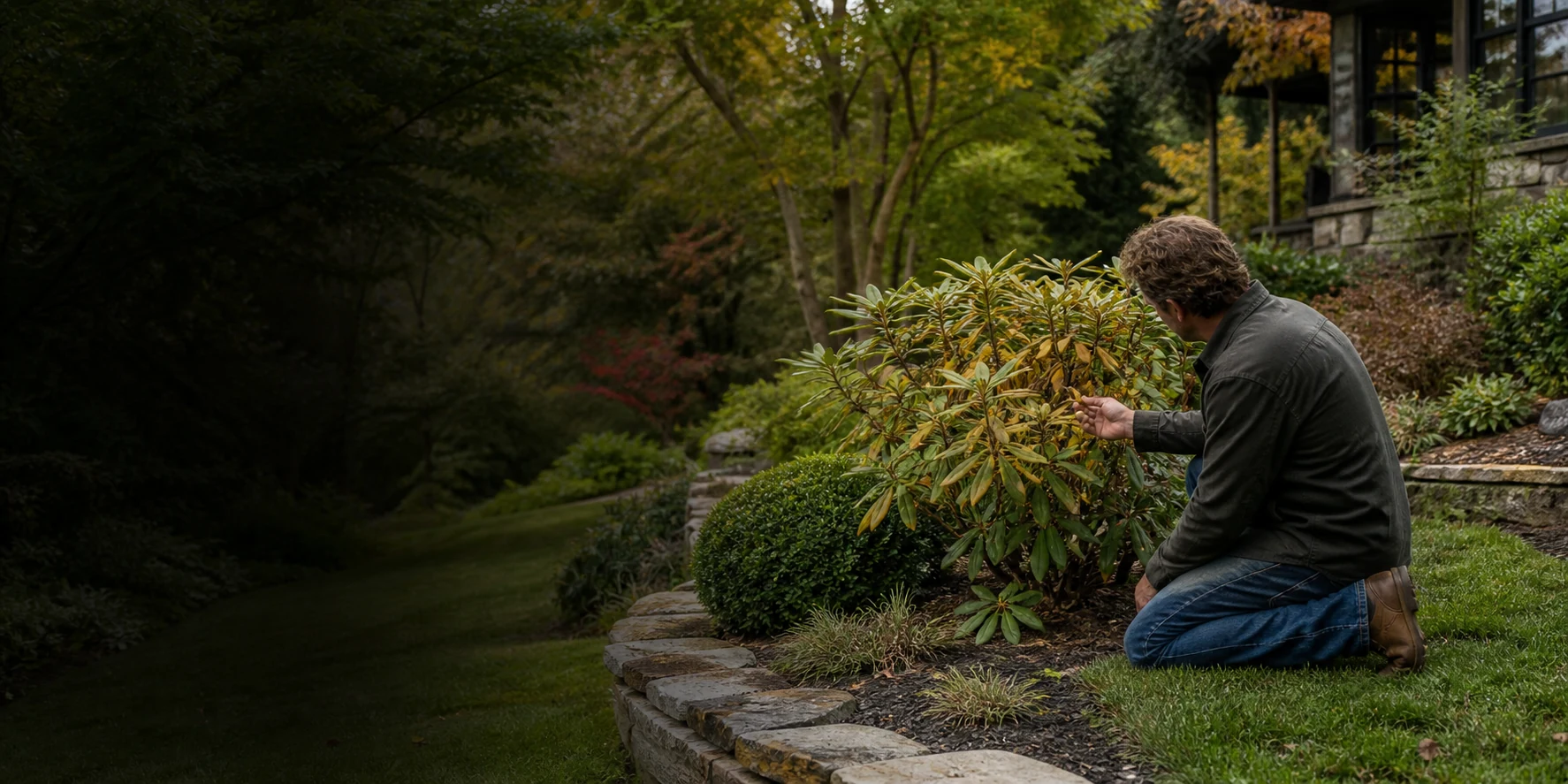
Horticultural Care • Diagnosis-Led Care
See the whole landscape before treating one symptom.
Plant health, turf, pruning, drainage, fertility, and ongoing landscape care work best when the site is understood as one connected system.
Services Included
Practical care built around causes, not generic programs.
We consider symptoms, history, site conditions, water, soil, maintenance, weather, and the surrounding landscape before recommending the next step.
Diagnose and direct
Understand what the landscape needs.
- 01
Plant-Health Diagnosis
Evaluation of visible decline, discoloration, dieback, stress, insects, disease symptoms, and environmental pressure.
- 02
Soil & Growing Conditions
Review of soil condition, drainage, exposure, root-zone competition, irrigation, planting depth, and other site factors.
- 03
Fertility Guidance
Plant and turf fertility recommendations tied to observed need, site conditions, appropriate testing, and realistic goals.
- 04
Weed, Insect & Disease Management
Diagnosis-based recommendations and licensed applications within the company’s current credentials and insured scope.
- 05
Horticultural Consulting
Property walkthroughs, prioritized improvement plans, budget guidance, proposed-work review, and coordination when another qualified trade is the right answer.
Restore and sustain
Act on the right priorities.
- 06
Fall Turf Renovation & Consulting
Assessment of turf performance, compaction, weeds, fertility, water, shade, and drainage, followed by aeration, seeding, fertility, or repair recommendations where warranted.
- 07
Pruning & Seasonal Cutbacks
Ornamental, corrective, and seasonal pruning intended to support plant structure, appearance, access, and long-term care.
- 08
Leaf Removal, Bed Reclamation & Detail Care
Leaf clearing, spent-annual removal, cleanup, edging, mulch, under-brushing, selective cutbacks, and practical work that brings the landscape back into order.
- 09
Drainage & Water Problems
Standing-water diagnosis, runoff and downspout evaluation, minor grading, bed-drainage correction, redirection, and specialist coordination for larger work.
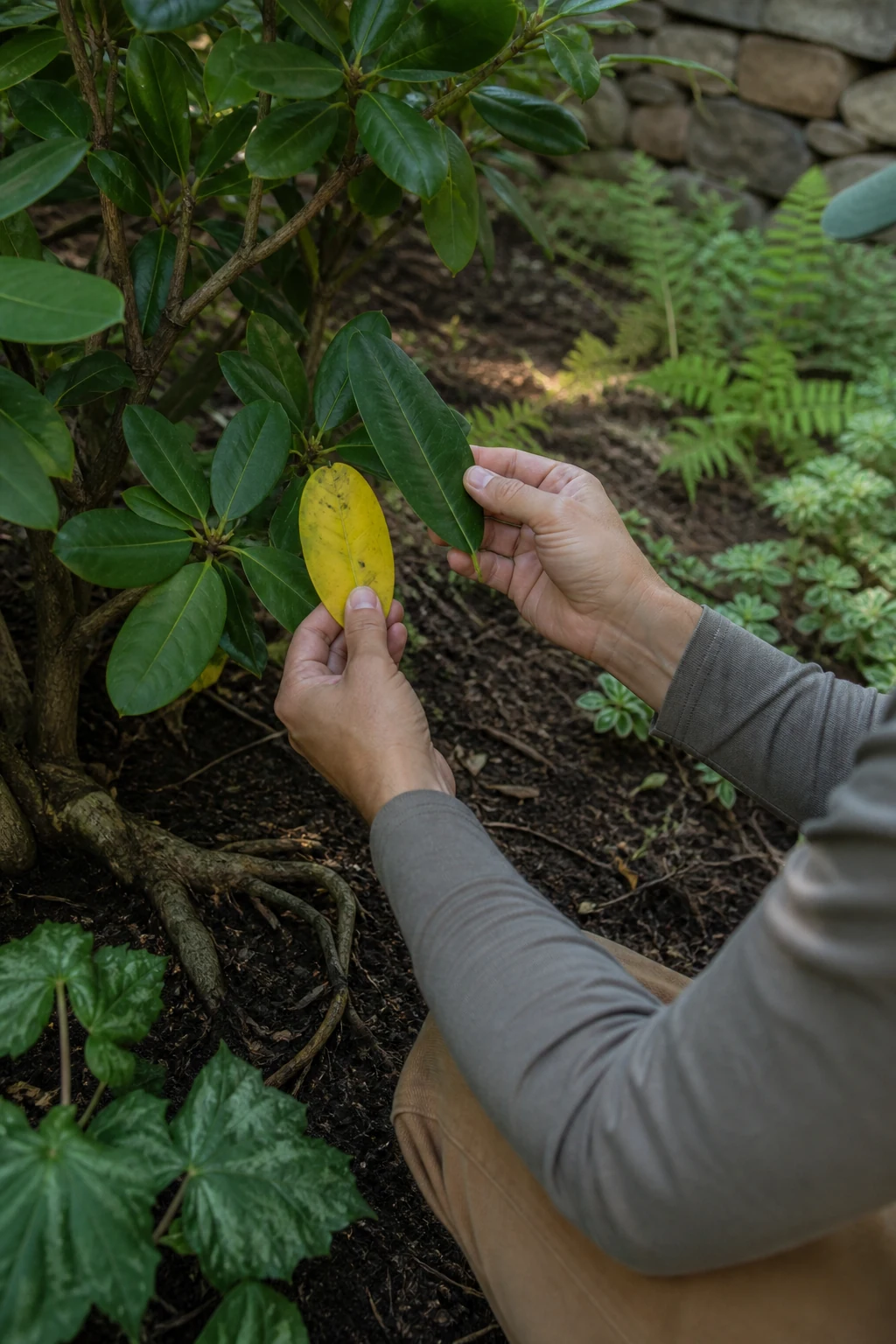
Diagnosis Before Treatment
The visible problem may not be the real problem.
A declining plant may be responding to water, soil, planting depth, roots, weather, maintenance, pests, disease, or several of those together. We separate what is known, what is likely, and what needs more evidence.
- Look at the pattern
- One plant, one area, or an entire property can point toward very different causes.
- Prioritize the leverage point
- Correcting water or site conditions may matter more than adding another product.
- Explain the tradeoffs
- Recommendations account for urgency, expected benefit, cost, timing, and the realistic future of the plant or turf.
“Fertilizer and pesticide work is performed only within current licensing, label requirements, insurance, and the diagnosed need.”
A Better Fit Through Clear Boundaries
Expert landscape care without pretending to be every trade.
- Not a weekly mowing routeWe diagnose, advise on, treat, and improve turf, but routine weekly mowing is not the center of the service.
- Testing and specialists when usefulSoil or laboratory testing and qualified arborists, engineers, excavators, or other specialists may be recommended when the evidence calls for them.
- No manufactured treatmentWe do not create a product program merely to create recurring work. Recommendations should have a clear horticultural reason.
The Care Process
Observe, diagnose, prioritize, and follow through.
- 01
Read the History
Understand when the concern began, what has changed, and what treatments or maintenance have already occurred.
- 02
Inspect the Conditions
Look at the plant or turf, the pattern of symptoms, soil and water conditions, exposure, maintenance, and surrounding site.
- 03
Set Priorities
Separate immediate actions from longer-term improvements and explain where testing or another specialist would add value.
- 04
Act & Reassess
Complete the authorized care, document the result, and adjust the plan as the landscape responds over time.
Start with What You See