


In the landscape.
Plants & places
Spruce, fir, hemlock, arborvitae, juniper, and other conifers.
Recognize the damage
Fine needle stippling and bronzing, sometimes noticed after the main feeding period.
Before you act
Tap affected branches over white paper and check for moving mites before deciding whether treatment is useful.
A sensible first response
Monitor living populations, support plant health, and conserve predatory mites. Seek advice before treating discolored foliage when no active mites are found.
When to look
Often active in spring and fall; mountain temperatures can alter the pattern.
In Western North Carolina
Especially relevant to the region's conifers and Fraser fir plantings; do not assume all spider mites are warm-weather pests.
Identification, lookalikes & further notes
Identification
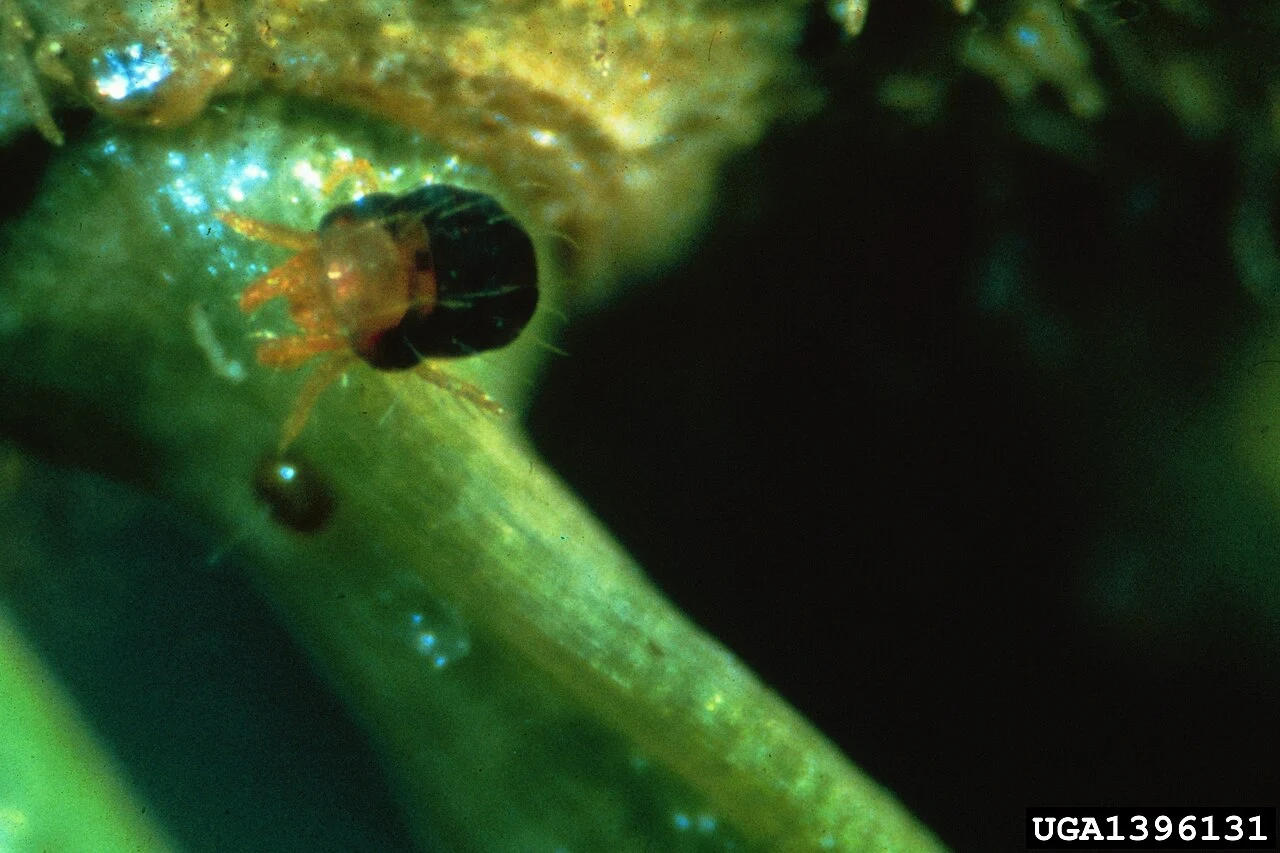
Tiny mites and eggs occur on needles and twigs; species confirmation needs magnification and host context.
Lookalikes & limits
Drought, root problems, and other mites can brown conifers. Old injury does not prove live mites remain.
In the garden
Fine needle stippling and bronzing, sometimes noticed after the main feeding period.
What would help next
Record the host plant, date, fresh damage, and a clear photograph of the animal or insect. A damage match narrows the search; it does not establish an identification.