Trees & woodland lore · Western North Carolina field companion
Fraser fir
Abies fraseri
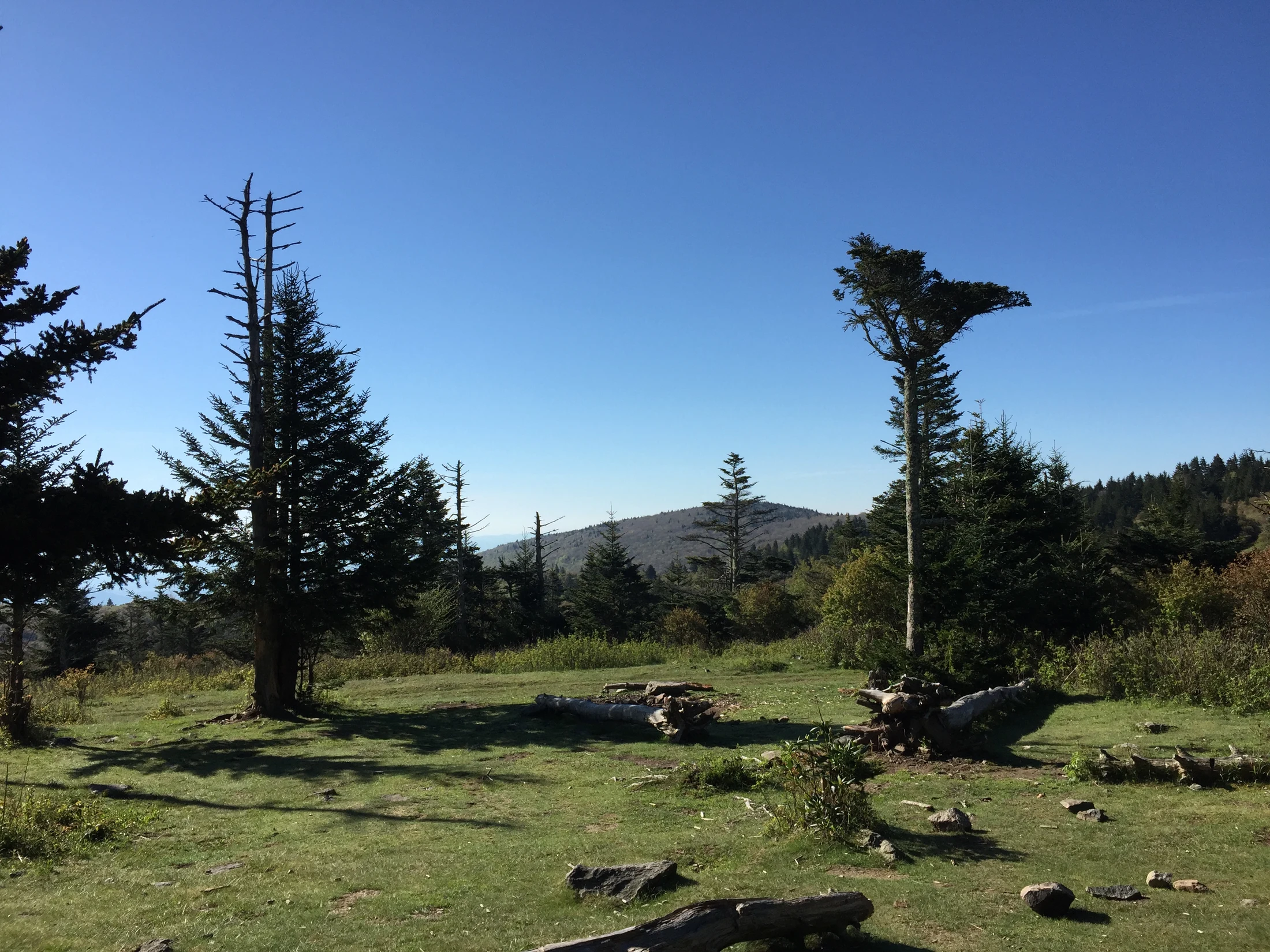
Whole tree — Abies fraseri. Species reference; the photographed specimen does not confirm the named variety. Age, pruning, and site affect its shape.☀ Full sun · ◐ Part sun or part shadeFamartin ↗ · CC BY-SA 4.0Photo contextResized and converted to WebP; full original composition retained.
Problems to recognize in WNC gardens. These are documented susceptibilities, not a local outbreak report or a diagnosis. Weather, elevation and growing conditions change the risk.
Diseases & similar-looking injury
Root problems and site stress can cause decline; this high-elevation fir is poorly suited to many warm lowland sites.
Insects to recognize
Balsam woolly adelgid is a major threat. Look for woolly material on bark and swollen or distorted twigs.
When to look
Check bark and twig growth during the growing season; compare new growth with healthy branches.
A useful first step
Ask Extension or an arborist to identify adelgid damage and assess whether the planting site suits Fraser fir.
More growing details
Read the leaves
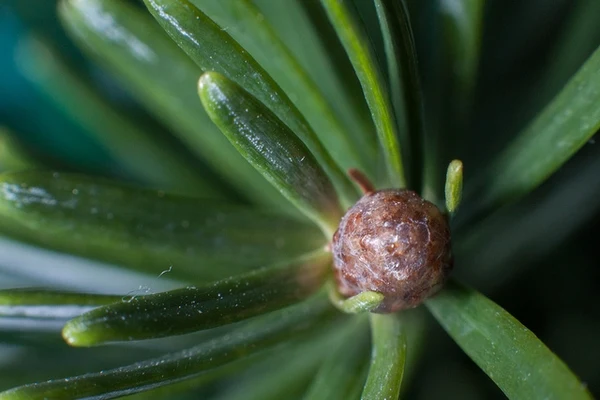
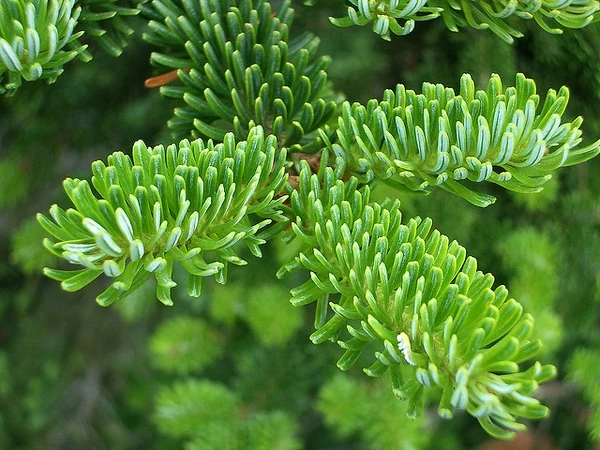
Needles attach singly with small rounded bases, leaving smoother twigs than spruce. Check the two whitish underside bands.
Read the bark
Young bark is gray and relatively smooth, with resin blisters; older bark becomes scaly.
Fruit & seed
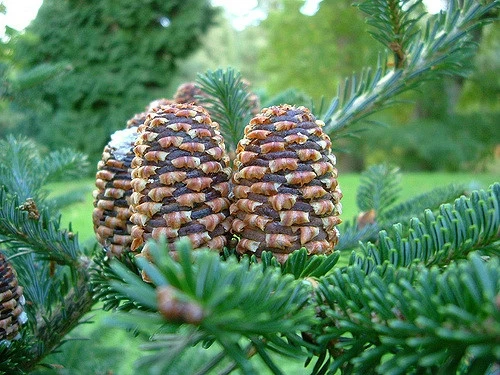
Upright cones have conspicuous projecting bracts and break apart on the tree.
Winter character
Evergreen needles and cone axes can remain when cone scales have fallen.
Origin & place
A southern Appalachian high-elevation native. A low-elevation Christmas-tree planting is outside its characteristic wild habitat.
WNC Notes
Best only on cool, elevated, moist, well-drained sites; heat and root disease limit lower sites.
Sun Exposure
Full sun–part shade
MATURE HEIGHT (FT)
30–55
MATURE WIDTH (FT)
10–25
BLOOM SEASON
Spring
BLOOM COLOR
Inconspicuous
FALL / WINTER COLOR
Evergreen
Wet-Soil Tolerance
Moderate
Drought Tolerance
Low
LOOK CLOSELY
Two views, a closer look.
Place two photographs beside one another. Compare the overall plant with leaves, flowers, or bark when those views are available. Captions identify what each photograph actually shows. Images are not at the same scale; species references may show different cultivars.
Whole tree — Abies fraseri. Species reference; the photographed specimen does not confirm the named variety. Age, pruning, and site affect its shape.☀ Full sun · ◐ Part sun or part shadeFamartin ↗ · CC BY-SA 4.0Photo contextResized and converted to WebP; full original composition retained.Species reference; does not confirm the named variety. Photograph subject: Close up of a brown round leaf bud☀ Full sun · ◐ Part sun or part shadeTim Sackton ↗ · CC-BY-SA 2.0Photo contextResized and converted to WebP; full original composition retained.Short flat green needles on the stem tip. Taxon reference; photograph alone does not establish a named cultivar.☀ Full sun · ◐ Part sun or part shadeDavid B. Gleason ↗ · CC-BY-SA 2.0Photo contextResized and converted to WebP; no diagnostic content altered.Upright brown cones with conspicuous bracts with curled tips — species reference; cultivar identity not inferred.☀ Full sun · ◐ Part sun or part shadeS. Rae ↗ · CC-BY-SA 2.0Photo contextResized and converted to WebP; full original composition retained.
Your margin of the garden.
Saved only in this browser on this device. Export your notes from My garden in the library.