
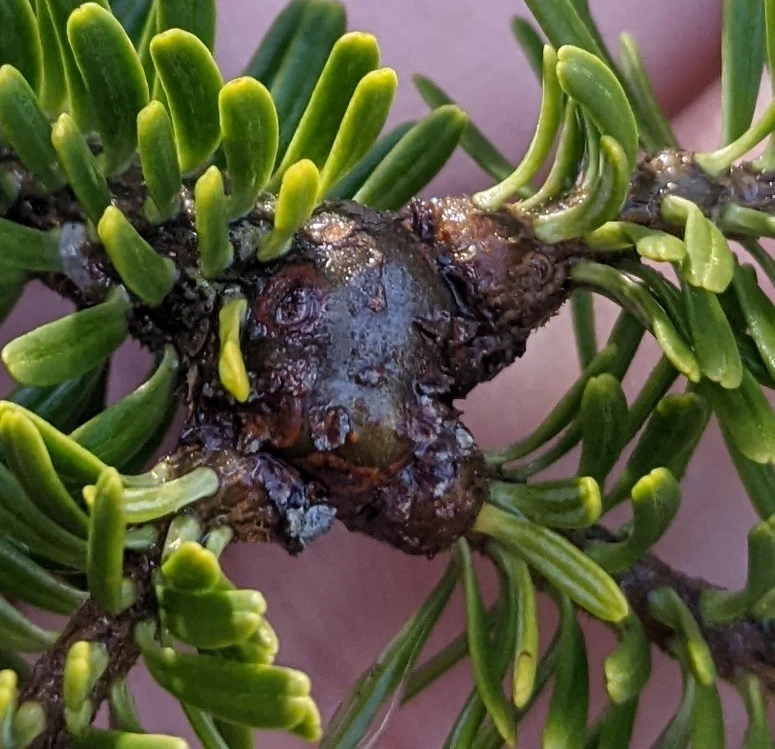
In the landscape.
Plants & places
True firs, especially highly susceptible Fraser fir.
Recognize the damage
Swollen twig nodes, distorted shoots, reduced growth, and potentially severe decline.
Before you act
Inspect bark and swollen shoot bases with a lens; look over the whole tree for uneven or stunted growth.
A sensible first response
Have suspicious wool and growth distortion identified early. Landscape firs need a site-specific plan; commercial Christmas-tree schedules should not be copied blindly.
When to look
Scout through the growing season; symptoms can be easier to assess after annual growth finishes.
In Western North Carolina
Highly relevant to Fraser fir in the Blue Ridge, including planted landscape trees and nearby production areas.
Identification, lookalikes & further notes
Identification
Tiny insects beneath white wool occur on bark; trunk and twig infestations can differ in appearance.
Lookalikes & limits
Hemlock woolly adelgid attacks hemlock. Balsam twig aphids curl new fir needles and are a different pest.
In the garden
Swollen twig nodes, distorted shoots, reduced growth, and potentially severe decline.
What would help next
Record the host plant, date, fresh damage, and a clear photograph of the animal or insect. A damage match narrows the search; it does not establish an identification.