Trees & woodland lore · Western North Carolina field companion
Eastern red cedar
Juniperus virginiana
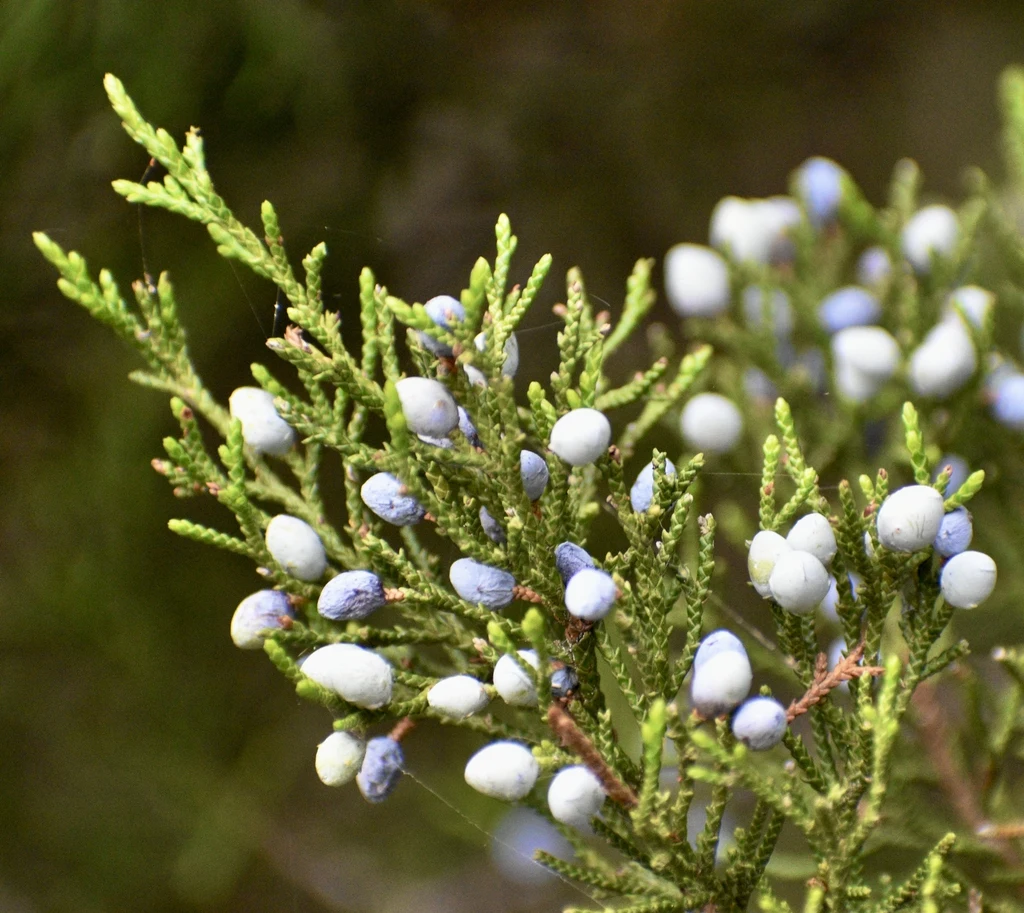
Berries and needles photographed on August 20 in Warren County, North Carolina. Taxon reference; photograph alone does not establish a named cultivar.☀ Full sunCathy DeWitt ↗ · CC BY 4.0Photo contextResized and converted to WebP; no diagnostic content altered.
Very durable native screen for dry sun; alternate host for cedar-apple rust.
Inspect both young and adult foliage: juvenile leaves can be sharp and needle-like, while adult leaves overlap as scales.
More growing details
Read the bark
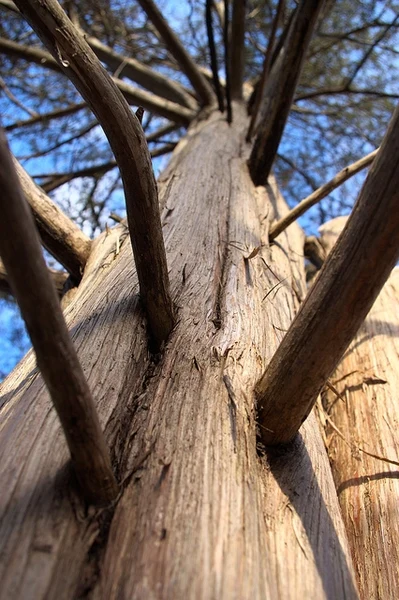
Reddish-brown bark peels in narrow fibrous strips.
Fruit & seed
Blue berry-like structures on female trees are fleshy cones; they are not true berries.
Winter character
Evergreen scales, shredding bark, and often persistent blue cones remain visible.
Origin & place
The species occurs naturally in the southern Appalachian region; a planted specimen is not evidence of wild local origin.
Compare with Arborvitae
Arborvitae has tiny dry woody cones and flatter fan-like sprays, rather than fleshy blue cones.
WNC Notes
Very durable native screen for dry sun; alternate host for cedar-apple rust.
Sun Exposure
Full sun
MATURE HEIGHT (FT)
30–50
MATURE WIDTH (FT)
10–20
BLOOM SEASON
Spring
BLOOM COLOR
Inconspicuous
FALL / WINTER COLOR
Evergreen; blue cones
Wet-Soil Tolerance
Low–moderate
Drought Tolerance
High
LOOK CLOSELY
Two views, a closer look.
Place two photographs beside one another. Compare the overall plant with leaves, flowers, or bark when those views are available. Captions identify what each photograph actually shows. Images are not at the same scale; species references may show different cultivars.
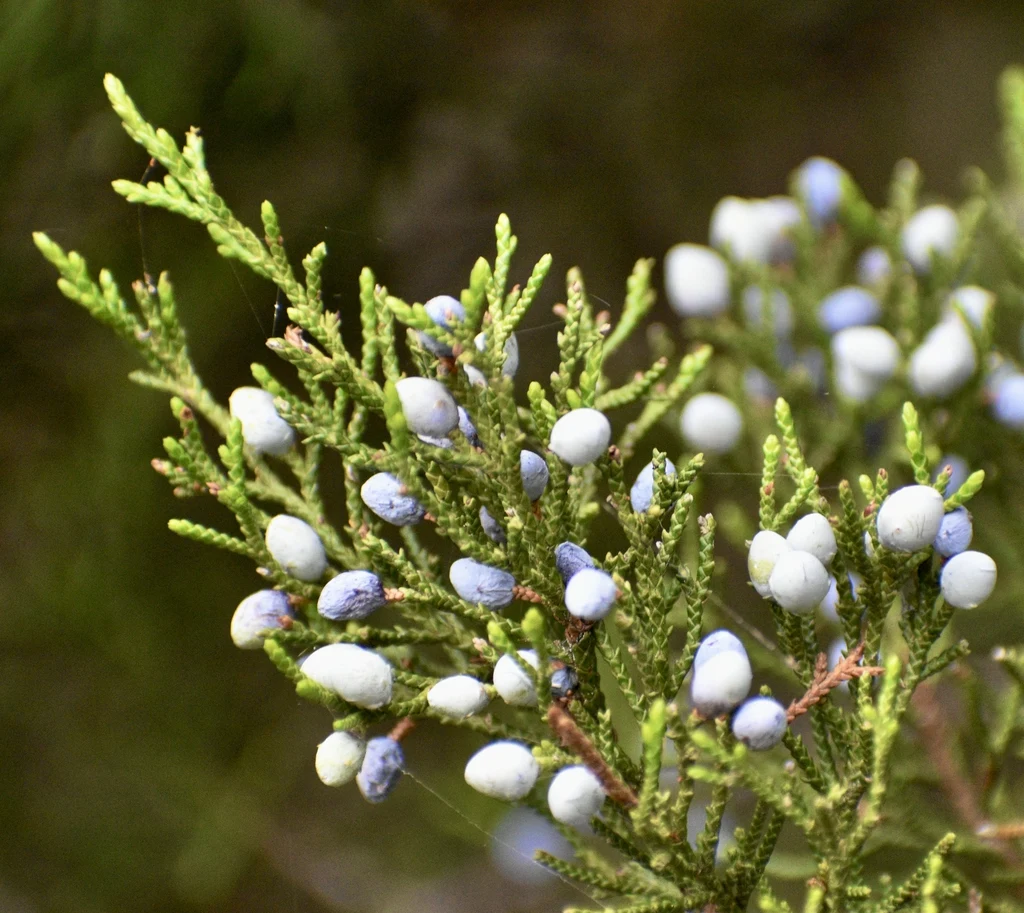
Berries and needles photographed on August 20 in Warren County, North Carolina. Taxon reference; photograph alone does not establish a named cultivar.☀ Full sunCathy DeWitt ↗ · CC BY 4.0Photo contextResized and converted to WebP; no diagnostic content altered.Fibrous bark of eastern red cedar — species reference; cultivar identity not inferred.☀ Full sunplantsforpermaculture ↗ · CC BY 2.0Photo contextResized and converted to WebP; full original composition retained.Berries & Needles - Aug. 20 - Warren Co., NC — species reference; cultivar identity not inferred.☀ Full sunCathy DeWitt ↗ · CC BY 4.0Photo contextResized and converted to WebP; full original composition retained.
Your margin of the garden.
Saved only in this browser on this device. Export your notes from My garden in the library.