
In the landscape.
Plants & places
Arborvitae, juniper, Leyland cypress, and many other woody plants.
Recognize the damage
Needles and leaves disappear; heavy feeding can kill portions of an evergreen.
Before you act
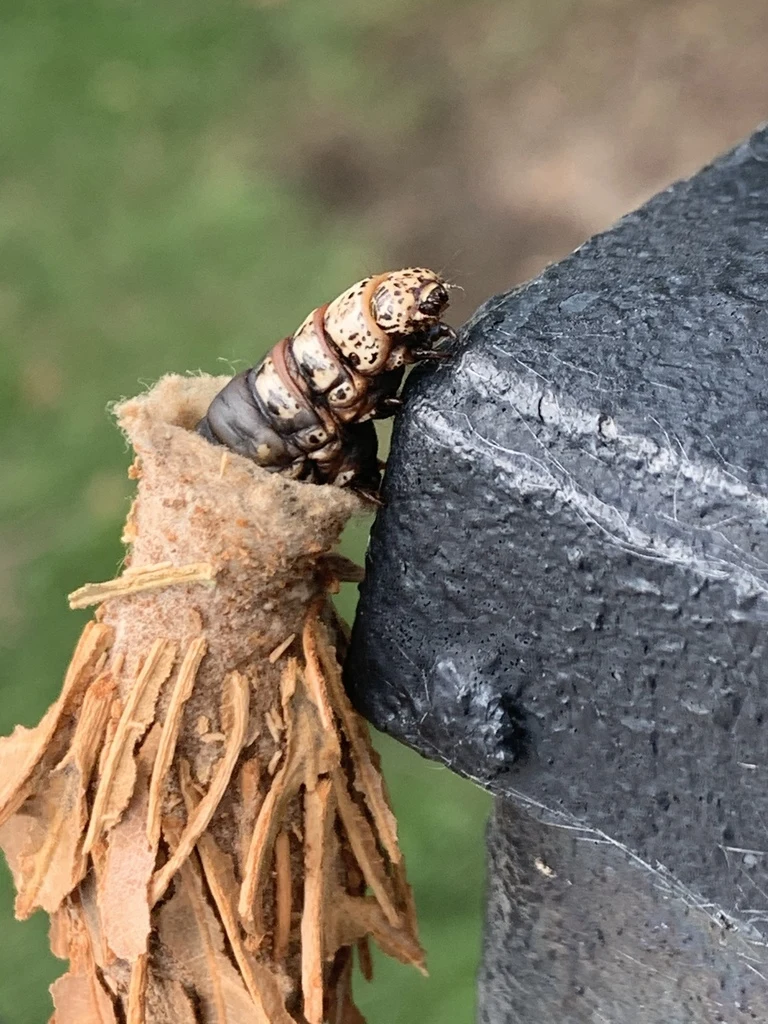
Check inside and beneath branches for small moving bags and old attached bags containing overwintering eggs.
A sensible first response
Remove attached bags before hatch where reachable, including their twig fastenings. Seek timely advice while new larvae are small; large mature bags are harder to manage.
When to look
Eggs hatch in late spring or early summer; bags enlarge through summer.
In Western North Carolina
A serious concern on mountain screening plants because evergreens may not replace lost foliage readily.
Identification, lookalikes & further notes
Identification
Tapered silken bags incorporate foliage and debris. Active larvae extend their heads to feed or move.
Lookalikes & limits
Cones do not crawl. Some other insects make bags; host fragments alone do not prove an active infestation.
In the garden
Needles and leaves disappear; heavy feeding can kill portions of an evergreen.
What would help next
Record the host plant, date, fresh damage, and a clear photograph of the animal or insect. A damage match narrows the search; it does not establish an identification.