Trees & woodland lore · Western North Carolina field companion
Leyland cypress
× Hesperotropsis leylandii
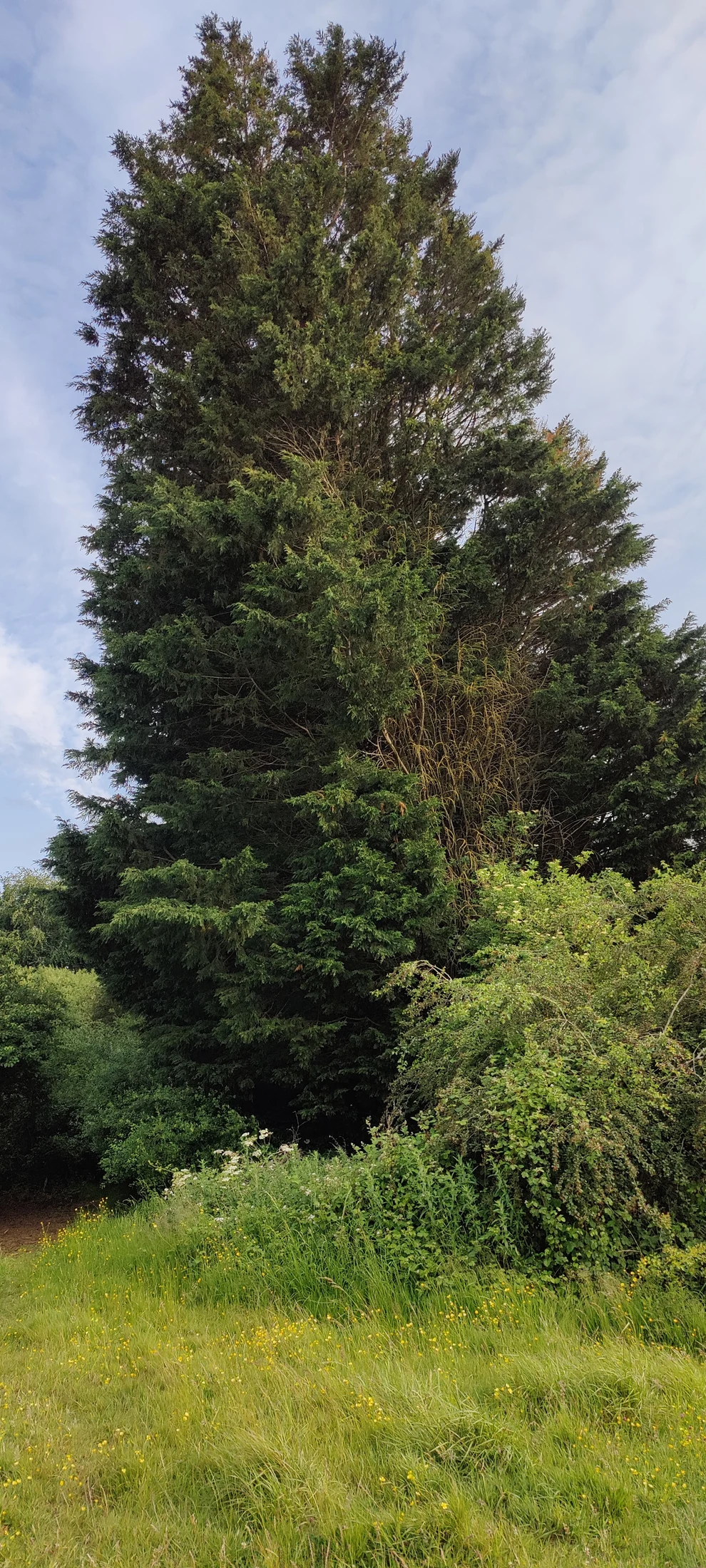
Whole tree — × Hesperotropsis leylandii. Species reference; the photographed specimen does not confirm the named variety. Age, pruning, and site affect its shape.☀ Full sunWhiteTailedEagle ↗ · CC BY-SA 4.0Photo contextResized and converted to WebP; full original composition retained.
Problems to recognize in WNC gardens. These are documented susceptibilities, not a local outbreak report or a diagnosis. Weather, elevation and growing conditions change the risk.
Diseases & similar-looking injury
Seiridium and Botryosphaeria cankers can kill branches. Armillaria and Phytophthora root rots are serious concerns, especially on unsuitable sites.
Insects to recognize
Bagworms can cause substantial defoliation.
When to look
Inspect isolated browning branches after drought and look for small bags in early summer.
A useful first step
Check drainage, spacing and drought stress. Seek a diagnosis promptly for spreading branch death; browning has several possible causes.
More growing details
Read the leaves
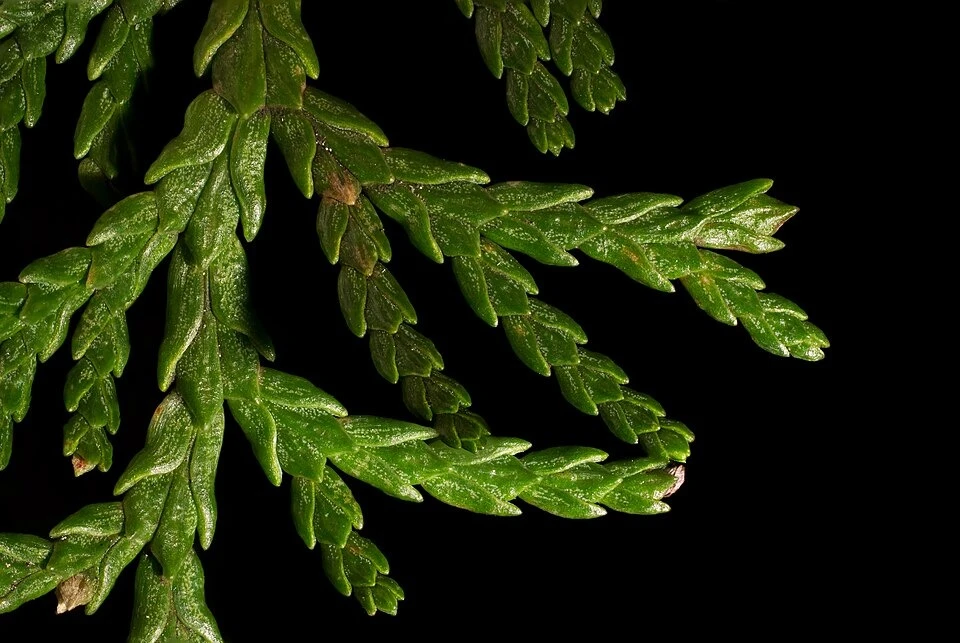
Closely overlapping scales form feathery sprays. Many cultivated cypresses are similar, so avoid naming the hybrid from foliage alone.
Read the bark
Gray-brown bark becomes fibrous and shallowly furrowed.
Fruit & seed
Round woody cones have shield-like scales; cone production varies among plants.
Winter character
Evergreen sprays help narrow the cypress group when other trees are bare.
Origin & place
An introduced garden species or horticultural hybrid; study it as part of WNC landscapes rather than assume it belongs to the native mountain flora.
WNC Notes
Rapid screen but canker, bagworms, ice, crowding, and ultimate size create high long-term risk.
Sun Exposure
Full sun
MATURE HEIGHT (FT)
60–70
MATURE WIDTH (FT)
10–15
BLOOM SEASON
Spring
BLOOM COLOR
Inconspicuous
FALL / WINTER COLOR
Evergreen
Wet-Soil Tolerance
Moderate
Drought Tolerance
Moderate
LOOK CLOSELY
Two views, a closer look.
Place two photographs beside one another. Compare the overall plant with leaves, flowers, or bark when those views are available. Captions identify what each photograph actually shows. Images are not at the same scale; species references may show different cultivars.
Whole tree — × Hesperotropsis leylandii. Species reference; the photographed specimen does not confirm the named variety. Age, pruning, and site affect its shape.☀ Full sunWhiteTailedEagle ↗ · CC BY-SA 4.0Photo contextResized and converted to WebP; full original composition retained.Leyland cypress scale foliage at close range. The source corrects an earlier arborvitae identification; use spray, cone, and whole-tree characters together.☀ Full sunBenjamin Smith from United States ↗ · CC BY 2.0Photo contextResized and converted to WebP; no diagnostic content altered.
Your margin of the garden.
Saved only in this browser on this device. Export your notes from My garden in the library.


.jpg)