

In the landscape.
Plants & places
Primarily elm; also several other hardwoods including river birch and dogwood.
Recognize the damage
Adults chew holes; larvae skeletonize leaves, sometimes across much of a canopy.
Before you act
Check undersides for egg clusters and young larvae; assess how early and how extensively the tree is losing foliage.
A sensible first response
Monitor natural recovery and predators. Early severe defoliation on a valuable small tree merits Extension advice; do not spray a large canopy from the ground.
When to look
Adults emerge in spring; outbreaks can be conspicuous for a year or two, then subside.
In Western North Carolina
An episodic North Carolina hardwood pest rather than a constant annual problem at every site.
Identification, lookalikes & further notes
Identification
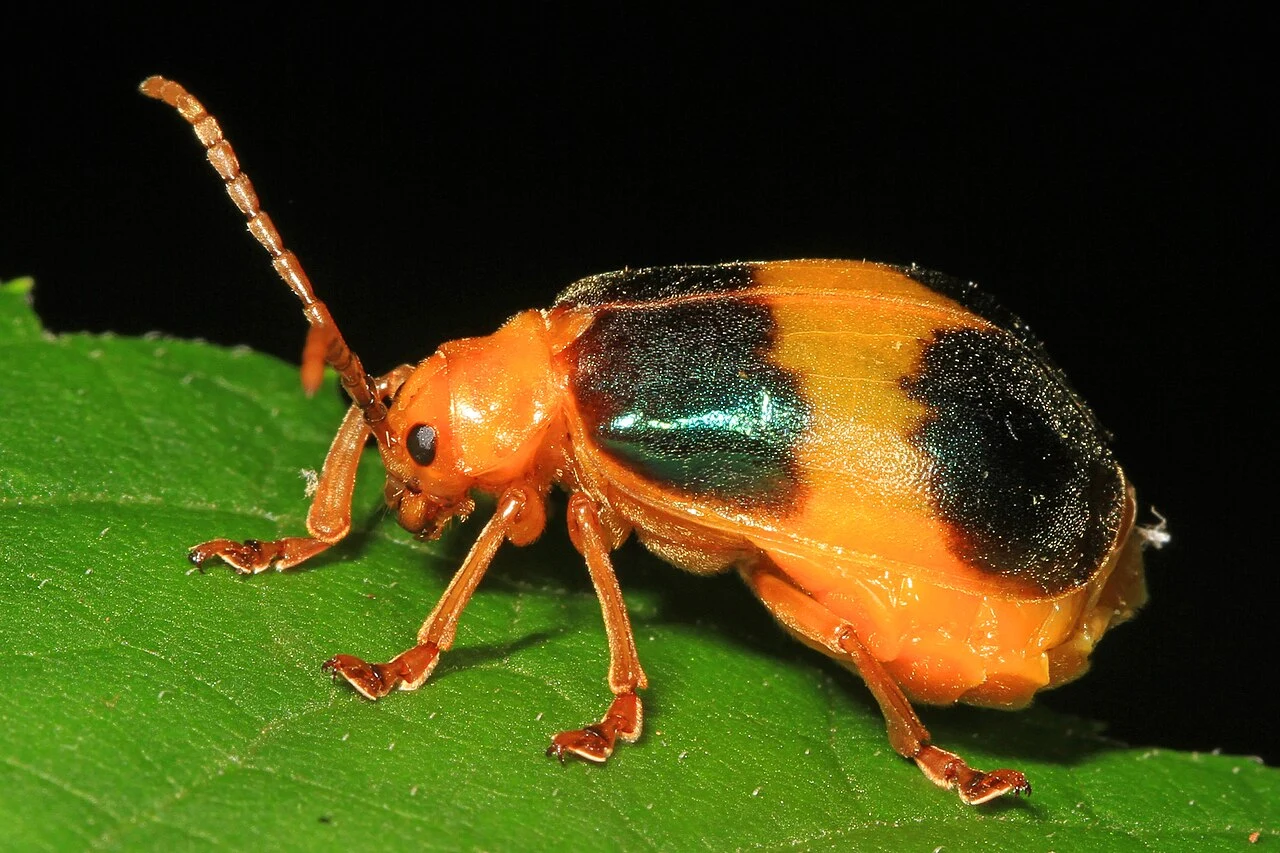
Adults are orange with four dark metallic-blue spots that may join into bands; larger larvae are orange.
Lookalikes & limits
The smaller elm leaf beetle is a different species. Confirm the orange adult and host rather than naming every elm chewer alike.
In the garden
Adults chew holes; larvae skeletonize leaves, sometimes across much of a canopy.
What would help next
Record the host plant, date, fresh damage, and a clear photograph of the animal or insect. A damage match narrows the search; it does not establish an identification.