Trees & woodland lore · Western North Carolina field companion
American elm
Ulmus americana
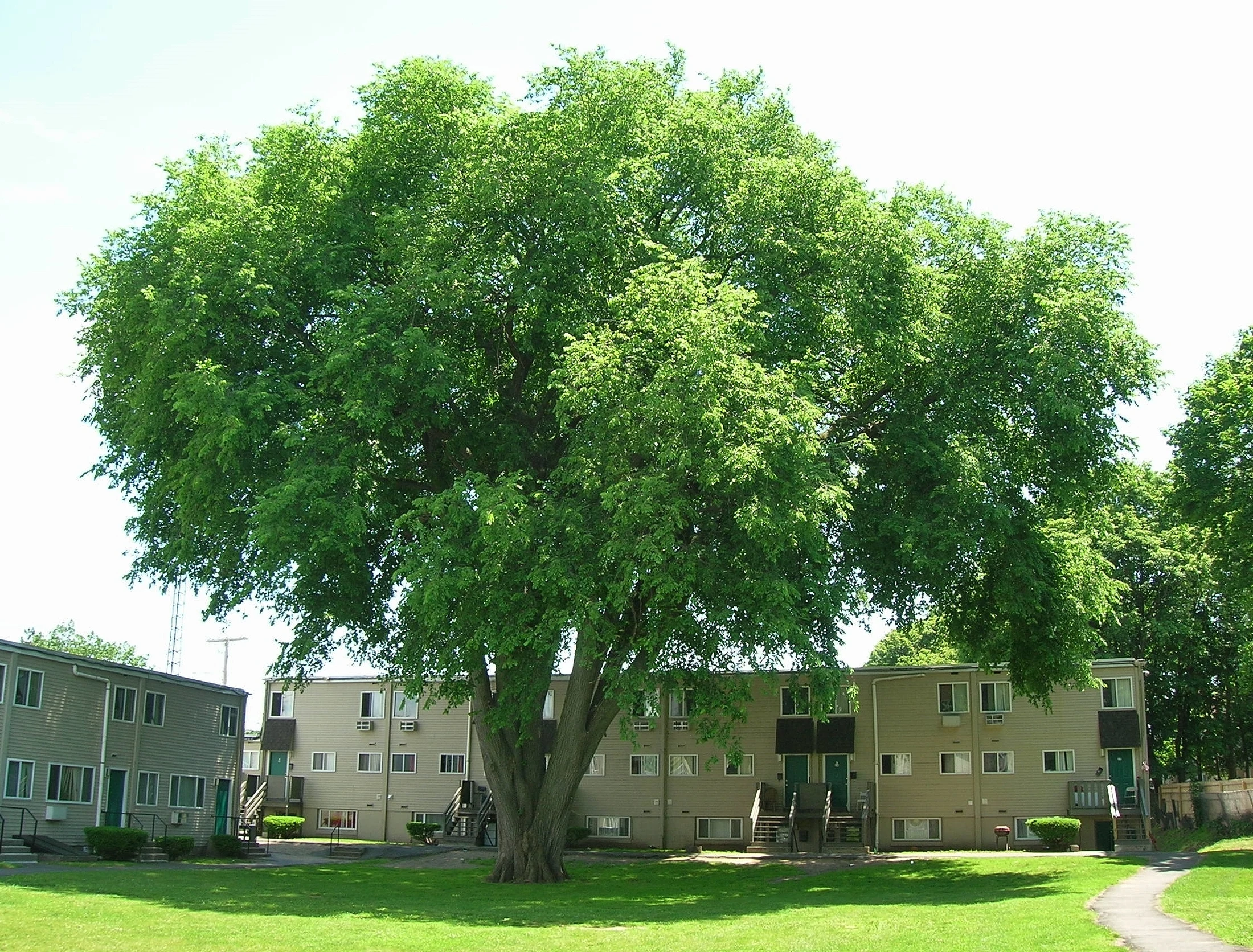
Whole tree — Ulmus americana. Species reference; the photographed specimen does not confirm the named variety. Age, pruning, and site affect its shape.☀ Full sunMarty Aligata ↗ · CC BY-SA 4.0Photo contextResized and converted to WebP; full original composition retained.
Problems to recognize in WNC gardens. These are documented susceptibilities, not a local outbreak report or a diagnosis. Weather, elevation and growing conditions change the risk.
Diseases & similar-looking injury
Dutch elm disease is a serious concern; early signs include wilting or yellowing on individual branches. Elm yellows and other wilts can also occur.
Insects to recognize
Bark beetles transmit Dutch elm disease. Leaf-feeding insects and scale may also visit.
When to look
Watch for sudden branch wilt during the growing season.
A useful first step
Seek an expert diagnosis promptly for flagging branches. Disease resistance varies among planted trees; a species name alone does not establish resistance.
More growing details
Read the leaves
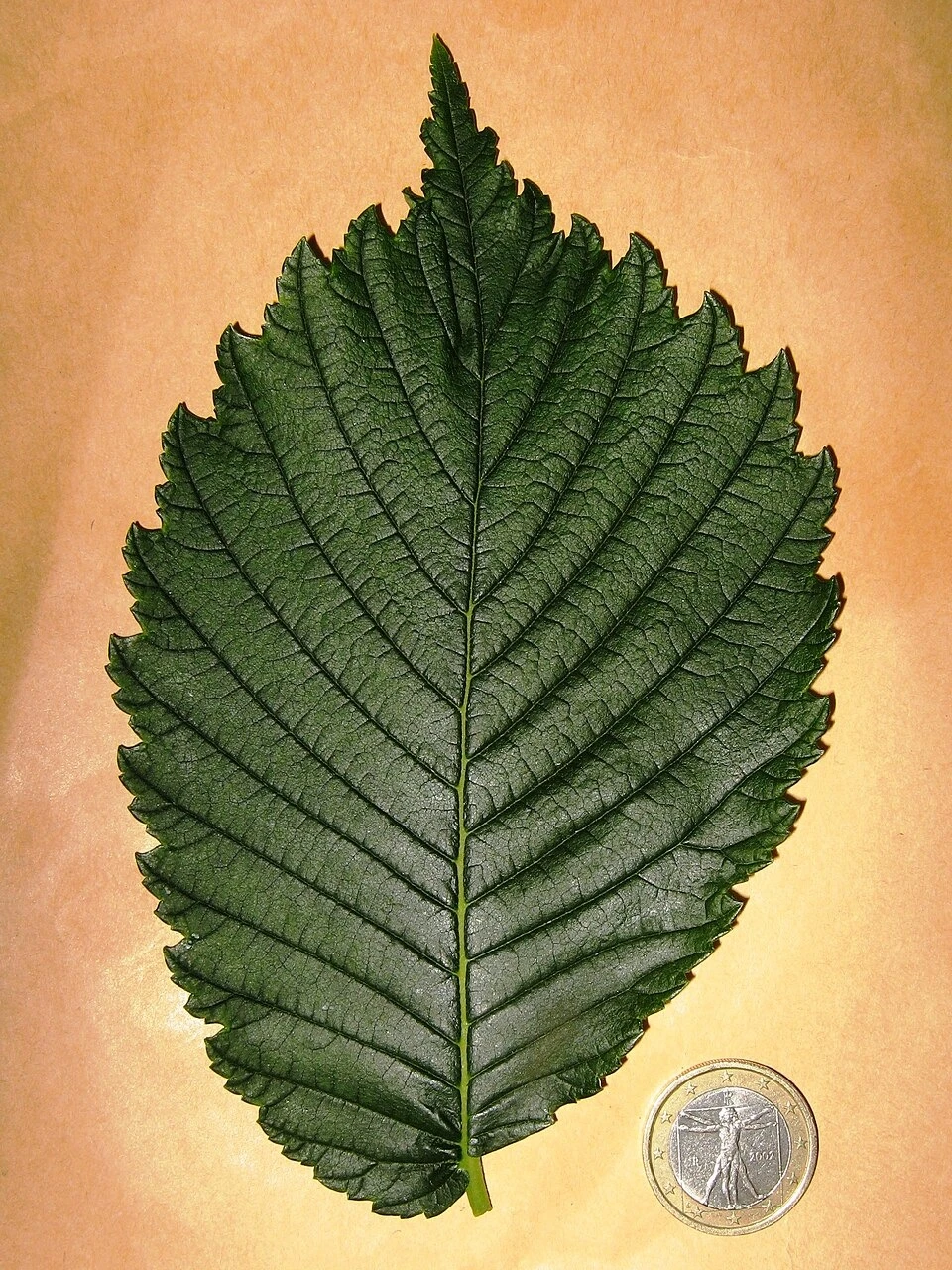
One side of the leaf base extends farther down the stalk. Prominent veins end at teeth that bear smaller teeth.
Read the bark
Gray mature bark forms interlacing ridges; it is not typically the colorful exfoliating mosaic of lacebark elm.
Fruit & seed
Flat rounded samaras form in spring, often before full leaf expansion.
Winter character
Alternate buds and a vase-shaped crown support identification but do not establish the cultivar.
Origin & place
The species occurs naturally in the southern Appalachian region; a planted specimen is not evidence of wild local origin.
WNC Notes
A native elm with substantial disease risk. Resistance differs among planted trees; inspect health and allow room for the mature crown.
Sun Exposure
Full sun
MATURE HEIGHT (FT)
60–80
MATURE WIDTH (FT)
30–60
BLOOM SEASON
Early spring
BLOOM COLOR
Inconspicuous
FALL / WINTER COLOR
Yellow
Wet-Soil Tolerance
High
Drought Tolerance
Low
LOOK CLOSELY
Two views, a closer look.
Place two photographs beside one another. Compare the overall plant with leaves, flowers, or bark when those views are available. Captions identify what each photograph actually shows. Images are not at the same scale; species references may show different cultivars.
Whole tree — Ulmus americana. Species reference; the photographed specimen does not confirm the named variety. Age, pruning, and site affect its shape.☀ Full sunMarty Aligata ↗ · CC BY-SA 4.0Photo contextResized and converted to WebP; full original composition retained.American elm leaf from the Valley Forge selection: an uneven base and doubled teeth. Species comparison only; this is not a photograph of.☀ Full sunPtelea (talk) 09:30, 24 June 2010 (UTC) ↗ · Public domainPhoto contextResized and converted to WebP; no diagnostic content altered.
Your margin of the garden.
Saved only in this browser on this device. Export your notes from My garden in the library.