Wildlife & landscape pests · Western North Carolina field companion
Japanese beetle
Popillia japonica
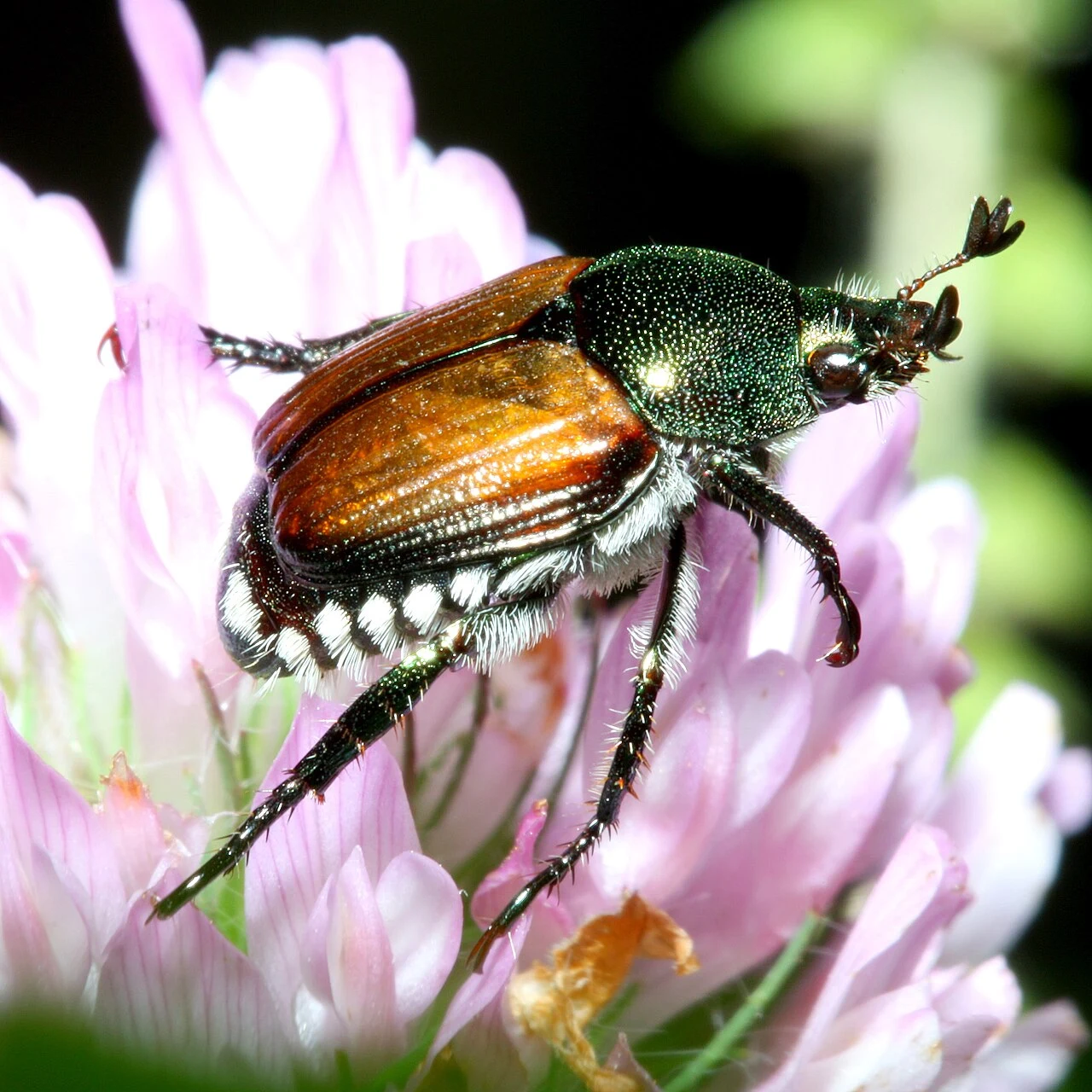
Japanese beetle · coppery wing covers and white side tuftsBruce Marlin ↗ · CC BY 3.0Photo contextThe adult foliage feeder is shown. This does not revise the identification of Holly’s original uncertain leaf-beetle image.
One of the most recognizable causes of lacy, skeletonized leaves in summer.
Roses, grapes, many trees, shrubs, and other ornamentals; larvae feed belowground.
Recognize the damage
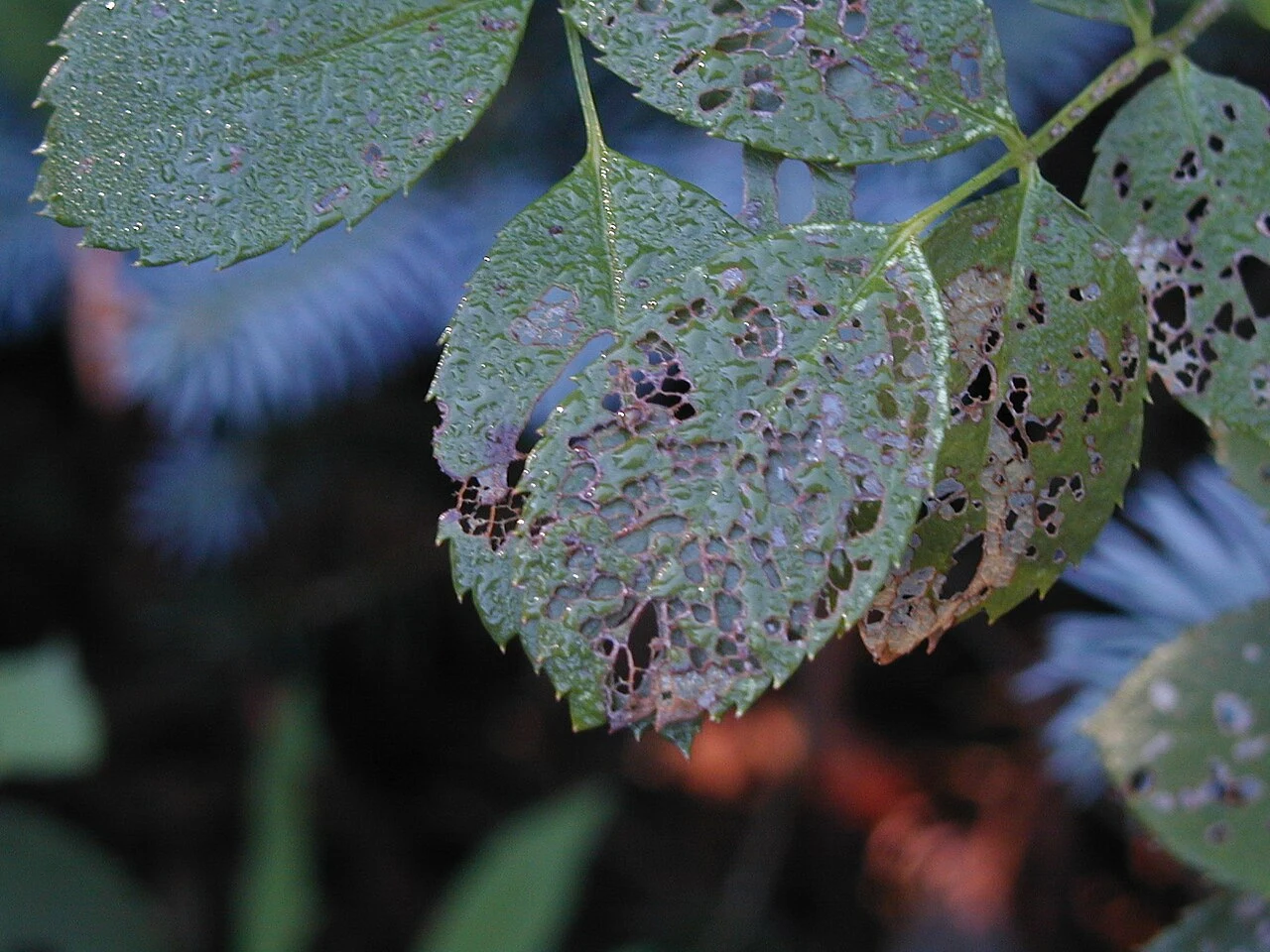
Adults remove leaf tissue between veins and can chew flowers or fruit.
Before you act
Look for actively feeding adults on fresh damage. Examine the plant as well as the beetle; lawn grubs require a separate inspection.
A sensible first response
Hand-collect manageable numbers into soapy water. Monitor new foliage and protect valued plants; treating lawn grubs does not prevent beetles arriving from elsewhere.
When to look
Adults mainly in summer; emergence shifts with elevation and weather.
In Western North Carolina
A reference to the actual species, separate from Holly's original uncertain leaf-beetle photograph and its preserved identification notes.
Identification, lookalikes & further notes
Identification
Metallic green adults have coppery wing covers and distinct white hair tufts along the abdomen.
Lookalikes & limits
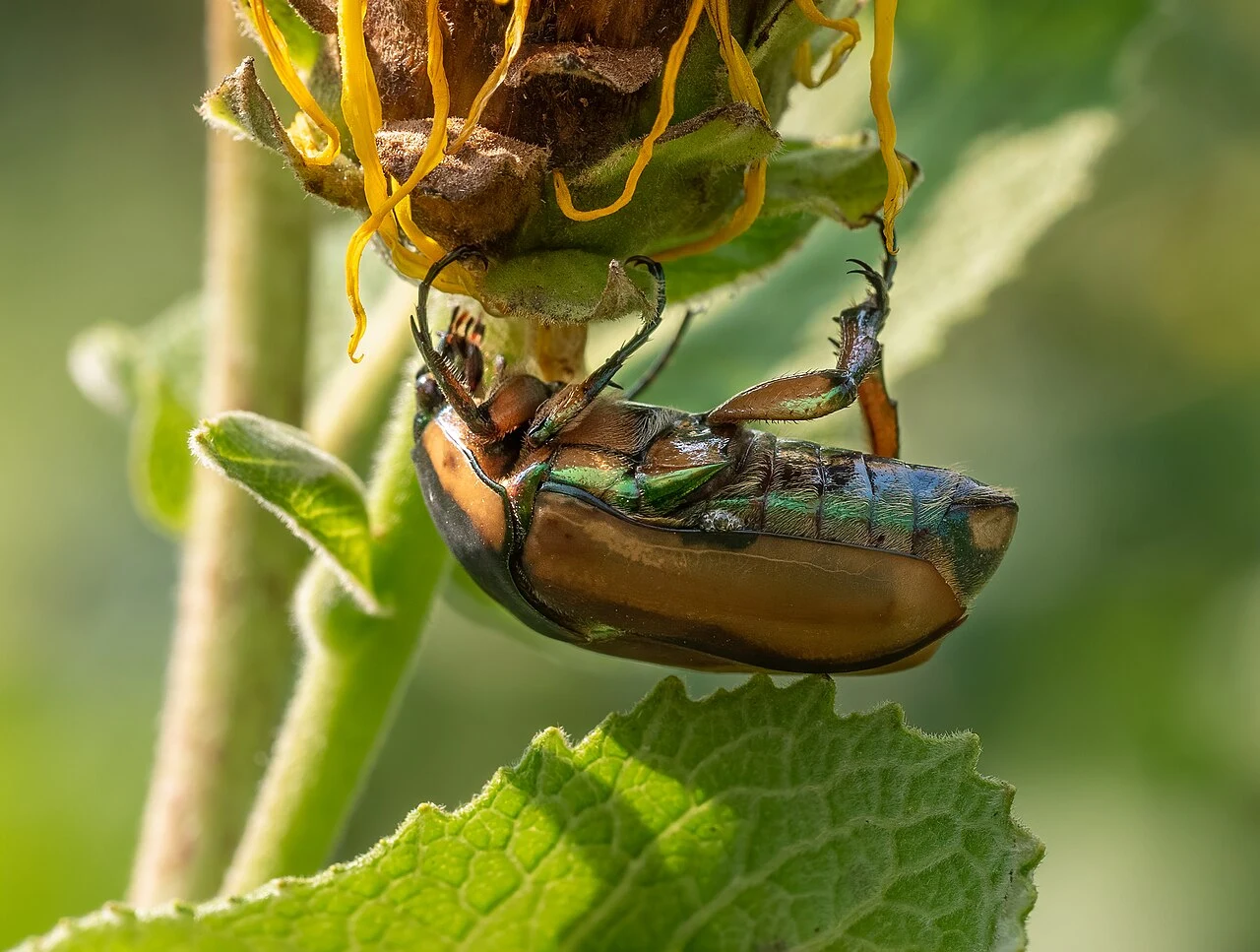
Green June beetles are larger; several other metallic leaf beetles lack the same white tufts.
In the garden
Adults remove leaf tissue between veins and can chew flowers or fruit.
What would help next
Record the host plant, date, fresh damage, and a clear photograph of the animal or insect. A damage match narrows the search; it does not establish an identification.
LOOK CLOSELY
Compare the clues.
Compare the animal or insect, its life stage, and signs of activity. Similar damage can have different causes. Images are not at the same scale; species references may show different cultivars.
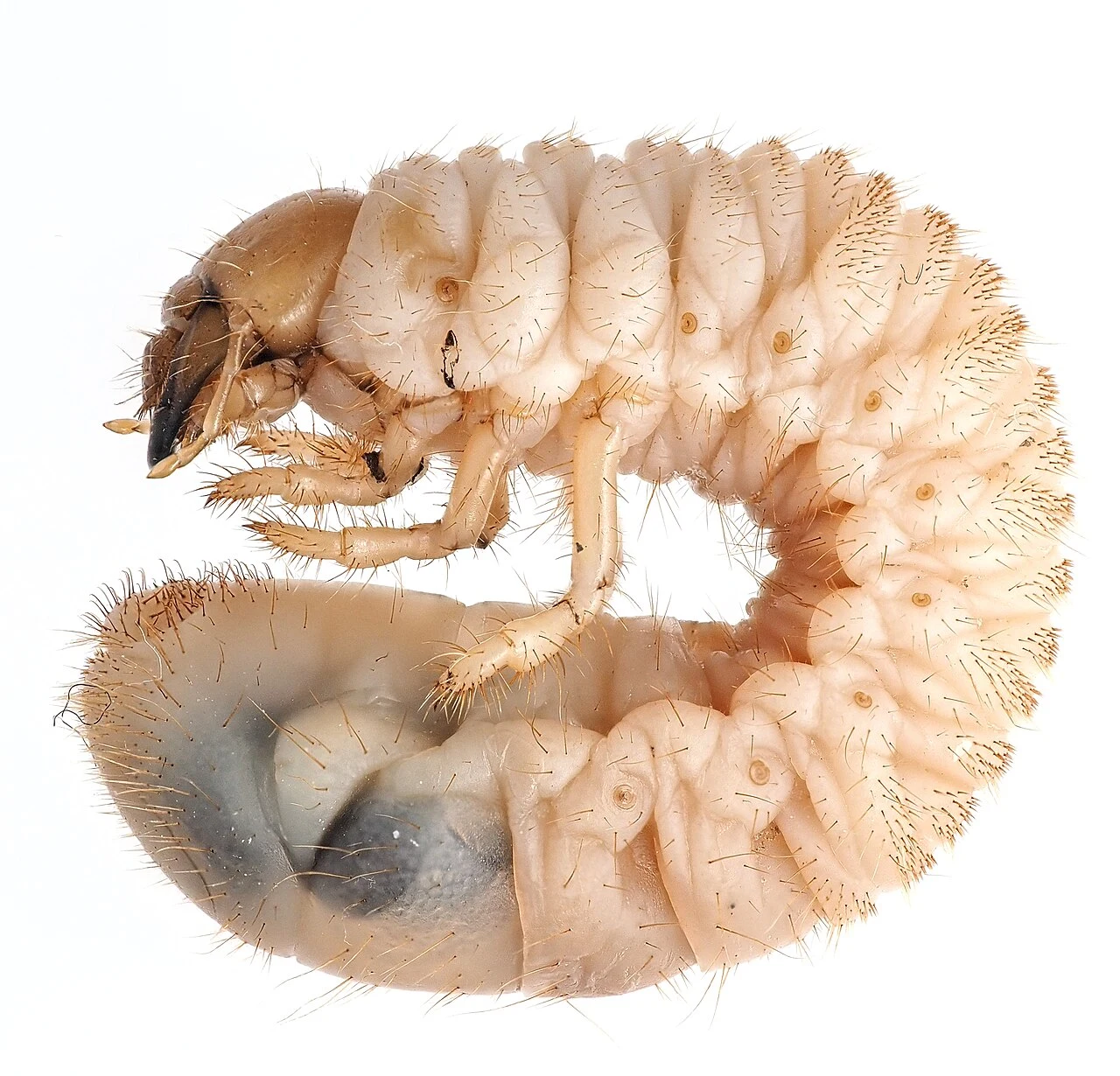
Japanese beetle · coppery wing covers and white side tuftsBruce Marlin ↗ · CC BY 3.0Photo contextThe adult foliage feeder is shown. This does not revise the identification of Holly’s original uncertain leaf-beetle image.Japanese beetle feeding damage on a rose leafUser:SB_Johnny ↗ · CC BY-SA 3.0Photo contextCompare the remaining veins with the missing tissue between them. Skeletonization alone does not identify its cause; look for the insect too. Resized and converted to WebP; full composition retained.Compare: Green June beetle · Green June beetles on vegetationRhododendrites ↗ · CC BY-SA 4.0Photo contextAdults are shown here; the large soil-dwelling grubs cause the lawn disturbance described in this profile.Compare: White grubs · Japanese beetle grub · one member of the white-grub groupGilles San Martin from Namur, Belgium ↗ · CC BY-SA 2.0Photo contextThe six legs and curled body are visible. Other scarab grubs need additional features to distinguish them.



.jpg)
.jpg)