Wildlife & landscape pests · Western North Carolina field companion
Green June beetle
Cotinis nitida
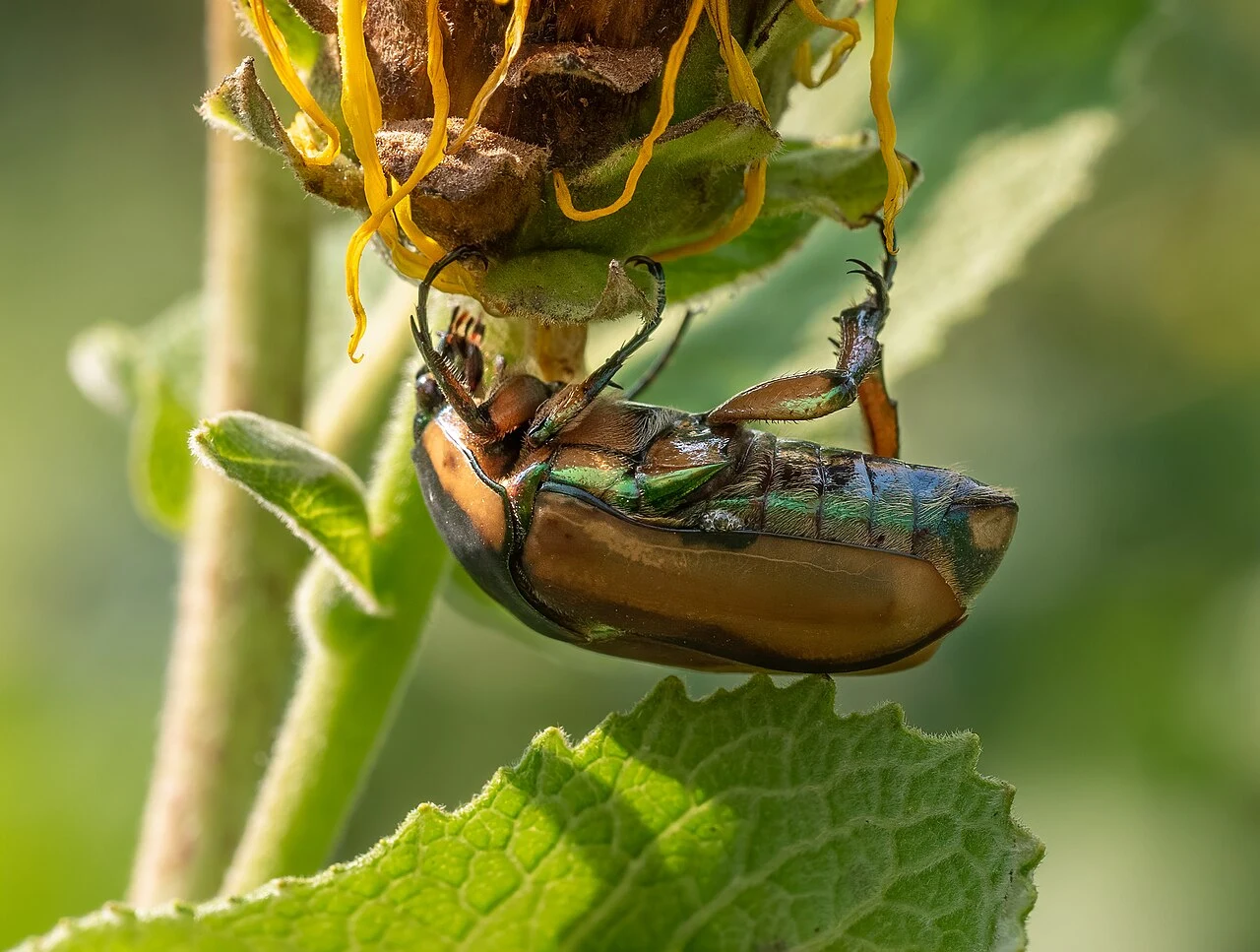
Green June beetles on vegetationRhododendrites ↗ · CC BY-SA 4.0Photo contextAdults are shown here; the large soil-dwelling grubs cause the lawn disturbance described in this profile.
Large buzzing beetles and large soil-tunneling grubs belong to the same life cycle.
Organic-rich turf soil; adults also visit ripe fruit.
Recognize the damage
Grub burrows and soil mounds can loosen turf; some feeding also damages roots.
Before you act
Inspect disturbed turf for burrows and large larvae, especially following rain; assess actual root and canopy injury.
A sensible first response
Avoid excessive organic additions that favor heavy populations. Base any grub response on confirmed injury, not noisy adults passing through.
When to look
Adults in late spring and summer; larvae feed from late summer and resume in spring.
In Western North Carolina
Useful in WNC lawns and gardens; mechanical soil disturbance can be as noticeable as feeding.
Identification, lookalikes & further notes
Identification
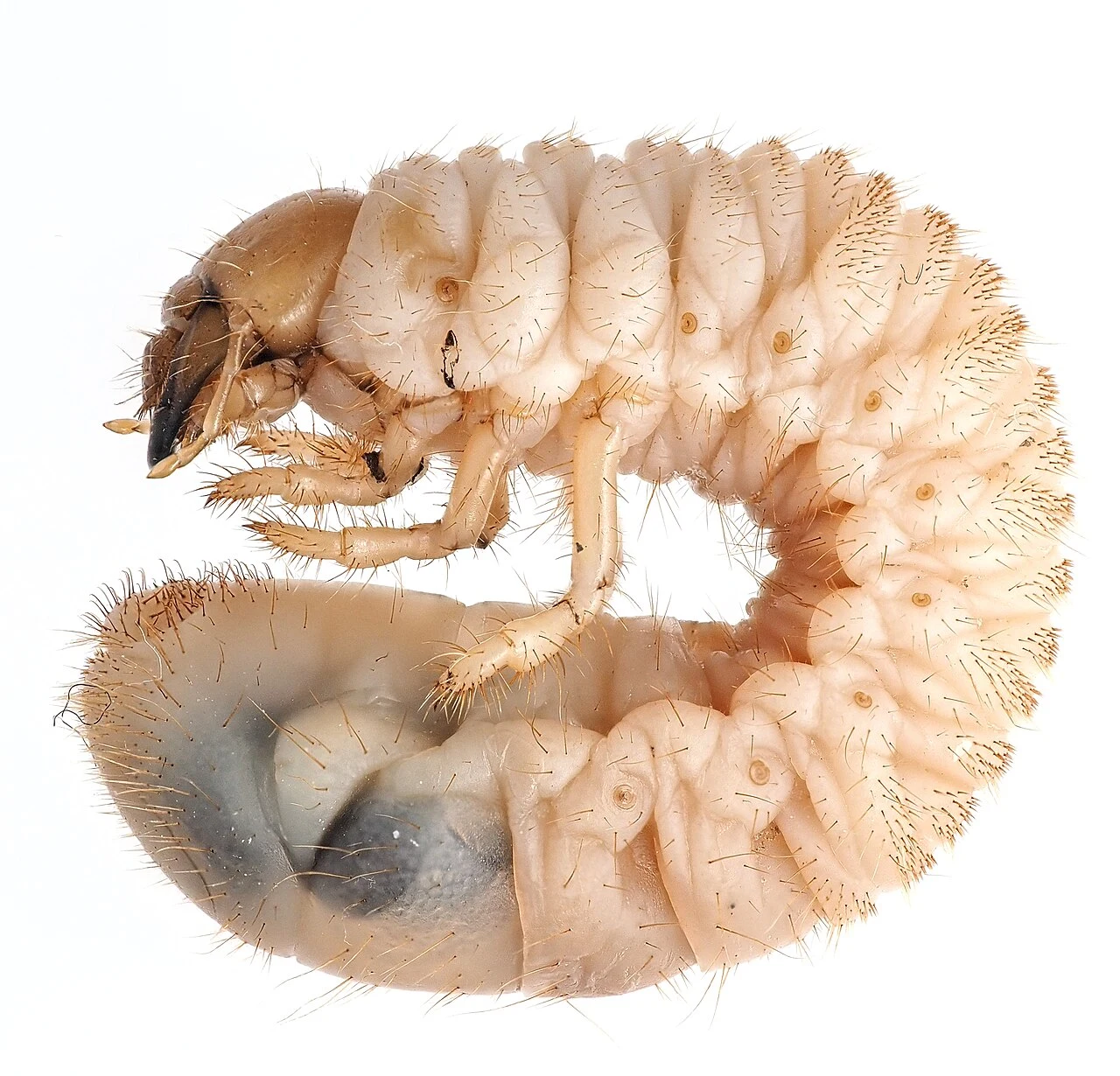
Adults are velvety green with yellowish margins. Large pale grubs characteristically crawl on their backs at the surface.
Lookalikes & limits
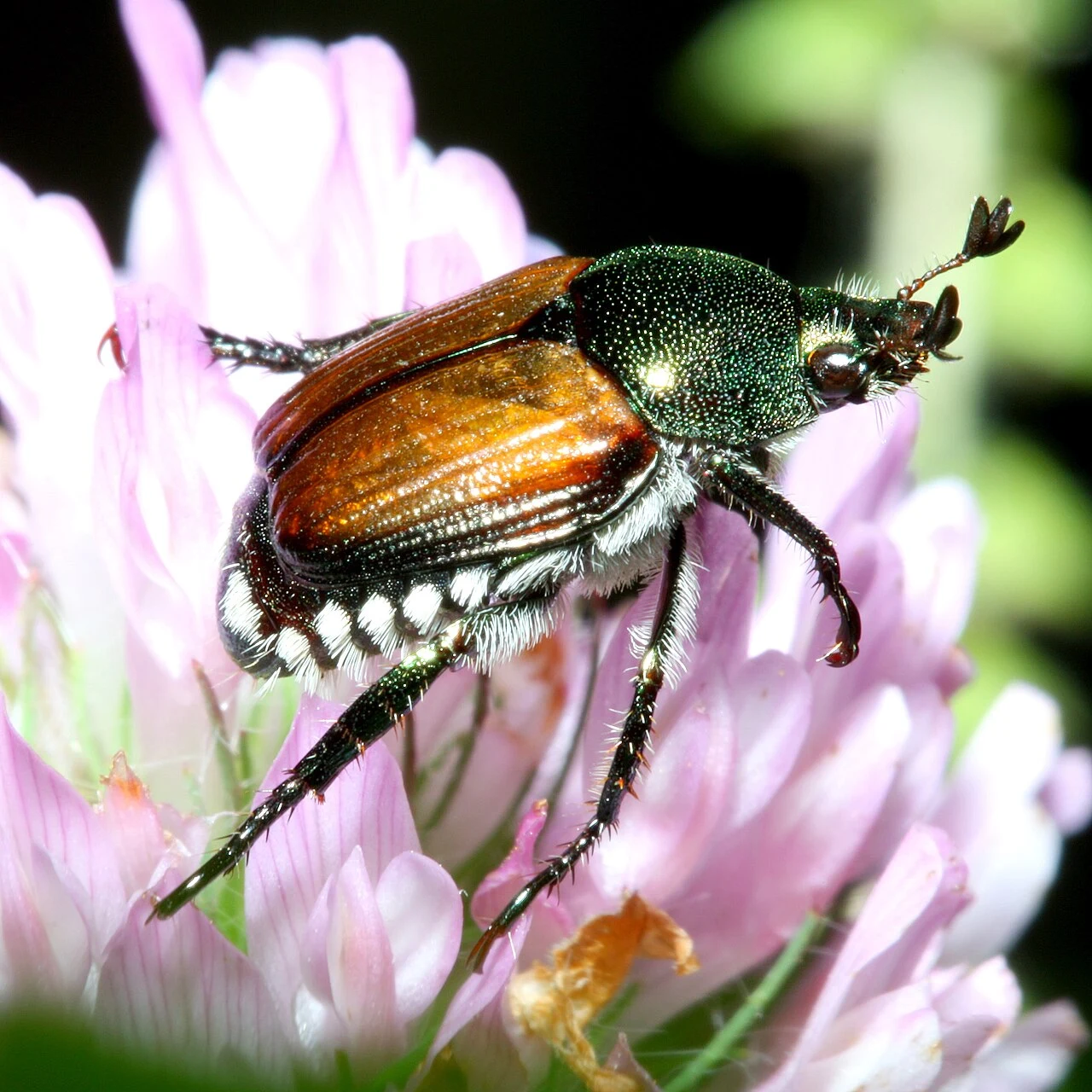
Japanese beetles are smaller, with coppery wing covers and white abdominal tufts; not every green beetle is this species.
In the garden
Grub burrows and soil mounds can loosen turf; some feeding also damages roots.
What would help next
Record the host plant, date, fresh damage, and a clear photograph of the animal or insect. A damage match narrows the search; it does not establish an identification.
LOOK CLOSELY
Compare the clues.
Compare the animal or insect, its life stage, and signs of activity. Similar damage can have different causes. Images are not at the same scale; species references may show different cultivars.
Green June beetles on vegetationRhododendrites ↗ · CC BY-SA 4.0Photo contextAdults are shown here; the large soil-dwelling grubs cause the lawn disturbance described in this profile.Compare: Japanese beetle · Japanese beetle · coppery wing covers and white side tuftsBruce Marlin ↗ · CC BY 3.0Photo contextThe adult foliage feeder is shown. This does not revise the identification of Holly’s original uncertain leaf-beetle image.Compare: White grubs · Japanese beetle grub · one member of the white-grub groupGilles San Martin from Namur, Belgium ↗ · CC BY-SA 2.0Photo contextThe six legs and curled body are visible. Other scarab grubs need additional features to distinguish them.

.jpg)

.jpg)