
.jpg)
In the landscape.
Plants & places
Turfgrass roots; several scarab beetle species share this feeding stage.
Recognize the damage
Irregular thinning patches; severely root-damaged sod lifts unusually easily.
Before you act
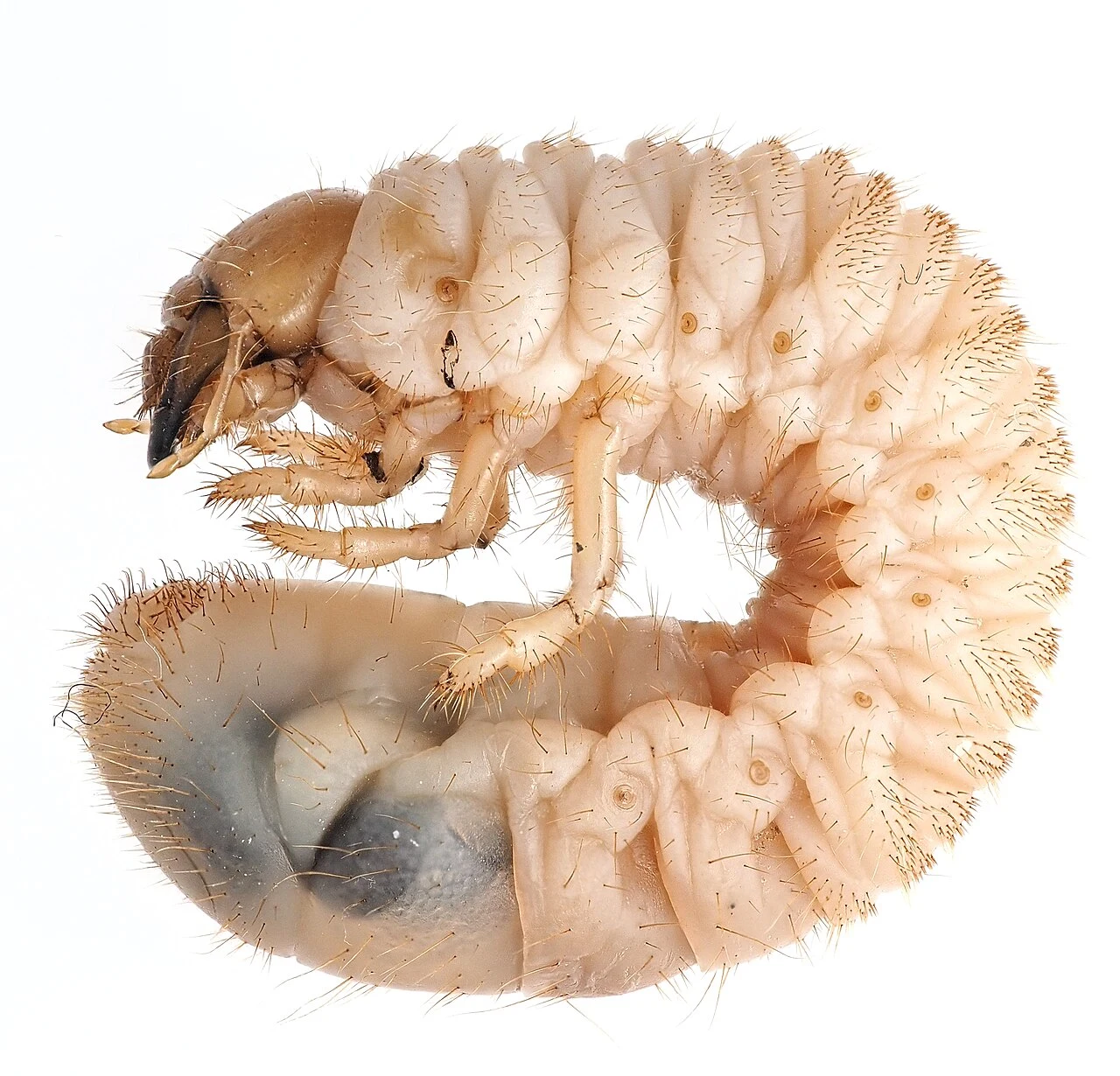
Lift small sections at the boundary of healthy and damaged turf. Record grub counts and root condition; identification may require the underside of the tail.
A sensible first response
Confirm damaging numbers before treating. Support grass recovery with appropriate mowing and watering; ask Extension which species and life stage any treatment must target.
When to look
Inspect during active feeding in spring and late summer; timing differs among species.
In Western North Carolina
Relevant to mountain lawns, but a few grubs or visiting adult beetles do not establish a lawn infestation.
Identification, lookalikes & further notes
Identification
Cream-colored, usually C-shaped larvae have a brown head and three pairs of legs near the head.
Lookalikes & limits
Billbug larvae lack legs. Drought and disease also brown grass; green June beetle grubs cause substantial tunneling injury.
In the garden
Irregular thinning patches; severely root-damaged sod lifts unusually easily.
What would help next
Record the host plant, date, fresh damage, and a clear photograph of the animal or insect. A damage match narrows the search; it does not establish an identification.