Dogwood, apple, and several other hardwoods; dwarf apple rootstocks are susceptible.
Recognize the damage
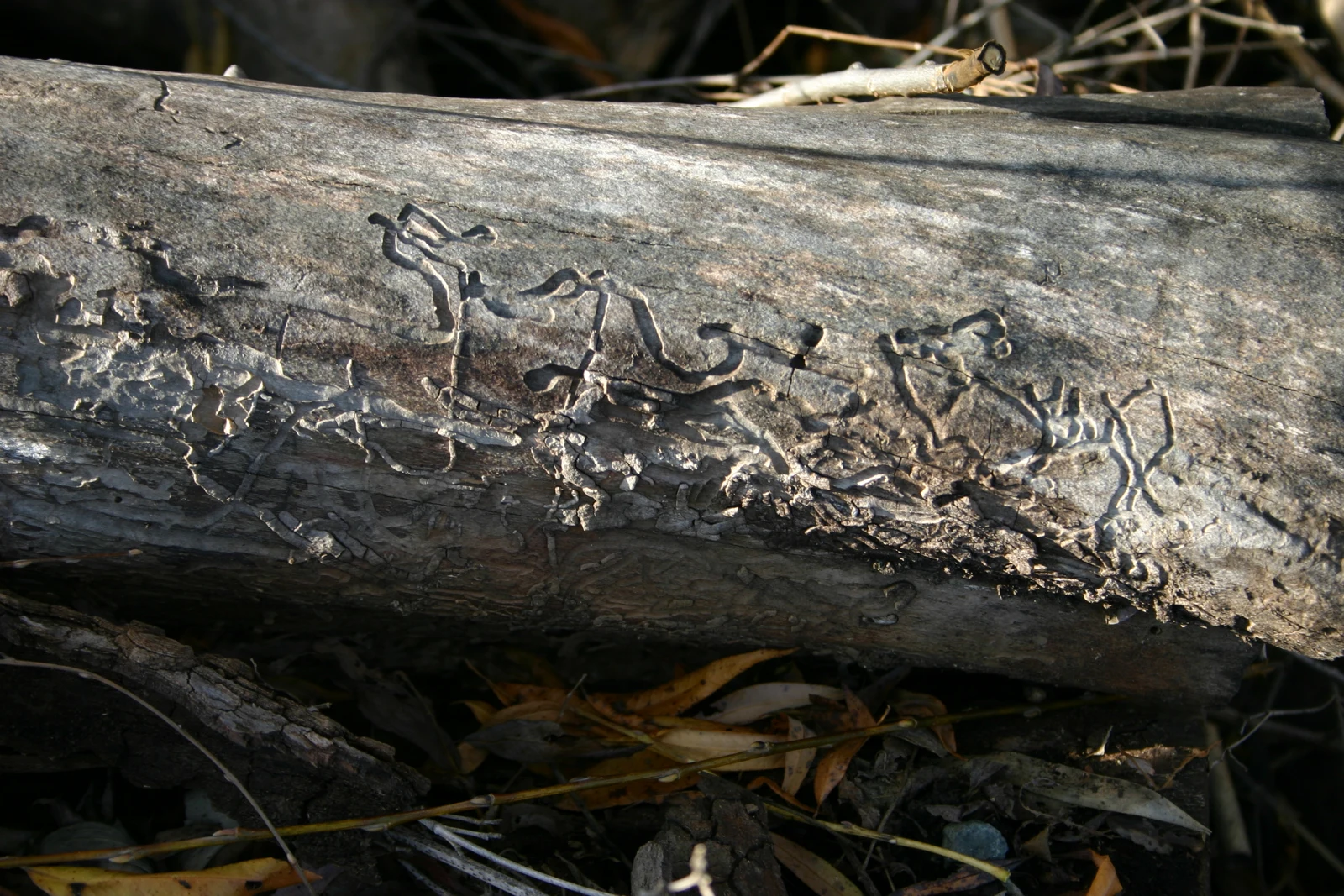
Crumbly reddish frass, damaged bark, and sometimes protruding empty pupal skins around feeding sites.
Before you act
Inspect the lower trunk, existing wounds, and apple burr knots; photograph frass without cutting into healthy bark.
A sensible first response
Prevent mower and string-trimmer injuries and keep trunks visible above mulch. Obtain a diagnosis for active borer injury before selecting a timed treatment.
When to look
Adults fly during the warmer growing season; larvae develop inside host tissue.
In Western North Carolina
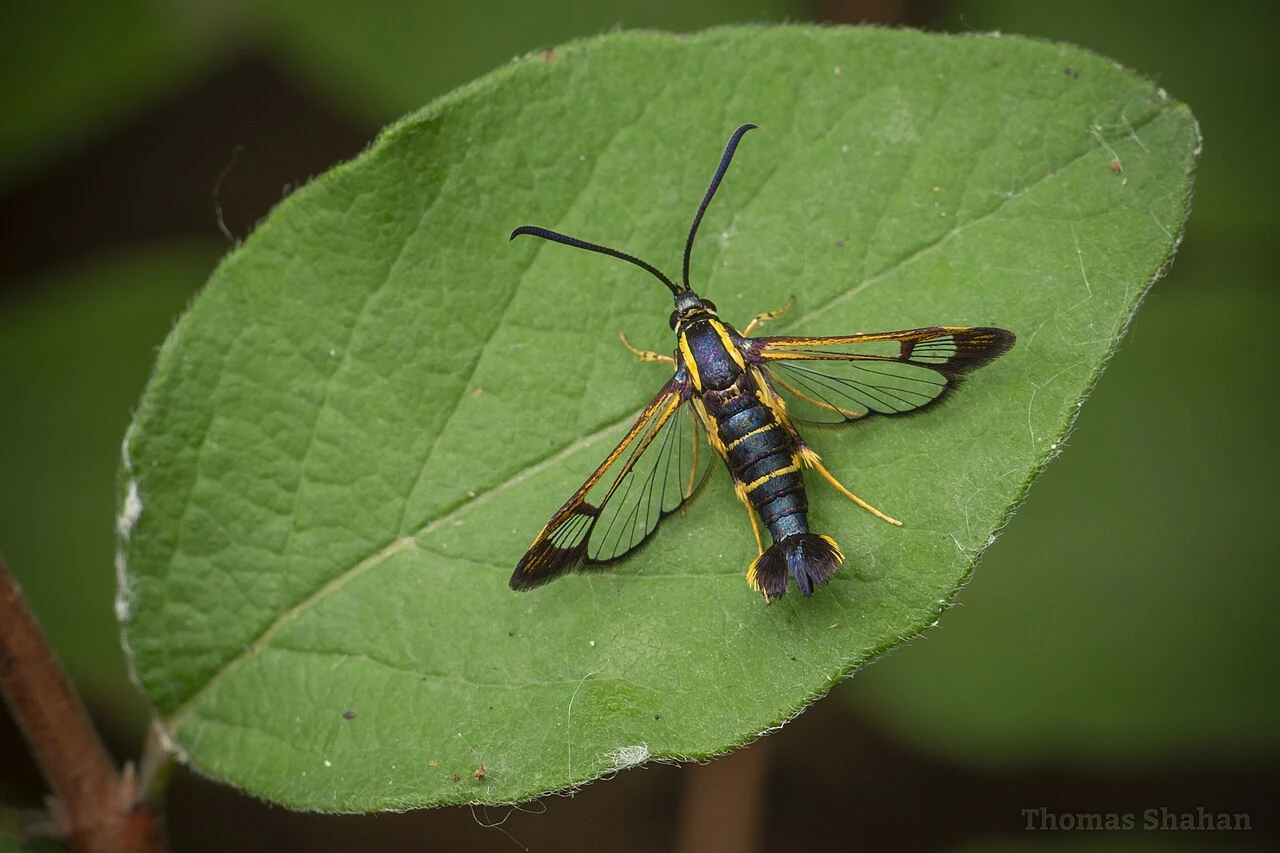
Relevant to WNC ornamental dogwoods and home orchards; the adult photograph illustrates the moth, not the concealed larva.
Identification, lookalikes & further notes
Identification
Adults are small clearwing moths with black-and-yellow markings; larvae are hidden beneath bark.
Lookalikes & limits
Other clearwing borers resemble them. Cankers and mechanical damage can occur without a borer.
In the garden
Crumbly reddish frass, damaged bark, and sometimes protruding empty pupal skins around feeding sites.
What would help next
Record the host plant, date, fresh damage, and a clear photograph of the animal or insect. A damage match narrows the search; it does not establish an identification.
LOOK CLOSELY
Two views, a closer look.
Place two photographs beside one another. Compare the overall plant with leaves, flowers, or bark when those views are available. Captions identify what each photograph actually shows. Images are not at the same scale; species references may show different cultivars.
Dogwood borer · a wasp-like clearwing mothThomas Shahan 3 ↗ · CC BY 2.0Photo contextThe adult is pictured; larvae cause the concealed bark injury.Dogwood borer galleries visible beneath dogwood barkUser:SB_Johnny ↗ · CC BY-SA 3.0Photo contextThe photographer identifies these galleries as dogwood borer injury. A photographed adult or larva is still needed to confirm a new local case. Resized and converted to WebP; full composition retained.
Your margin of the garden.
Saved only in this browser on this device. Export your notes from My garden in the library.