Trees & woodland lore · Western North Carolina field companion
Hybrid crabapple
Malus
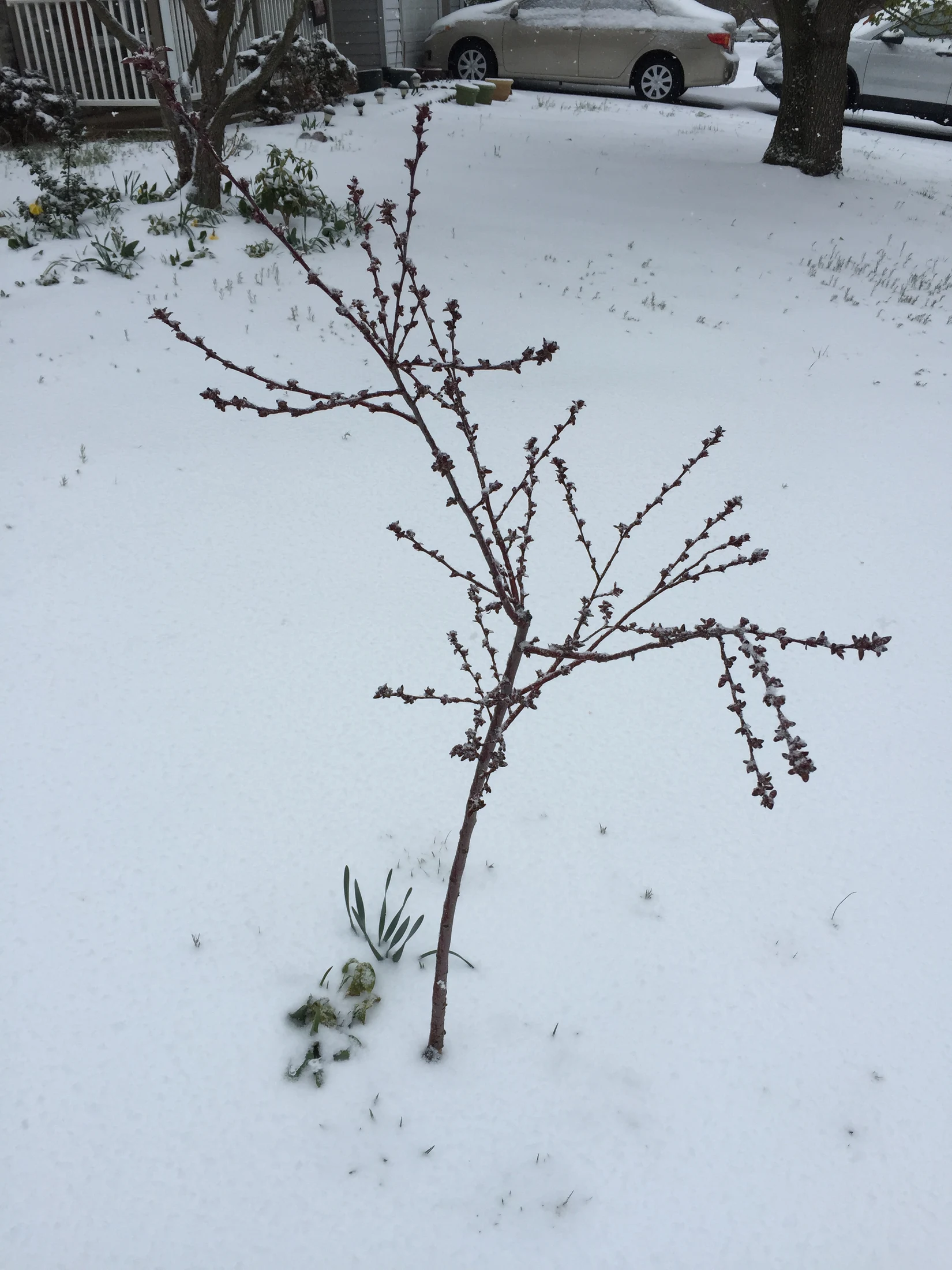
Young crabapple in winter. The source identifies the variety; this sapling does not show the mature canopy.☀ Full sun · ◐ Part sun or part shadeFamartin ↗ · CC BY-SA 4.0Photo contextResized and converted to WebP; full original composition retained.
Problems to recognize in WNC gardens. These are documented susceptibilities, not a local outbreak report or a diagnosis. Weather, elevation and growing conditions change the risk.
Diseases & similar-looking injury
Apple scab is a key concern; rust, fire blight and mildew are also apple-family problems to recognize. Resistance varies among garden trees.
Insects to recognize
Inspect for aphids, scale and leaf-feeding insects when foliage is sticky, distorted or eaten.
When to look
Check flowers and new shoots in spring, then leaves during wet spring and summer weather.
A useful first step
Photograph blackened shoots and spotted leaves. Have fire blight distinguished from other injury; repeated early leaf drop deserves attention.
More growing details
Read the leaves
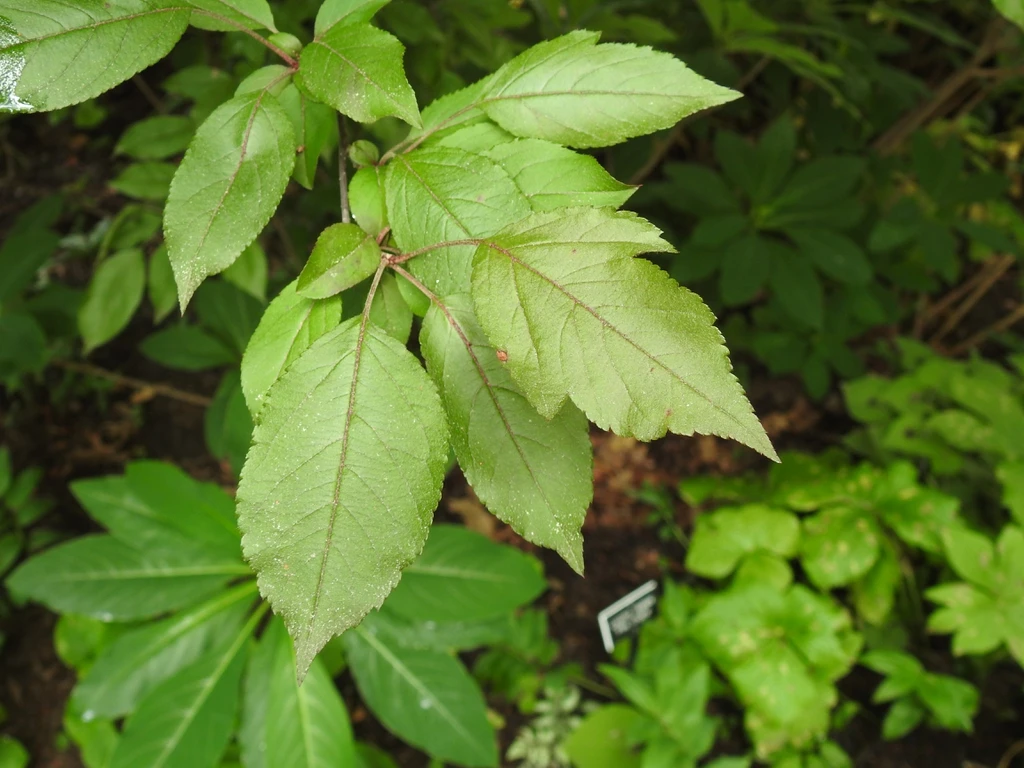
Simple toothed leaves may have a bronze or purplish cast. Color is supporting evidence, not proof of a cultivar.
Read the bark
Gray-brown bark becomes scaly on older wood.
Fruit & seed
Small apple-like fruits follow flowering; color and persistence vary among garden hybrids. Look for the persistent calyx at the fruit tip.
Winter character
Short fruiting spurs and remaining small apples support a crabapple identification.
Origin & place
An introduced garden species or horticultural hybrid; study it as part of WNC landscapes rather than assume it belongs to the native mountain flora.
WNC Notes
Garden crabapples vary in mature size, flower color and disease resistance. Consider fruit drop and wildlife activity when choosing a site.
Sun Exposure
Full sun–part shade
MATURE HEIGHT (FT)
15–26
MATURE WIDTH (FT)
10–20
BLOOM SEASON
Mid spring
BLOOM COLOR
Catkins
FALL / WINTER COLOR
Orange-red; red fruit-brown
Wet-Soil Tolerance
Low–high
Drought Tolerance
Low
LOOK CLOSELY
Two views, a closer look.
Place two photographs beside one another. Compare the overall plant with leaves, flowers, or bark when those views are available. Captions identify what each photograph actually shows. Images are not at the same scale; species references may show different cultivars.
Young crabapple in winter. The source identifies the variety; this sapling does not show the mature canopy.☀ Full sun · ◐ Part sun or part shadeFamartin ↗ · CC BY-SA 4.0Photo contextResized and converted to WebP; full original composition retained.Crabapple comparison — does not establish cultivar. This hybrid crabapple leaf illustrates the broad, simple, toothed leaf form of the group.☀ Full sun · ◐ Part sun or part shadeKathleen Moore ↗ · CC BY 2.0Photo contextResized and converted to WebP; no diagnostic content altered.
Your margin of the garden.
Saved only in this browser on this device. Export your notes from My garden in the library.