Wildlife & landscape pests · Western North Carolina field companion
Eastern tent caterpillar
Malacosoma americanum
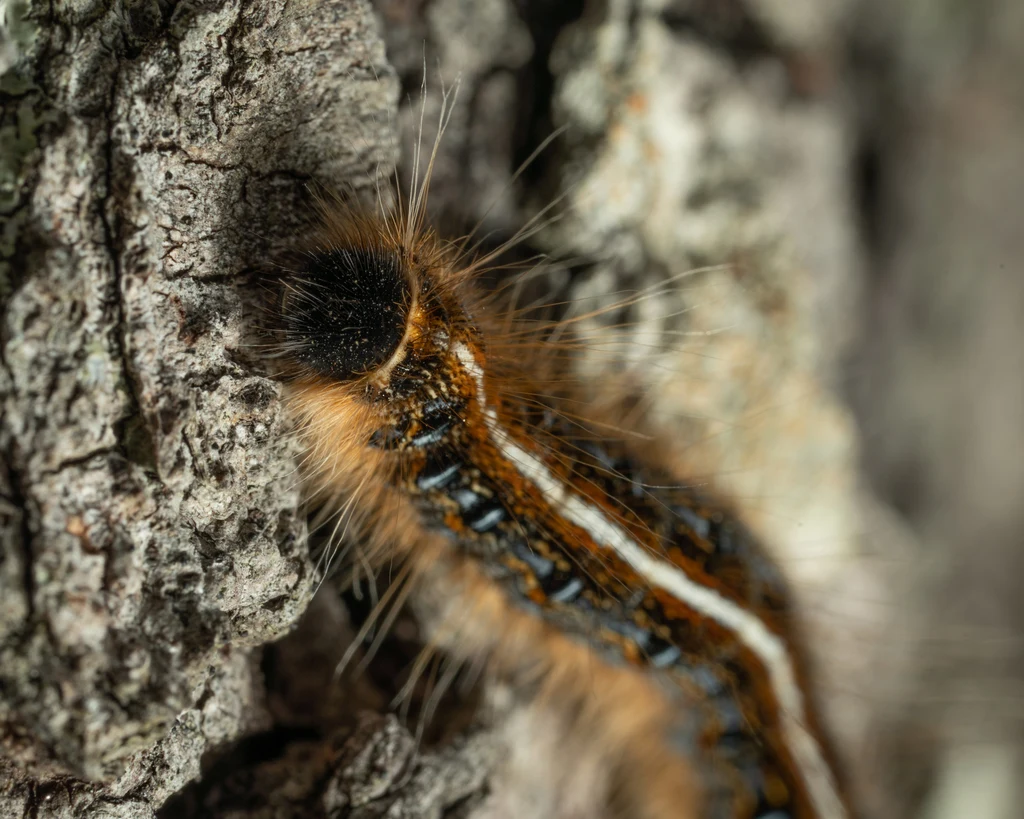
Eastern tent caterpillar · continuous pale back stripeCurtis Meyers ↗ · CC BY-SA 4.0Photo contextThe photo source uses Malacosoma americana, while the NC reference uses M. americanum.
A spring tent in a branch fork belongs to a different caterpillar than late-summer web nests.
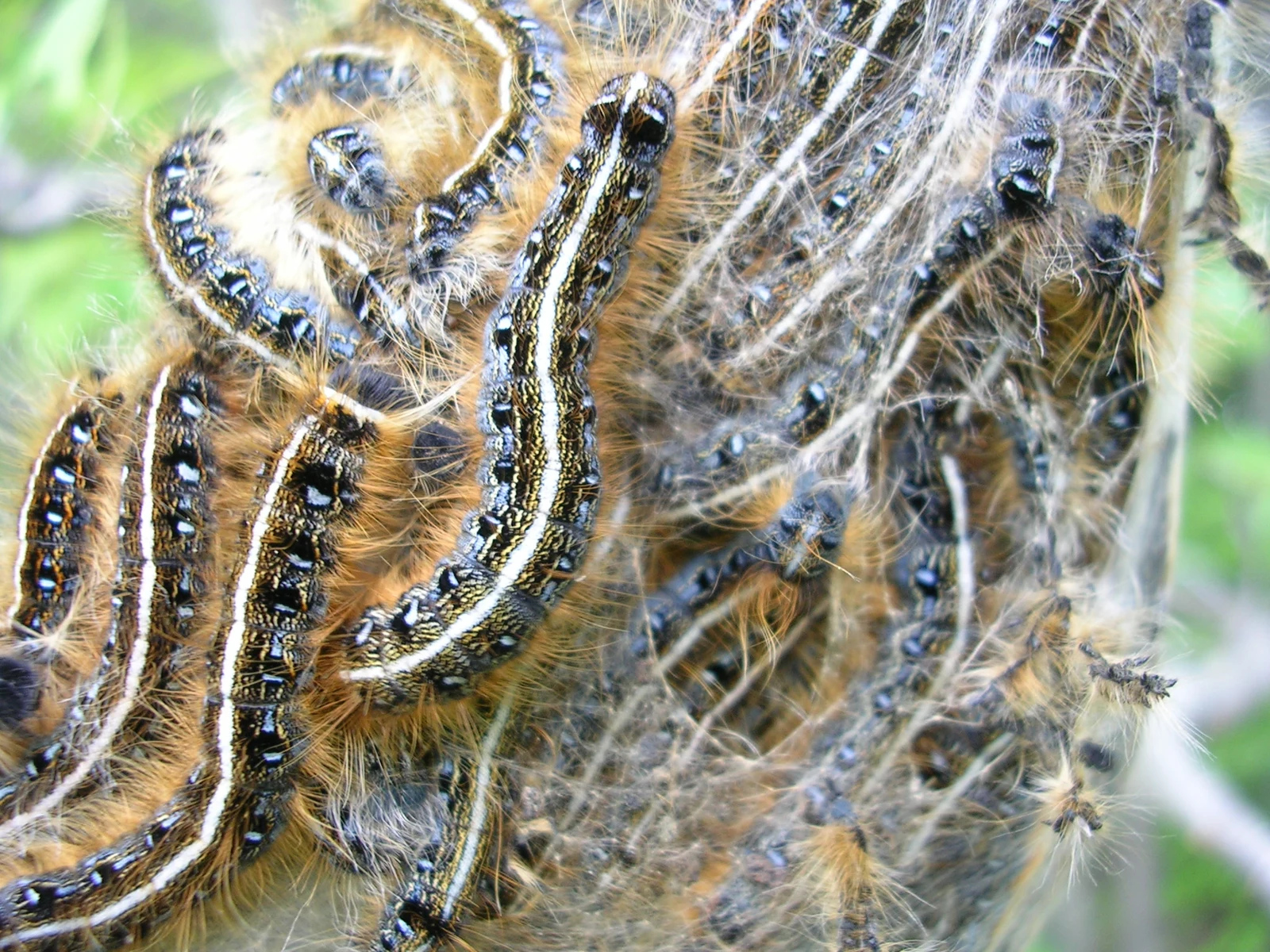
Leaves are eaten outside a silk tent built at a branch crotch.
Before you act
Check branch forks as buds open and look for encircling egg masses on small twigs during dormancy.
A sensible first response
Remove reachable egg masses or small occupied tents if a young tree needs protection. Never burn tents; established trees often tolerate limited feeding.
When to look
One spring generation; old empty tents may remain after feeding ends.
In Western North Carolina
Common on woodland-edge cherries and ornamental relatives in WNC; a tent alone does not mean a tree will die.
Identification, lookalikes & further notes
Identification
Dark, somewhat hairy larvae have a continuous pale stripe down the back with blue and gold markings.
Lookalikes & limits
Forest tent caterpillars have separate pale back spots; fall webworms enclose foliage at branch ends later in the season.
In the garden
Leaves are eaten outside a silk tent built at a branch crotch.
What would help next
Record the host plant, date, fresh damage, and a clear photograph of the animal or insect. A damage match narrows the search; it does not establish an identification.
LOOK CLOSELY
Two views, a closer look.
Place two photographs beside one another. Compare the overall plant with leaves, flowers, or bark when those views are available. Captions identify what each photograph actually shows. Images are not at the same scale; species references may show different cultivars.
Eastern tent caterpillar · continuous pale back stripeCurtis Meyers ↗ · CC BY-SA 4.0Photo contextThe photo source uses Malacosoma americana, while the NC reference uses M. americanum.Eastern tent caterpillars gathered in their silk tentJ.R. Carmichael ↗ · Public domainPhoto contextThe silk tent is a visible sign on host branches; this close photograph does not measure foliage loss. Resized and converted to WebP; full composition retained.
Your margin of the garden.
Saved only in this browser on this device. Export your notes from My garden in the library.

.JPG)