
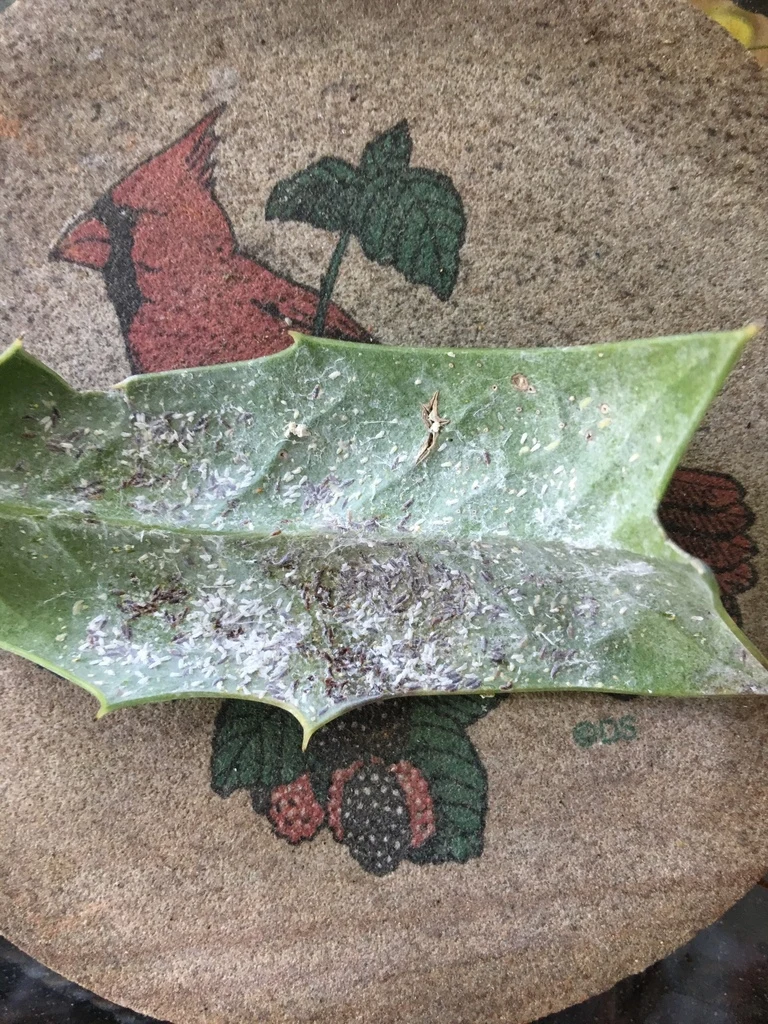
In the landscape.
Plants & places
Camellias and hollies, among other susceptible ornamentals.
Recognize the damage
Yellow blotches, reduced vigor, and leaf drop when infestations are heavy.
Before you act
Examine undersides of discolored leaves with a lens and check for live scales or newly moving crawlers.
A sensible first response
Reduce crowding and remove severely affected material where appropriate. Time further action to active stages; Florida year-round schedules do not directly fit mountain gardens.
When to look
Inspect during the growing season; warmer sites can support prolonged activity.
In Western North Carolina
Most relevant where susceptible camellias and hollies are grown in sheltered, milder WNC sites.
Identification, lookalikes & further notes
Identification
Brown female covers and smaller pale male covers crowd leaf undersides, which can appear whitish or fuzzy.
Lookalikes & limits
Cottony camellia scale has conspicuous egg sacs and produces honeydew; tea scale is armored and does not.
In the garden
Yellow blotches, reduced vigor, and leaf drop when infestations are heavy.
What would help next
Record the host plant, date, fresh damage, and a clear photograph of the animal or insect. A damage match narrows the search; it does not establish an identification.