Skip to the profile
THE GARDEN SAGEA library of living things
Wildlife & landscape pests · Western North Carolina field companion

Emerald ash borer

Agrilus planipennis

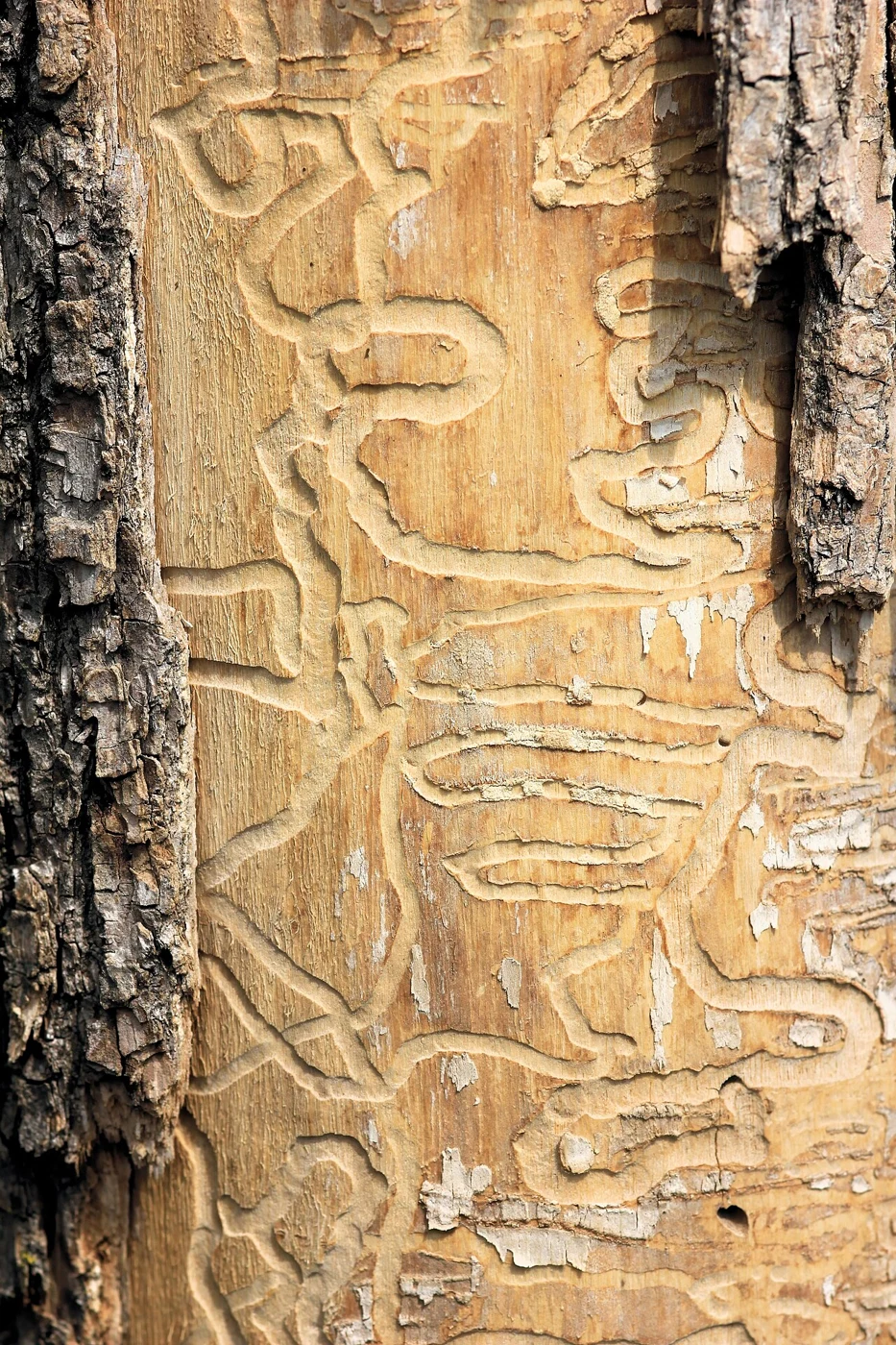
Emerald ash borer galleries beneath removed bark
Emerald ash borer galleries beneath removed barkImagePerson ↗ · CC BY 4.0
Photo contextA damage reference; confirm the host and other signs with a tree-health professional.

A small metallic beetle can cause serious decline long before an ash looks beyond help.

Record
Landscape reference
Open in the illustrated book →

In the landscape.

Plants & places

True ash trees, Fraxinus; white fringetree is a secondary host.

Recognize the damage

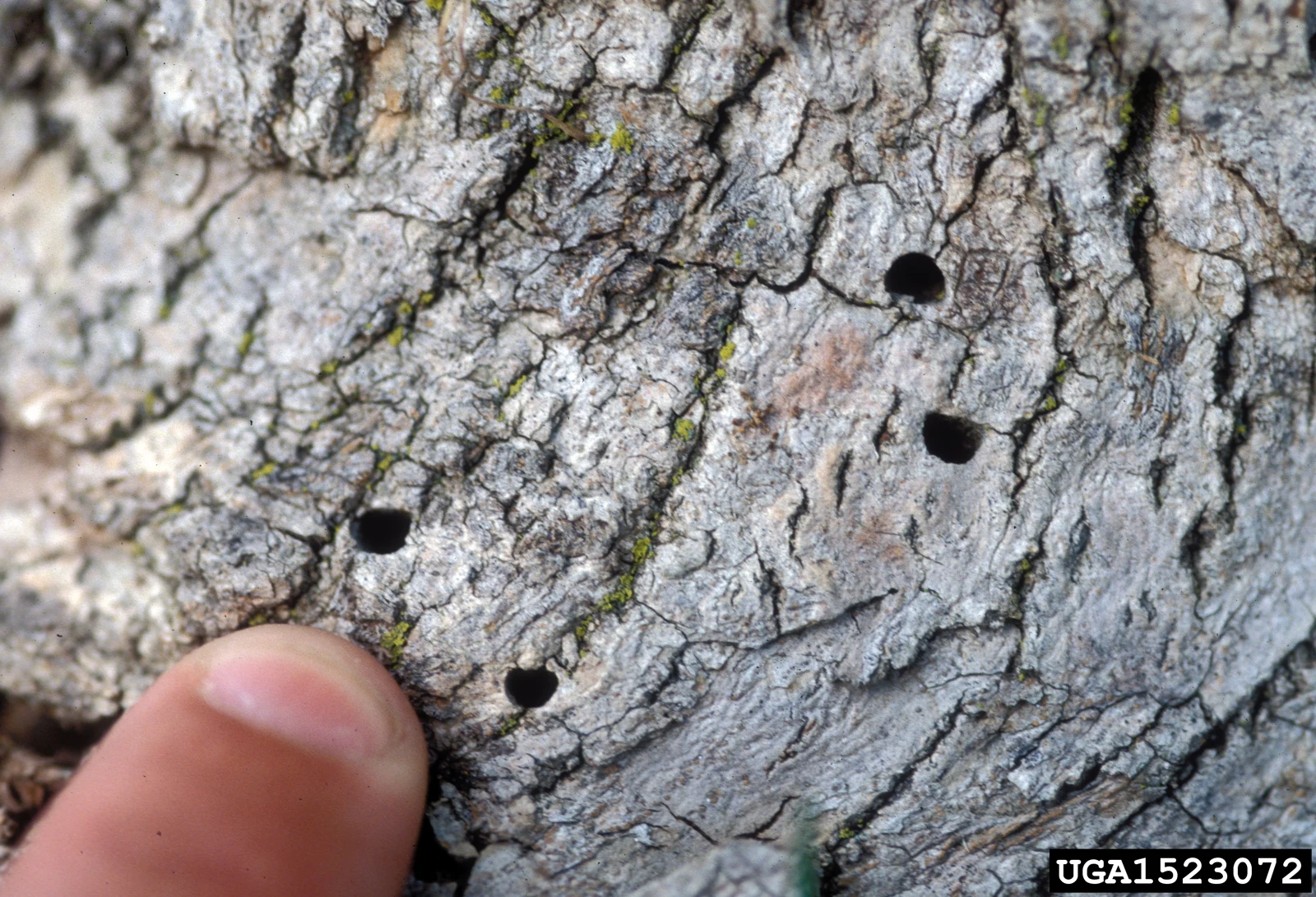
Crown thinning, bark splitting, woodpecker flecking, winding galleries, and D-shaped exit holes.

Before you act

Confirm the tree is an ash and document fresh bark and canopy symptoms; ask an arborist to assess valuable trees early.

A sensible first response

Seek an arborist or NC Forest Service assessment promptly. Protection is most useful before major decline; avoid moving potentially infested firewood.

When to look

Adults in spring and summer; larvae feed beneath bark into the following season.

In Western North Carolina

A major WNC tree-health concern. A declining ash can become hazardous and deserves a professional assessment.

Identification, lookalikes & further notes

Identification

Adults are narrow metallic-green beetles; pale larvae feed under bark. Several clues together are stronger than one hole.

Lookalikes & limits

Other borers and metallic beetles overlap. Mountain-ash is Sorbus, not a true ash host.

In the garden

Crown thinning, bark splitting, woodpecker flecking, winding galleries, and D-shaped exit holes.

What would help next

Record the host plant, date, fresh damage, and a clear photograph of the animal or insect. A damage match narrows the search; it does not establish an identification.

LOOK CLOSELY

Two views, a closer look.

Place two photographs beside one another. Compare the overall plant with leaves, flowers, or bark when those views are available. Captions identify what each photograph actually shows. Images are not at the same scale; species references may show different cultivars.

Emerald ash borer galleries beneath removed bark
Emerald ash borer galleries beneath removed barkImagePerson ↗ · CC BY 4.0
Photo contextA damage reference; confirm the host and other signs with a tree-health professional.
D-shaped emerald ash borer exit holes in ash bark
D-shaped emerald ash borer exit holes in ash barkDaniel Herms, The Ohio State University, Bugwood.org ↗ · CC BY 3.0
Photo contextThe source identifies these as adult emergence holes. The existing photograph shows galleries under bark; this shows a different field sign. Resized and converted to WebP; full composition retained.

Your margin of the garden.

Saved only in this browser on this device. Export your notes from My garden in the library.