
.jpg)
In the landscape.
Plants & places
Dogwoods, including shrubby Cornus species.
Recognize the damage
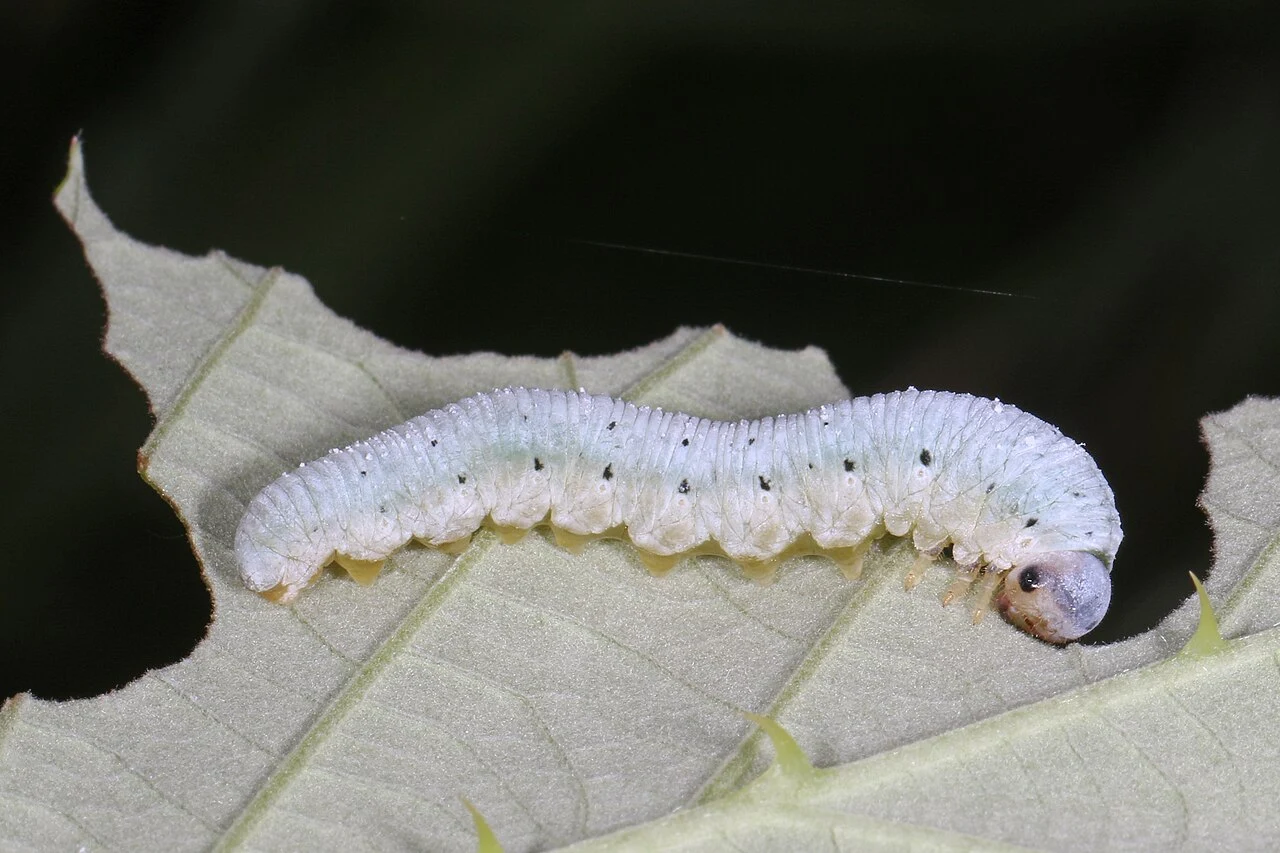
Young larvae skeletonize leaves; older larvae consume nearly the entire blade.
Before you act
Turn damaged leaves over and check whole branches for colonies before judging the extent of feeding.
A sensible first response
Remove small colonies by hand or dislodge them where practical. Caterpillar-specific Bt does not control sawflies; identify the group before selecting a treatment.
When to look
Larvae follow spring-to-summer adult emergence; one generation annually in North Carolina.
In Western North Carolina
Especially useful when inspecting shrubby dogwoods; extensive defoliation matters more on small or stressed plants.
Identification, lookalikes & further notes
Identification
Early larvae can look white and waxy; later larvae become spotted and eventually yellow and black.
Lookalikes & limits
Bird droppings can resemble waxy young larvae. These are sawfly larvae, not moth or butterfly caterpillars.
In the garden
Young larvae skeletonize leaves; older larvae consume nearly the entire blade.
What would help next
Record the host plant, date, fresh damage, and a clear photograph of the animal or insect. A damage match narrows the search; it does not establish an identification.