
.jpg)
In the landscape.
Plants & places
Willows, cottonwoods, and poplars; not tulip-poplar.
Recognize the damage
Adults notch leaves and chew holes; larvae skeletonize the blade.
Before you act
Turn willow leaves over to find egg clusters and grouped larvae; check whether fresh damage continues after an apparent pause.
A sensible first response
On reachable plants remove small colonies and monitor regrowth. Repeated loss of foliage warrants attention, but one damaged leaf does not justify treating a whole tree.
When to look
Spring through summer, with repeated generations.
In Western North Carolina
Relevant beside wet gardens and streams where susceptible hosts grow; keep any treatment out of water.
Identification, lookalikes & further notes
Identification
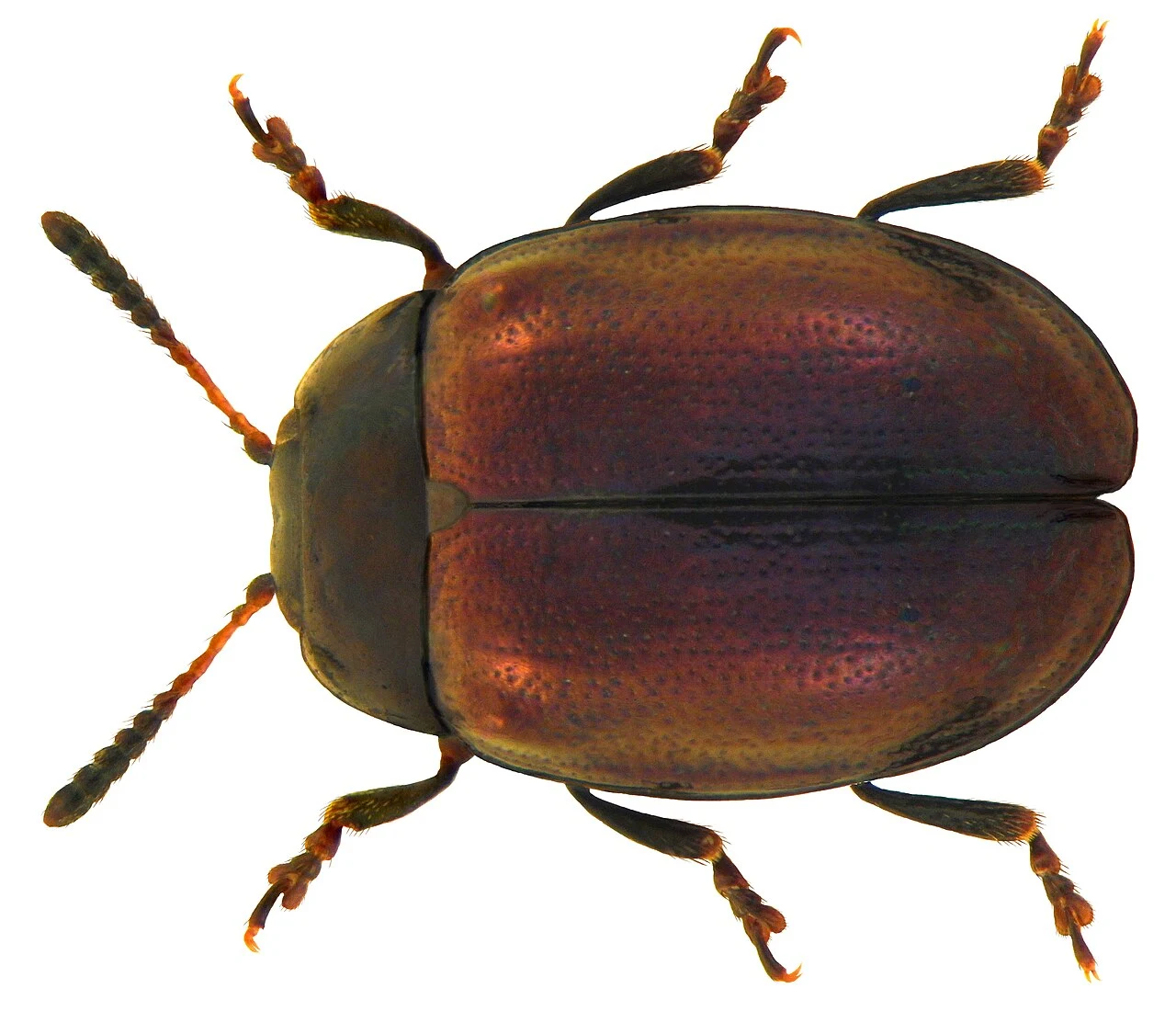
Rounded, dark metallic beetles resemble tiny black lady beetles; larvae often begin feeding together.
Lookalikes & limits
Beneficial lady beetles can look similar. Host, larvae, and actual leaf feeding help separate them.
In the garden
Adults notch leaves and chew holes; larvae skeletonize the blade.
What would help next
Record the host plant, date, fresh damage, and a clear photograph of the animal or insect. A damage match narrows the search; it does not establish an identification.