Wildlife & landscape pests · Western North Carolina field companion
White-tailed deer
Odocoileus virginianus
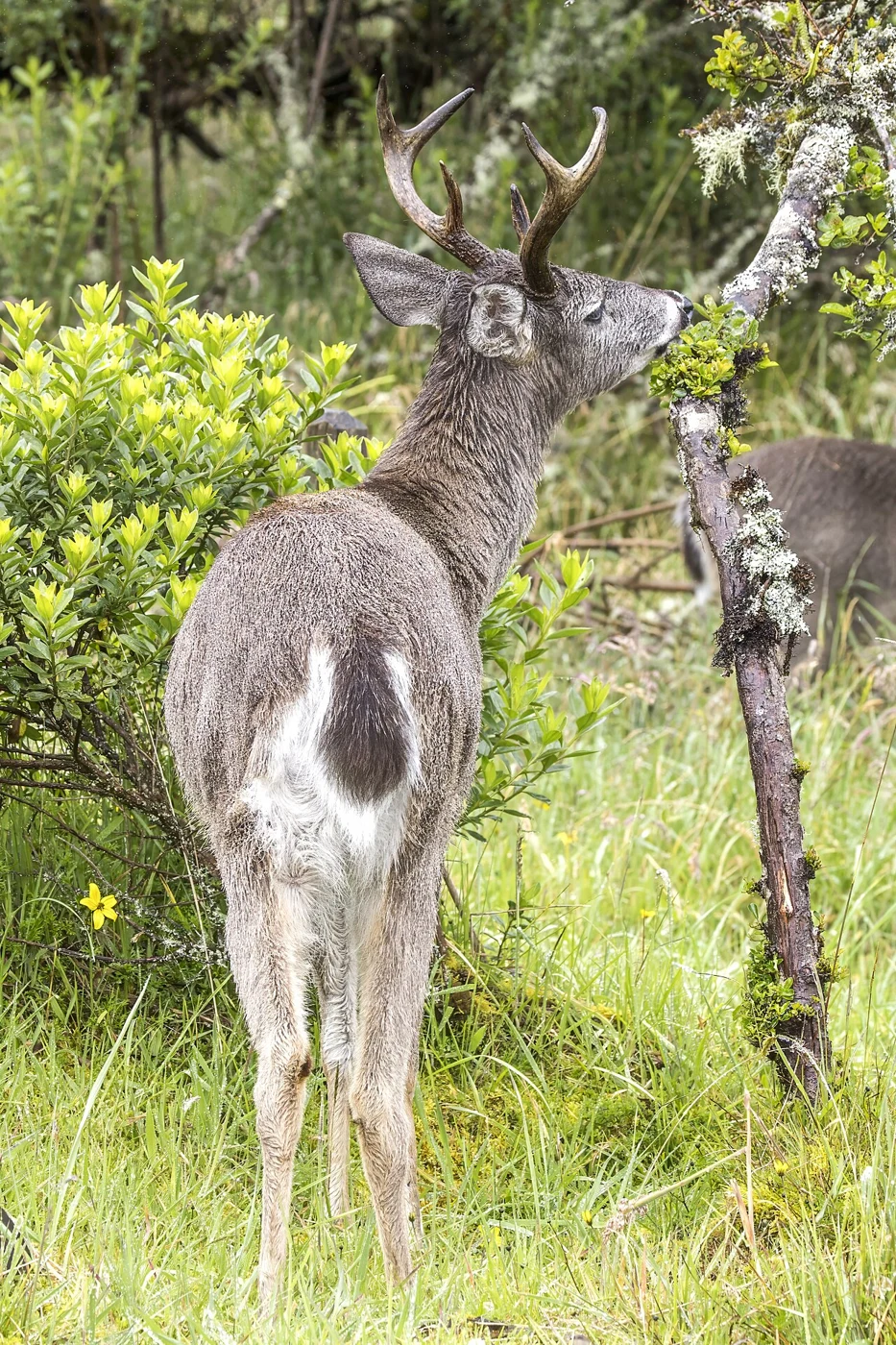
White-tailed deer browsing vegetationCharles J. Sharp ↗ · CC BY-SA 4.0Photo contextThis source photograph is from Colombia and shows a different regional population; it is not a WNC sighting.
Browsing height, torn shoots, and hoofprints can explain a disappearing planting.
Tender shoots, flowers, foliage, and bark of many ornamentals.
Recognize the damage
Ragged browse, missing buds, and rubbed bark on young trees; favored plants can be repeatedly stripped.
Before you act
Check fresh stems, tracks, and the height of feeding; record which plants are repeatedly selected.
A sensible first response
Use well-designed exclusion around valuable plantings and individual trunk protection. Diversify with less-preferred plants, recognizing that no planting palette is deer-proof.
When to look
Year-round; seasonal food shortages and autumn antler rubbing change the pattern.
In Western North Carolina
Common throughout the region; browsing pressure can differ sharply between neighboring gardens.
Identification, lookalikes & further notes
Identification
Cloven hoofprints and pellet groups support a sighting; browsing damage is usually torn rather than neatly clipped.
Lookalikes & limits
Rabbits often leave cleaner low cuts. Pruning, storm injury, and different mammals can overlap in appearance.
In the garden
Ragged browse, missing buds, and rubbed bark on young trees; favored plants can be repeatedly stripped.
What would help next
Record the host plant, date, fresh damage, and a clear photograph of the animal or insect. A damage match narrows the search; it does not establish an identification.
LOOK CLOSELY
Two views, a closer look.
Place two photographs beside one another. Compare the overall plant with leaves, flowers, or bark when those views are available. Captions identify what each photograph actually shows. Images are not at the same scale; species references may show different cultivars.
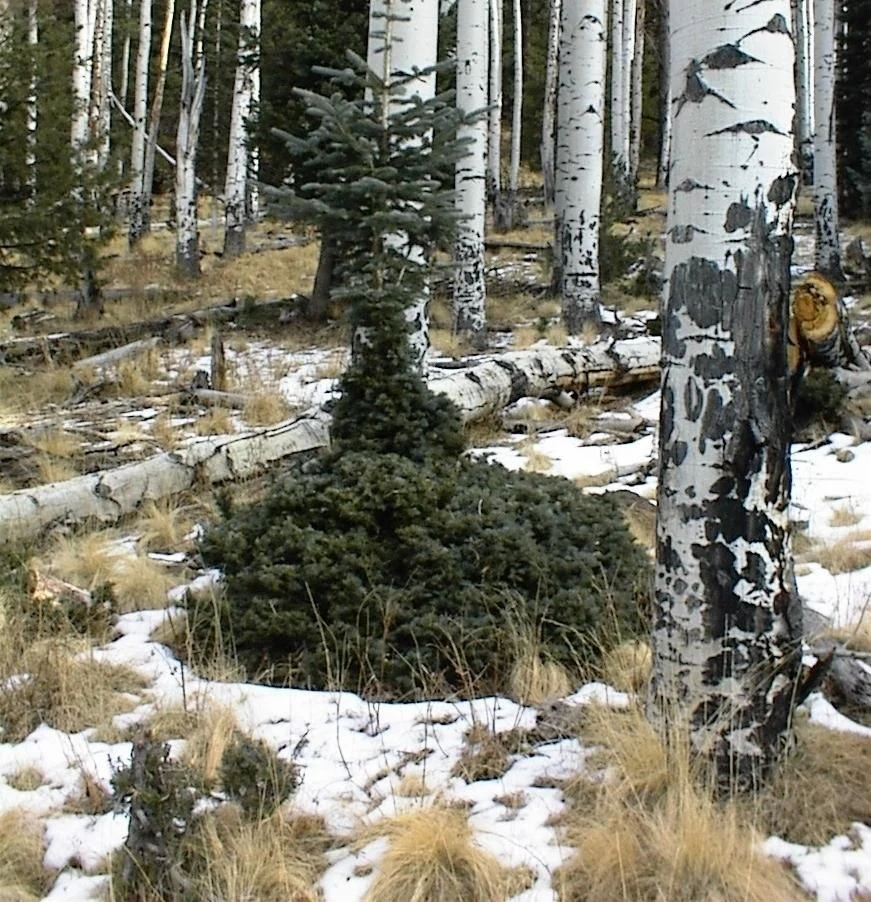
White-tailed deer browsing vegetationCharles J. Sharp ↗ · CC BY-SA 4.0Photo contextThis source photograph is from Colombia and shows a different regional population; it is not a WNC sighting.Browsing line on a young subalpine firTyler Finvold ↗ · Public domainPhoto contextA western reference tree illustrates repeated browsing. This does not identify the animal or prove a local deer visit. Resized and converted to WebP; full composition retained.
Your margin of the garden.
Saved only in this browser on this device. Export your notes from My garden in the library.

_male_browsing_Chingaza.jpg)
