
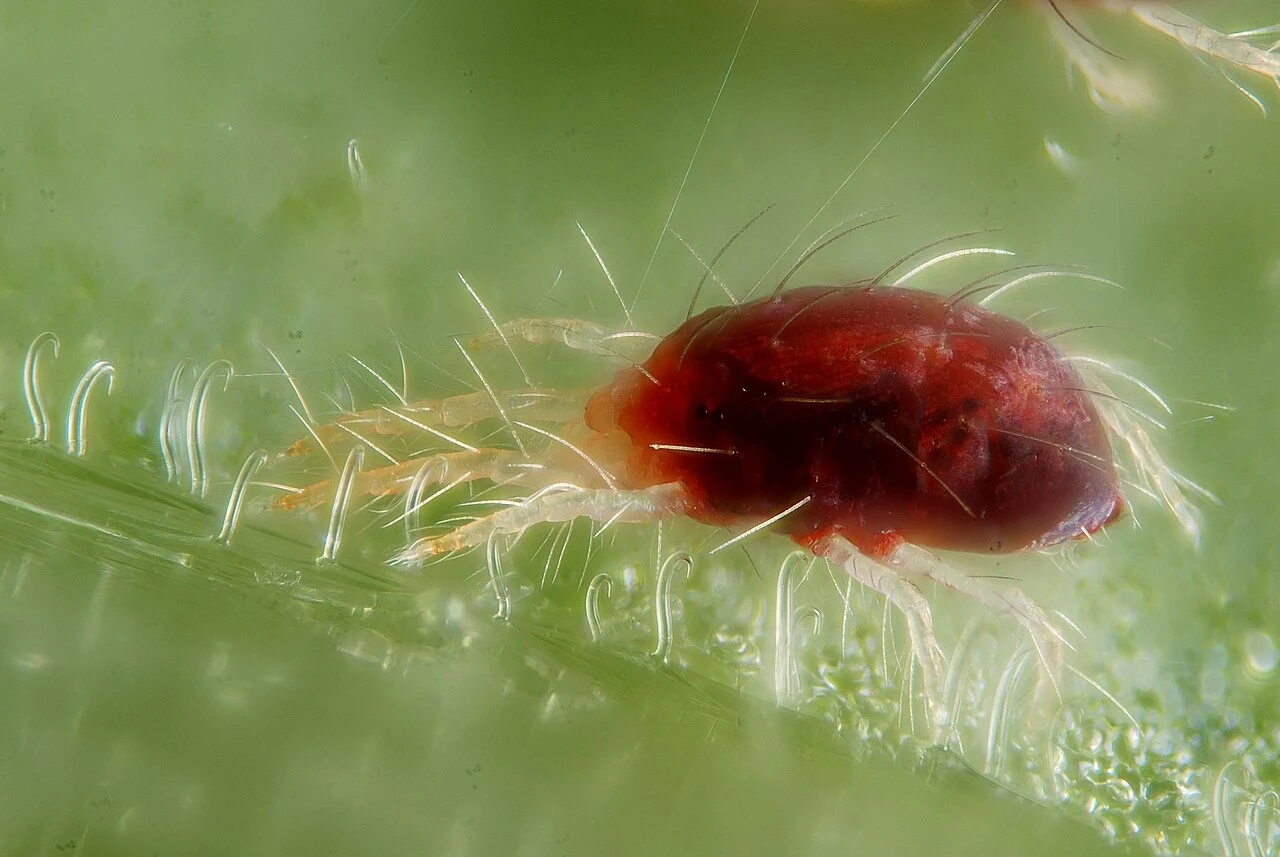

In the landscape.
Plants & places
Many flowering plants, shrubs, and other ornamentals.
Recognize the damage
Tiny pale spots progress to bronzing or drying leaves; heavy infestations develop fine webbing.
Before you act
Tap affected foliage over white paper, inspect moving specks, and compare fresh injury on several leaves.
A sensible first response
Reduce drought and dust stress and wash reachable foliage where appropriate. Preserve predators; broad insecticide use can worsen mite problems.
When to look
Often troublesome during warm, dry weather; protected locations can extend activity.
In Western North Carolina
A broad-host concern in WNC borders and containers; mites are arachnids, not insects.
Identification, lookalikes & further notes
Identification
Minute mites often have two dark internal spots; a hand lens is needed, and color varies with season.
Lookalikes & limits
Lace bugs leave dark fecal specks; predatory mites can be present too. Webbing alone is not a species diagnosis.
In the garden
Tiny pale spots progress to bronzing or drying leaves; heavy infestations develop fine webbing.
What would help next
Record the host plant, date, fresh damage, and a clear photograph of the animal or insect. A damage match narrows the search; it does not establish an identification.