
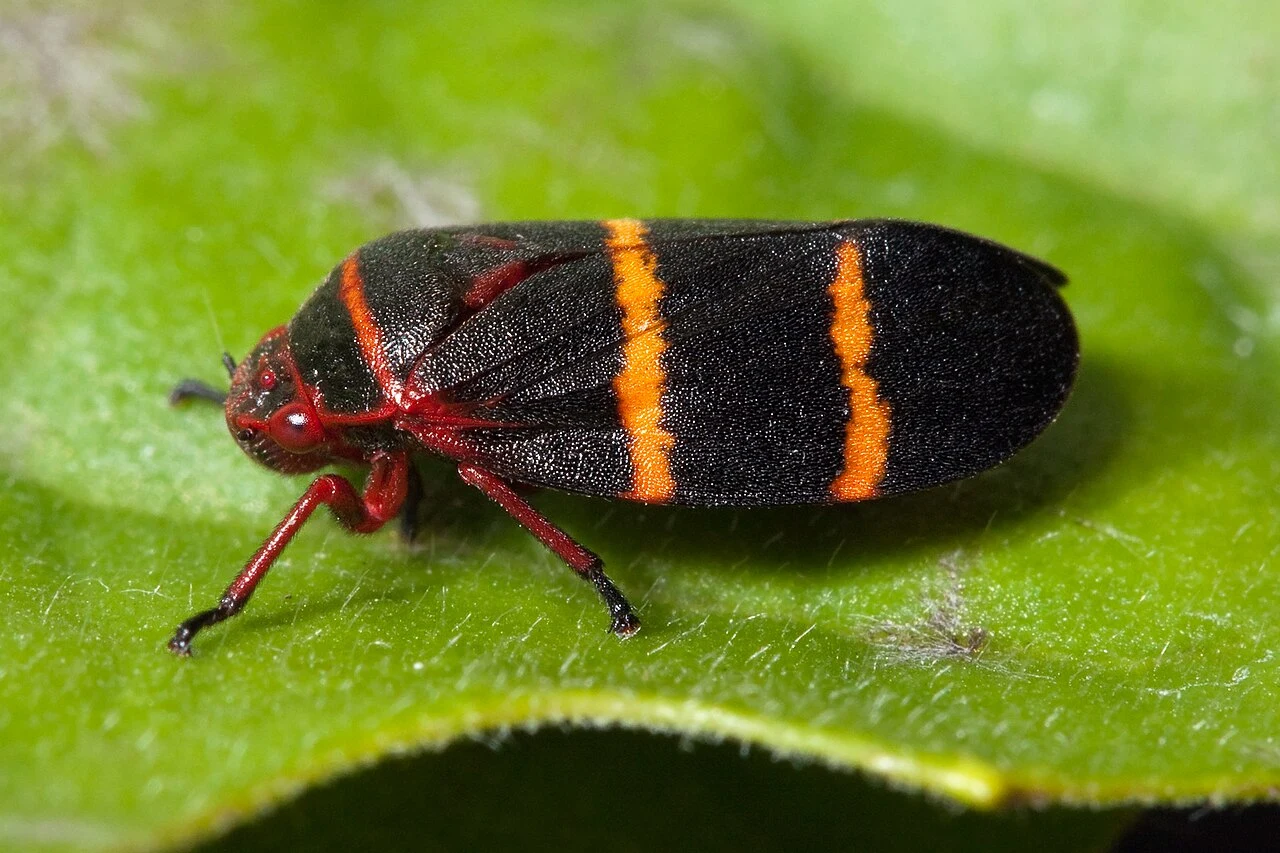


In the landscape.
Plants & places
Especially centipedegrass and other warm-season grasses; adults also feed on hollies.
Recognize the damage
Yellowing or browning turf can accompany heavy nymph feeding; adult feeding can damage holly foliage.
Before you act
Part the turf canopy and inspect spittle masses at fresh injury; compare the adults and confirm the grass species.
A sensible first response
Address excessive thatch and unnecessary moisture while preserving grass health. Confirm a damaging population before selecting further control.
When to look
Warm-season activity; damp, thatchy conditions favor nymph habitat.
In Western North Carolina
More associated with eastern NC and warm-season turf; included for suitable lower-elevation WNC sites, not as a typical mountain-fescue diagnosis.
Identification, lookalikes & further notes
Identification
Adults are dark with two reddish-orange wing bands; pale nymphs occupy wet spittle masses near stems.
Lookalikes & limits
Other spittlebugs use many garden plants. Foam alone does not identify this species or establish damaging numbers.
In the garden
Yellowing or browning turf can accompany heavy nymph feeding; adult feeding can damage holly foliage.
What would help next
Record the host plant, date, fresh damage, and a clear photograph of the animal or insect. A damage match narrows the search; it does not establish an identification.