
.jpg)
In the landscape.
Plants & places
Southern pines, particularly shortleaf and loblolly.
Recognize the damage
Pitch tubes, a yellow-to-red fading crown, and winding S-shaped galleries beneath bark.
Before you act
Document affected trees and fresh pitch tubes; ask the Forest Service to inspect a spreading group of fading pines.
A sensible first response
Reduce avoidable tree stress and obtain prompt professional diagnosis. Management of an active infestation is a stand or tree-health decision, not a general foliar spray.
When to look
Activity increases in warm conditions; multiple generations and outbreaks are possible.
In Western North Carolina
Especially relevant where susceptible pines grow; this guide does not assert a current local outbreak.
Identification, lookalikes & further notes
Identification
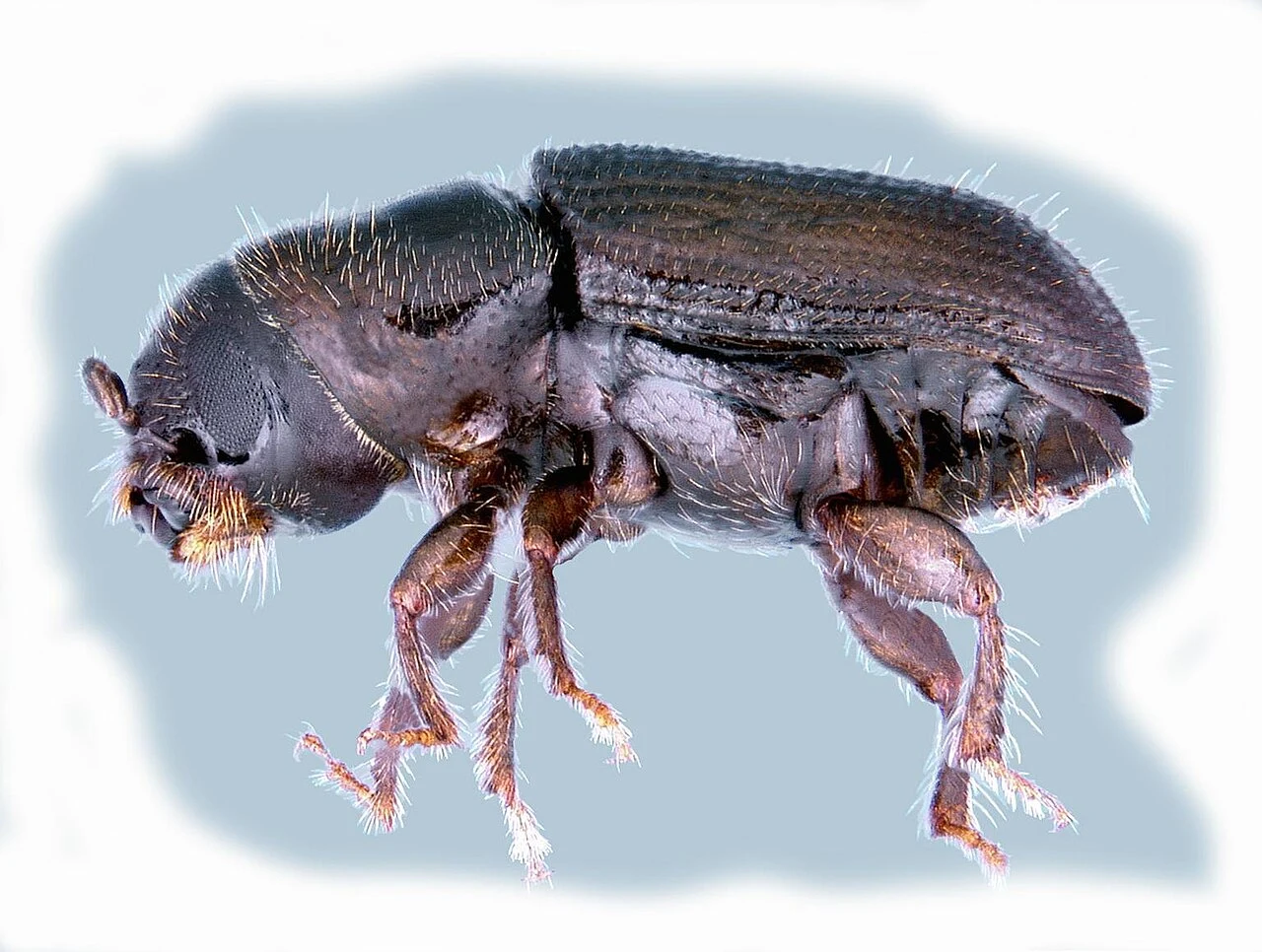
Very small dark bark beetles attack in numbers; gallery pattern and host condition help specialists identify the cause.
Lookalikes & limits
Ips engraver beetles, drought, root damage, and other bark beetles can produce similar crown decline.
In the garden
Pitch tubes, a yellow-to-red fading crown, and winding S-shaped galleries beneath bark.
What would help next
Record the host plant, date, fresh damage, and a clear photograph of the animal or insect. A damage match narrows the search; it does not establish an identification.