
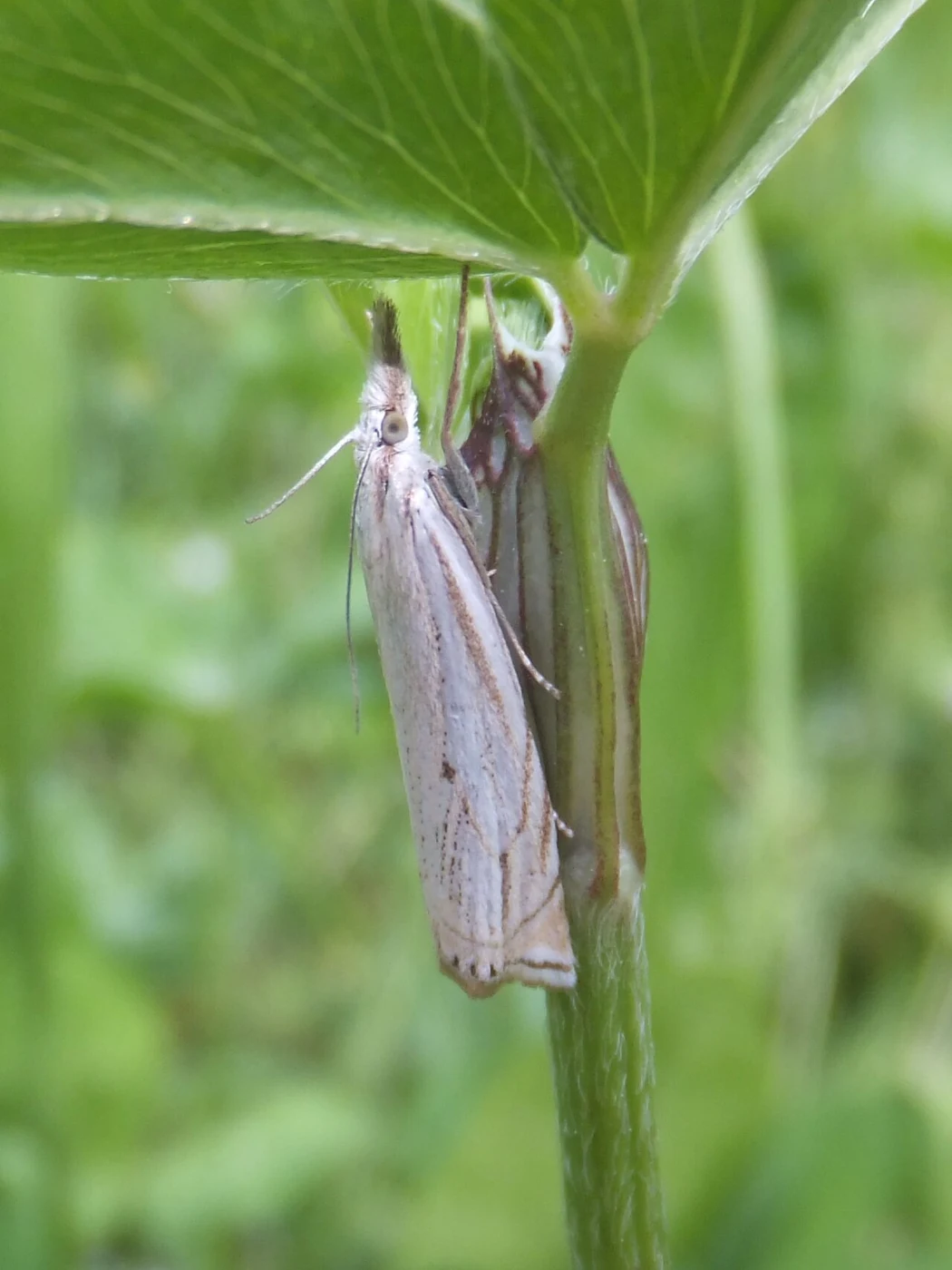

In the landscape.
Plants & places
Many lawn grasses, including bluegrass and bermudagrass.
Recognize the damage
Small closely cropped brown patches can merge; larvae pull clipped blades into silk-lined shelters near the thatch.
Before you act
Part grass at a fresh patch edge and inspect the thatch for silk, caterpillars, and clipped blades.
A sensible first response
Monitor active feeding rather than treating every moth flight. Maintain an appropriate mowing height and address excessive thatch before choosing a targeted response.
When to look
Spring through fall; moth flights can recur during the growing season.
In Western North Carolina
A group profile: the photograph illustrates a crambine moth, not identification of every sod-webworm species in WNC.
Identification, lookalikes & further notes
Identification
Small snout moths rest with narrow folded wings. Larvae are spotted, bristly caterpillars concealed near the soil surface.
Lookalikes & limits
Crambine moths alone do not prove turf damage; cutworms and drought can create similar patches.
In the garden
Small closely cropped brown patches can merge; larvae pull clipped blades into silk-lined shelters near the thatch.
What would help next
Record the host plant, date, fresh damage, and a clear photograph of the animal or insect. A damage match narrows the search; it does not establish an identification.