Wildlife & landscape pests · Western North Carolina field companion
Garden slugs
Terrestrial gastropods · several species
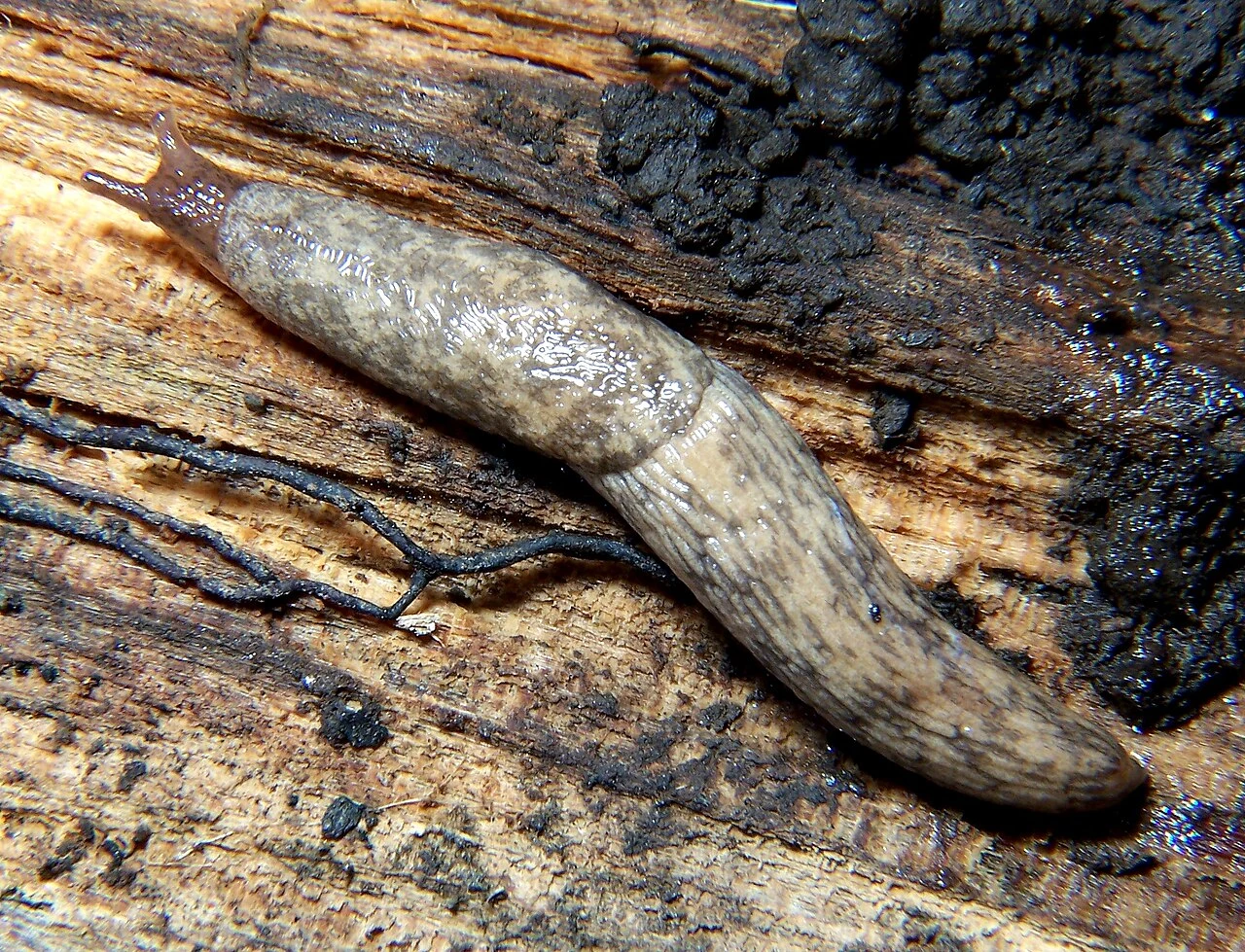
Gray garden slug · representative garden slugBruce Marlin ↗ · CC BY-SA 3.0Photo contextDeroceras reticulatum illustrates a group with several species; not every garden slug belongs to this species.
Ragged holes and a dried silvery trail can point to a nighttime mollusk.
Hostas, seedlings, lilies, and many tender garden plants.
Recognize the damage
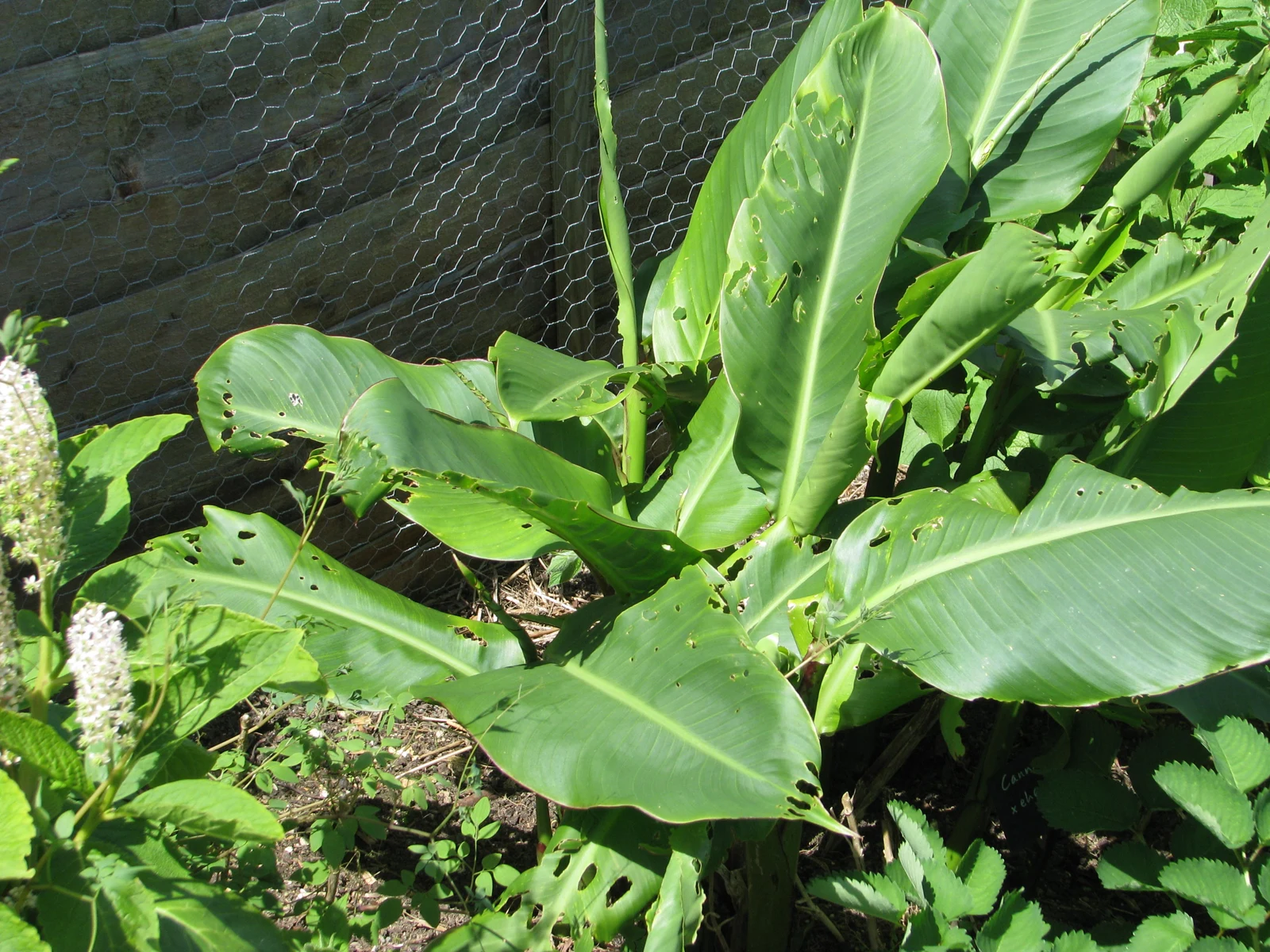
Irregular holes, scraped leaf tissue, and sometimes completely eaten young seedlings.
Before you act
Inspect after dark or during damp weather and look beneath pots or nearby shelter for live slugs and trails.
A sensible first response
Hand-collect where practical, remove avoidable damp hiding places beside seedlings, and water early so surfaces can dry. Use any bait only according to its labeled directions.
When to look
Spring through fall; cool, damp periods favor feeding.
In Western North Carolina
Commonly relevant in moist WNC gardens; the gray garden slug photograph represents a group containing several species.
Identification, lookalikes & further notes
Identification
Soft-bodied animals glide on a muscular foot; slugs lack the conspicuous external shell of snails.
Lookalikes & limits
Roseslug sawflies are insects with legs and no slime trail. Caterpillars, beetles, and rabbits can also remove foliage.
In the garden
Irregular holes, scraped leaf tissue, and sometimes completely eaten young seedlings.
What would help next
Record the host plant, date, fresh damage, and a clear photograph of the animal or insect. A damage match narrows the search; it does not establish an identification.
LOOK CLOSELY
Two views, a closer look.
Place two photographs beside one another. Compare the overall plant with leaves, flowers, or bark when those views are available. Captions identify what each photograph actually shows. Images are not at the same scale; species references may show different cultivars.
Gray garden slug · representative garden slugBruce Marlin ↗ · CC BY-SA 3.0Photo contextDeroceras reticulatum illustrates a group with several species; not every garden slug belongs to this species.Leaf feeding damage attributed to slugspeganum from Henfield, England ↗ · CC BY-SA 2.0Photo contextHoles in leaves have several possible causes. This photograph is a reference for comparison, not a diagnosis. Resized and converted to WebP; full composition retained.
Your margin of the garden.
Saved only in this browser on this device. Export your notes from My garden in the library.


.jpg)