Wildlife & landscape pests · Western North Carolina field companion
Redheaded pine sawfly
Neodiprion lecontei
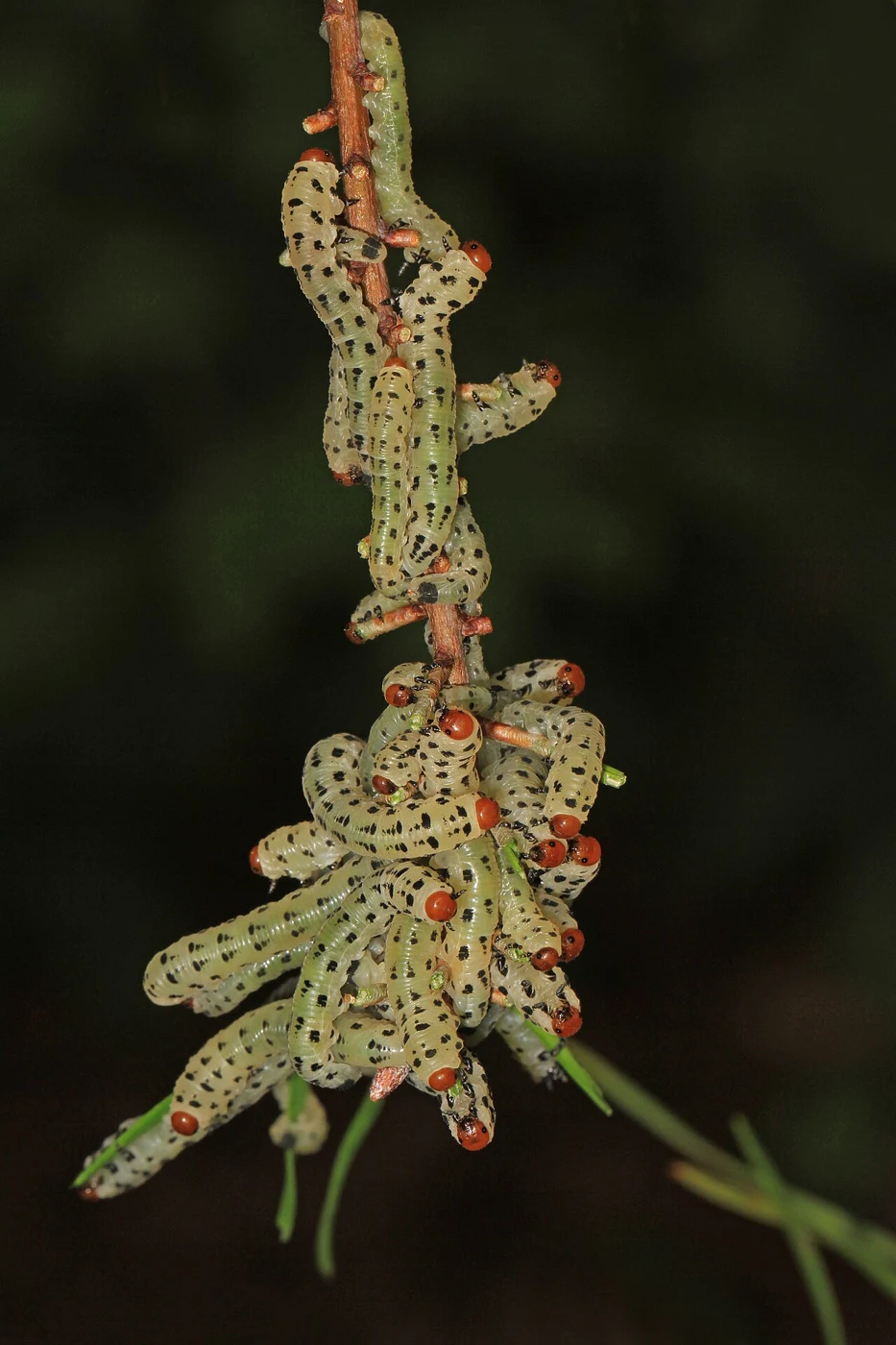
Redheaded pine sawfly larvae clustered on a twigJudy Gallagher ↗ · CC BY 2.0Photo contextSawfly colonies can strip needles; caterpillar-specific Bt does not control them.
Coordinated groups of red-headed larvae can rapidly thin the needles of young pines.
Especially hard pines such as shortleaf and loblolly; other conifers occasionally.
Recognize the damage
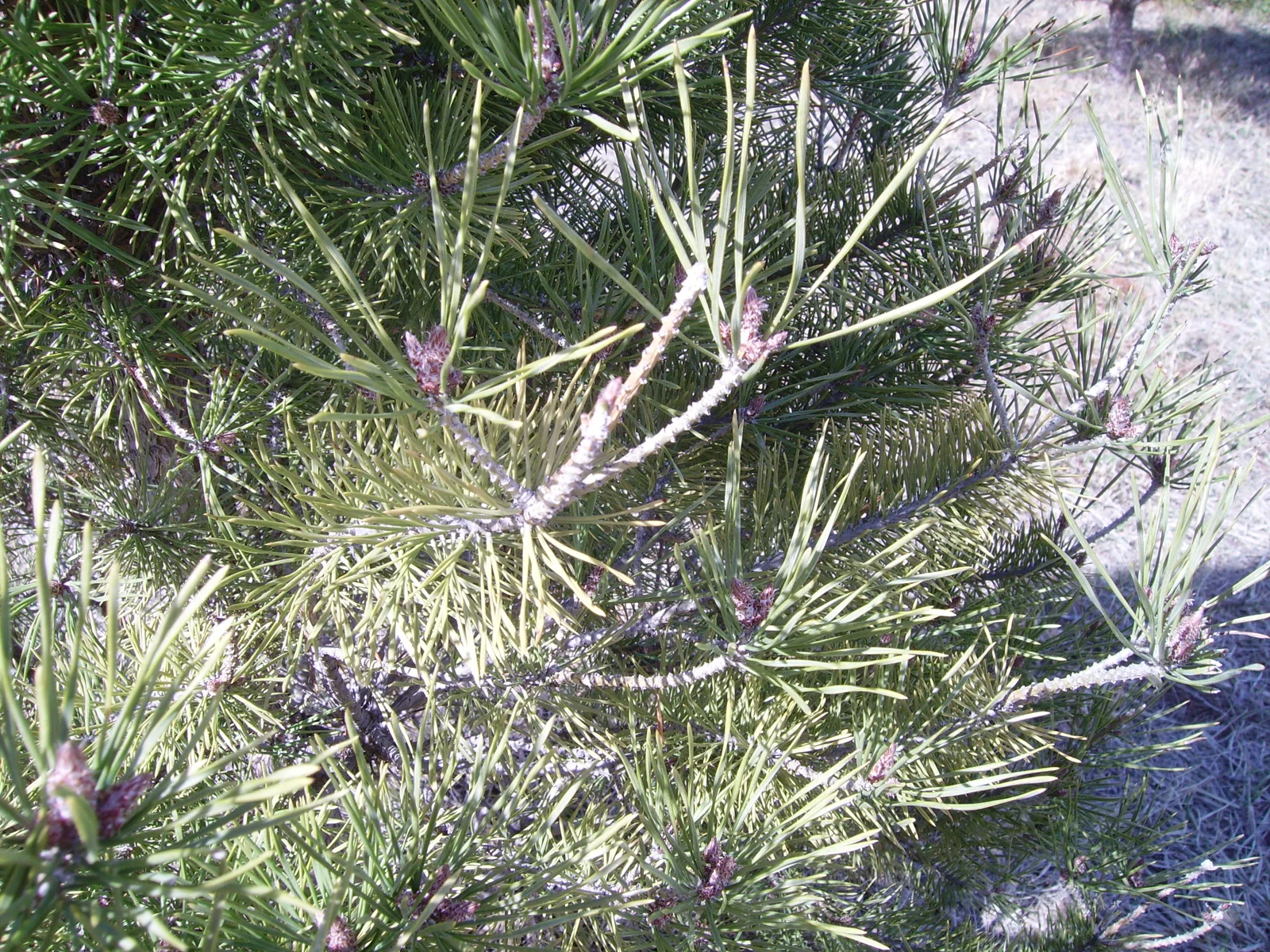
Groups eat needles and may severely defoliate small trees.
Before you act
Check affected twigs for whole colonies and nearby needles for eggs or new feeding.
A sensible first response
Pick or shake off small reachable colonies when needed. Caterpillar-specific Bt will not control sawflies; protect remaining foliage on young or stressed pines.
When to look
Warm-season feeding; repeat inspections as new colonies may appear.
In Western North Carolina
Most relevant to susceptible planted or naturally occurring hard pines, rather than every mountain conifer.
Identification, lookalikes & further notes
Identification
Yellowish larvae with dark spots and reddish heads often raise their bodies together when disturbed.
Lookalikes & limits
Other pine sawflies have different heads and markings. These are sawflies rather than moth caterpillars.
In the garden
Groups eat needles and may severely defoliate small trees.
What would help next
Record the host plant, date, fresh damage, and a clear photograph of the animal or insect. A damage match narrows the search; it does not establish an identification.
LOOK CLOSELY
Two views, a closer look.
Place two photographs beside one another. Compare the overall plant with leaves, flowers, or bark when those views are available. Captions identify what each photograph actually shows. Images are not at the same scale; species references may show different cultivars.
Redheaded pine sawfly larvae clustered on a twigJudy Gallagher ↗ · CC BY 2.0Photo contextSawfly colonies can strip needles; caterpillar-specific Bt does not control them.Needle loss on Scots pine after feeding by a related pine sawflyMateinsixtynine ↗ · CC BY-SA 3.0Photo contextThe source identifies European pine sawfly, not redheaded pine sawfly. It illustrates a similar needle-feeding pattern and does not identify the cause on a local tree. Resized and converted to WebP; full composition retained.
Your margin of the garden.
Saved only in this browser on this device. Export your notes from My garden in the library.

.jpg)
