
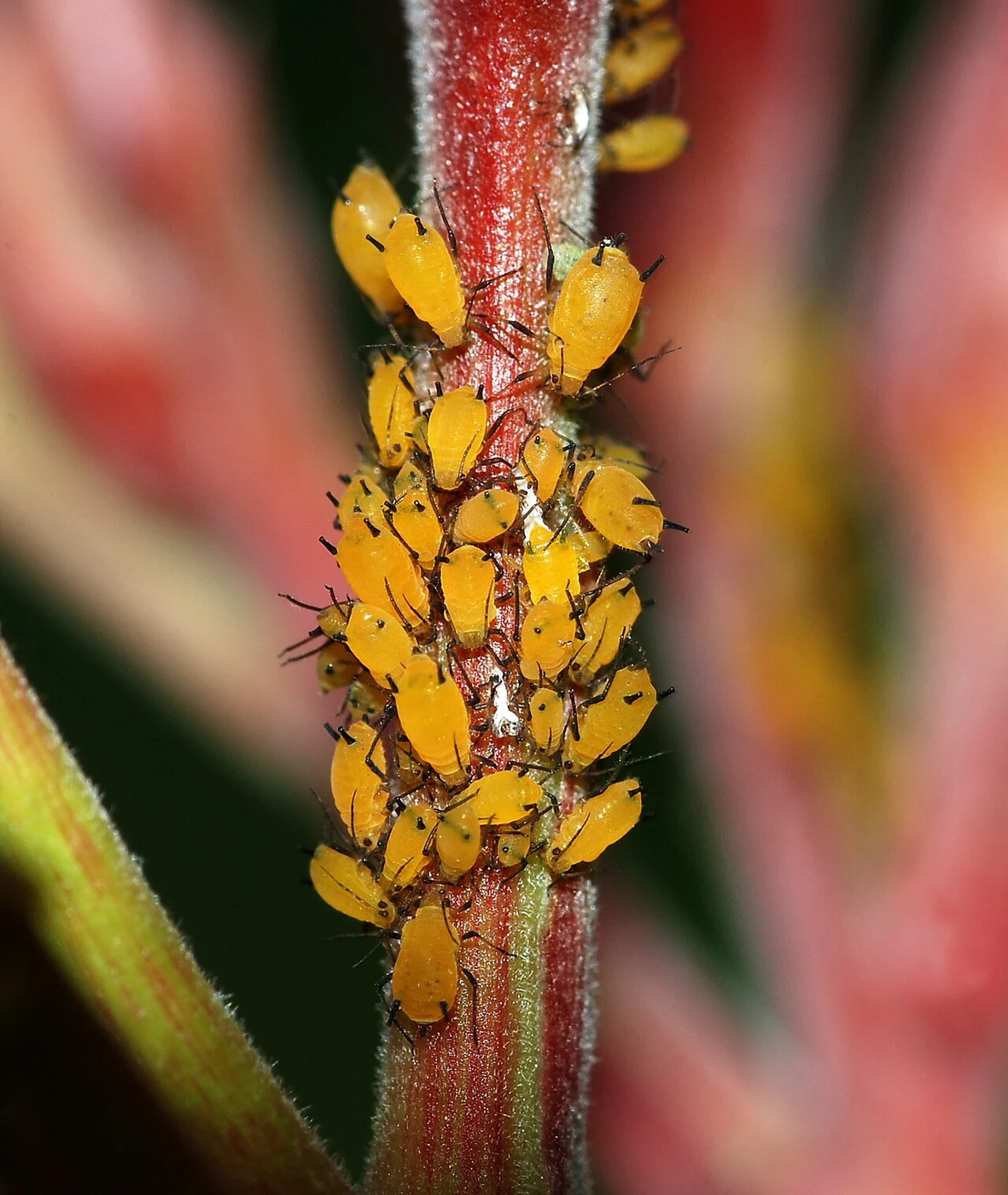

In the landscape.
Plants & places
Milkweeds including butterfly weed; oleander and some related plants.
Recognize the damage
Sap feeding may distort growth; sticky honeydew supports black sooty mold.
Before you act
Inspect new shoots and leaf undersides, including any predator larvae, parasitized aphids, or monarchs present.
A sensible first response
Tolerate modest numbers and let predators work. If needed, gently dislodge aphids while checking for monarchs; avoid routine insecticide use on their host plants.
When to look
Warm growing-season activity; colonies can multiply quickly.
In Western North Carolina
This milkweed-associated species represents one common WNC aphid problem; aphids on other hosts may be different species.
Identification, lookalikes & further notes
Identification
Yellow aphids have black legs and dark rear tubes; crowded colonies may include winged adults.
Lookalikes & limits
Other aphids vary in color. Monarch eggs and caterpillars can share the plant and need separate recognition.
In the garden
Sap feeding may distort growth; sticky honeydew supports black sooty mold.
What would help next
Record the host plant, date, fresh damage, and a clear photograph of the animal or insect. A damage match narrows the search; it does not establish an identification.