
.jpg)
In the landscape.
Plants & places
Especially American holly; other hollies may be affected.
Recognize the damage
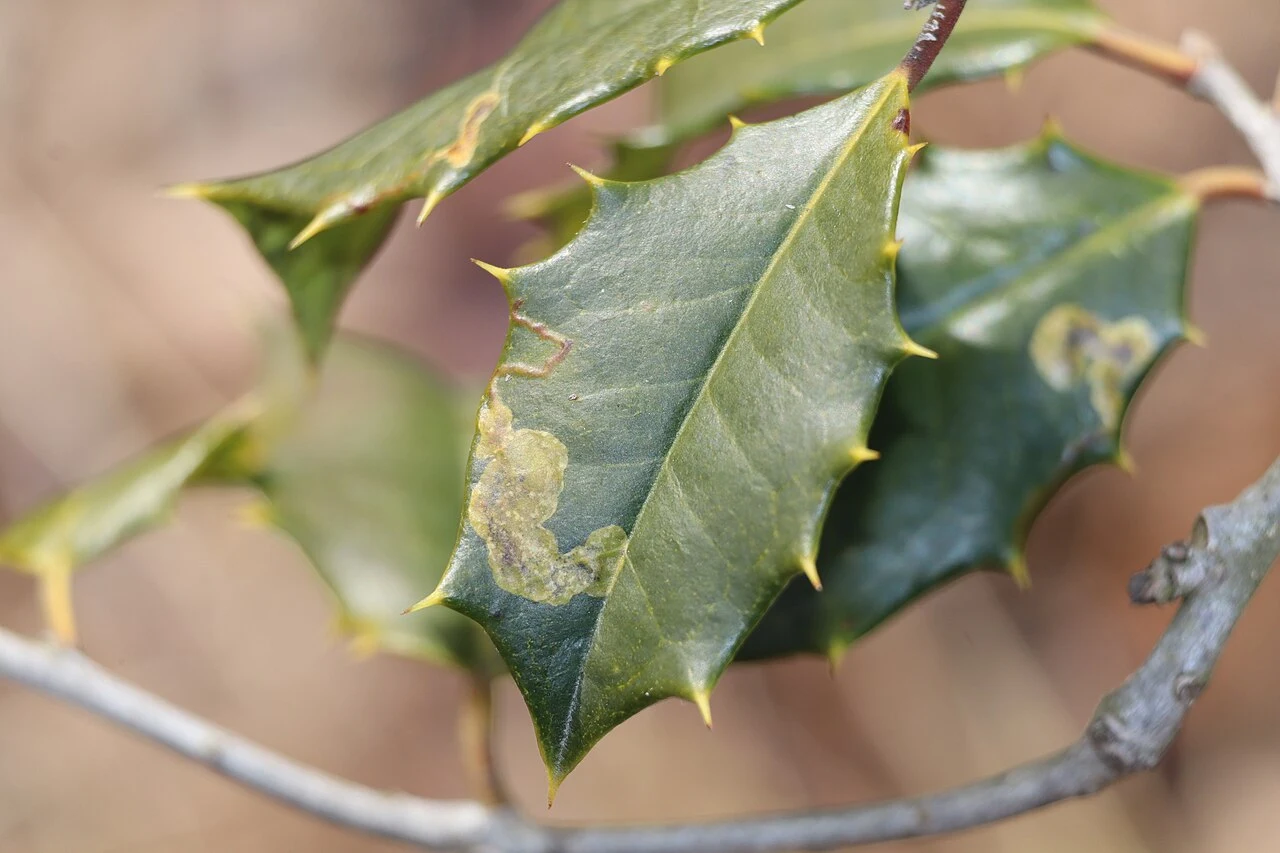
Yellow-brown winding mines widen into blotches; heavy mining can contribute to leaf drop.
Before you act
Hold a fresh blotch to the light and look for an occupied cavity between leaf surfaces.
A sensible first response
Remove a few occupied mined leaves where feasible. Tolerate limited cosmetic damage and preserve parasitoids; widespread decline requires checking other causes as well.
When to look
Larvae remain in leaves through winter; adults emerge with spring growth.
In Western North Carolina
Particularly useful for American holly in WNC; the source and image name should not be confused with European Phytomyza ilicis.
Identification, lookalikes & further notes
Identification
Small pale larvae develop inside leaves. Adults are tiny dark flies and rarely useful for a casual diagnosis.
Lookalikes & limits
Other holly miners, fungal spots, and winter injury can look similar; establish the holly species and inspect the mine.
In the garden
Yellow-brown winding mines widen into blotches; heavy mining can contribute to leaf drop.
What would help next
Record the host plant, date, fresh damage, and a clear photograph of the animal or insect. A damage match narrows the search; it does not establish an identification.