
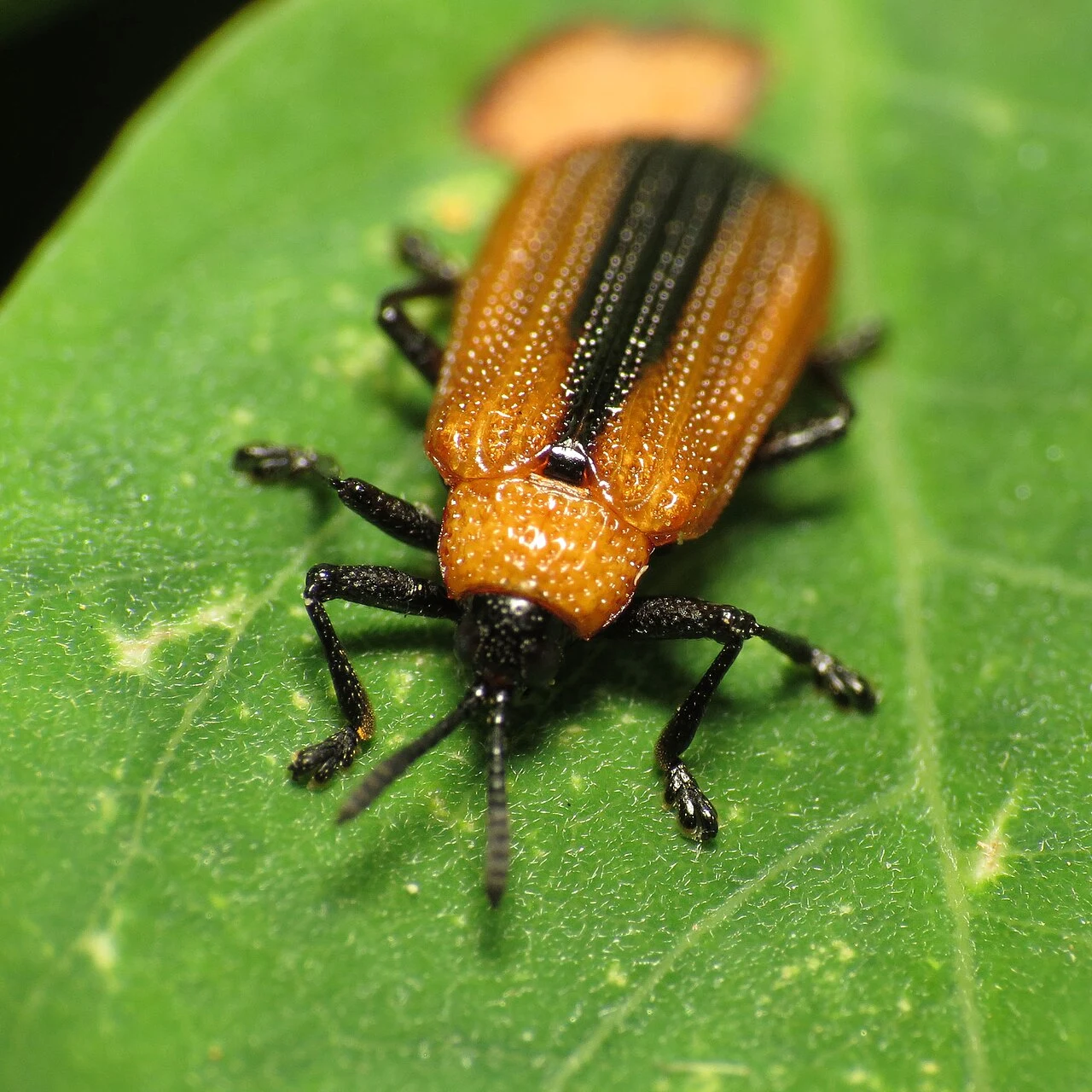

In the landscape.
Plants & places
Black locust is the principal host.
Recognize the damage
Larvae mine inside leaflets; adult feeding also skeletonizes foliage, producing a scorched-looking canopy.
Before you act
Hold a leaflet to the light and look inside a fresh blotch; check for characteristic adults and intact veins.
A sensible first response
Established trees often warrant observation rather than intervention. Monitor repeated defoliation and support stressed young trees; predators and parasites help limit populations.
When to look
Spring into summer; damage often becomes conspicuous later in the growing season.
In Western North Carolina
A familiar clue on black locust in the mountain landscape; browning alone does not mean the tree is dying.
Identification, lookalikes & further notes
Identification
Small flattened beetles have orange wing covers with a broad dark central stripe; larvae feed inside the leaf.
Lookalikes & limits
Drought and other leafminers can resemble this damage. Honeylocust and black locust are different hosts.
In the garden
Larvae mine inside leaflets; adult feeding also skeletonizes foliage, producing a scorched-looking canopy.
What would help next
Record the host plant, date, fresh damage, and a clear photograph of the animal or insect. A damage match narrows the search; it does not establish an identification.