
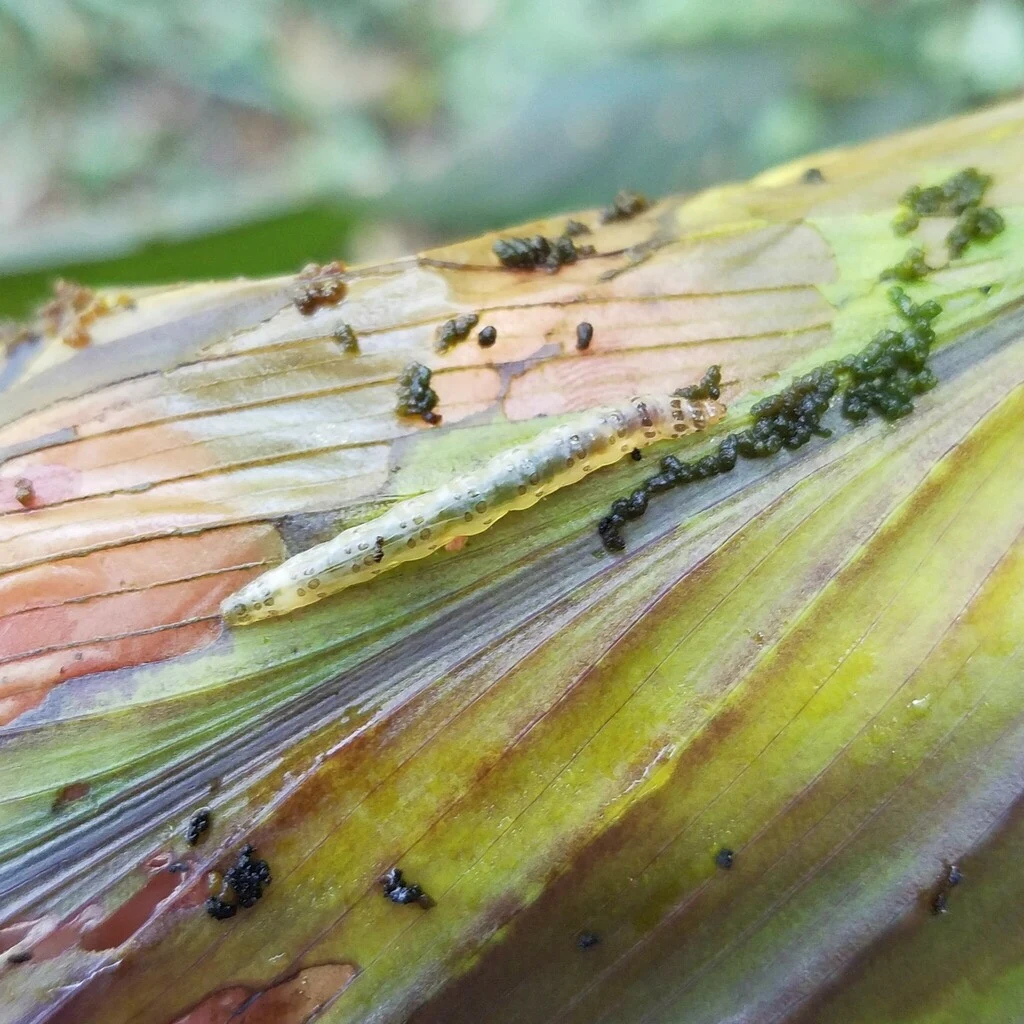
In the landscape.
Plants & places
Cannas.
Recognize the damage
Silk holds leaves rolled or folded; feeding scrapes the surface and leaves streaks, holes, and debris.
Before you act
Gently open a suspicious roll and look for a larva, silk, and fresh feeding.
A sensible first response
Remove infested rolls where practical. Clear affected dead canna tops at season's end instead of leaving them as mulch that shelters the pest.
When to look
From spring growth through summer; larvae can overwinter in old canna foliage and stems.
In Western North Carolina
Useful in WNC summer borders and containers; adult imagery is not a picture of the damaging larval stage.
Identification, lookalikes & further notes
Identification
Small larvae live within the rolled foliage. Adult moths are modest brownish moths with patterned wings.
Lookalikes & limits
The larger canna leafroller is a skipper larva. Cold damage and normal unfurling leaves do not contain silk and frass.
In the garden
Silk holds leaves rolled or folded; feeding scrapes the surface and leaves streaks, holes, and debris.
What would help next
Record the host plant, date, fresh damage, and a clear photograph of the animal or insect. A damage match narrows the search; it does not establish an identification.