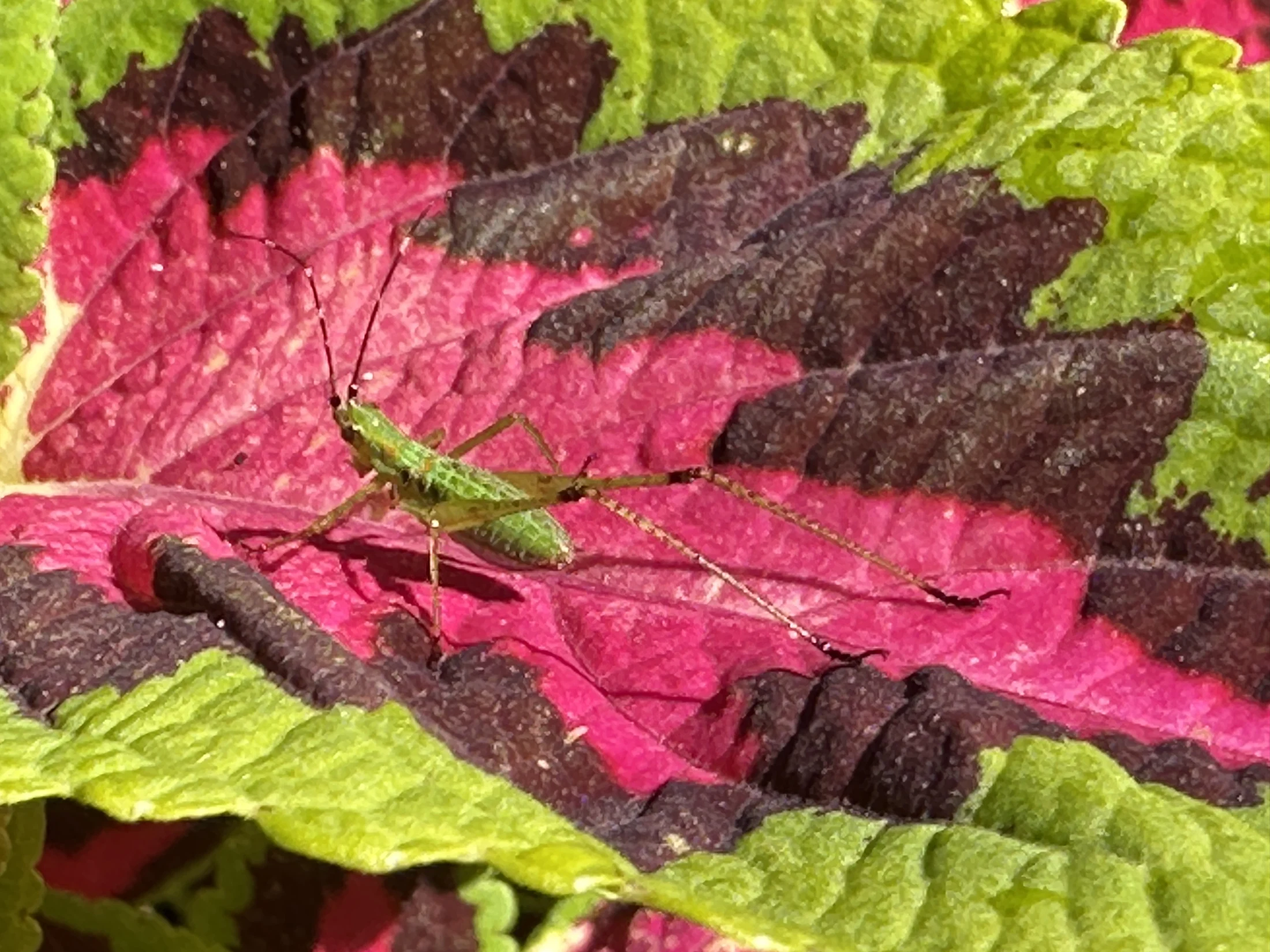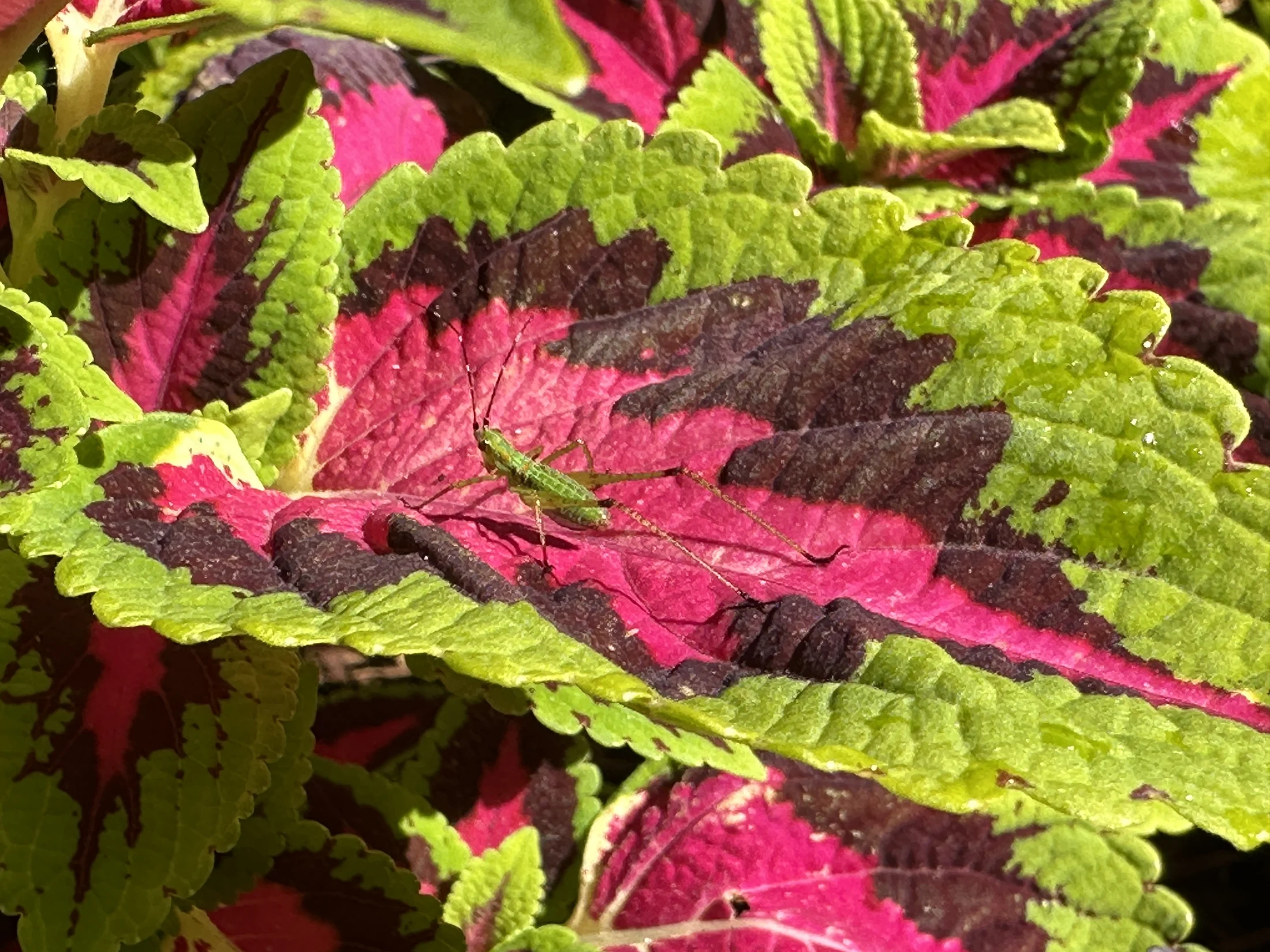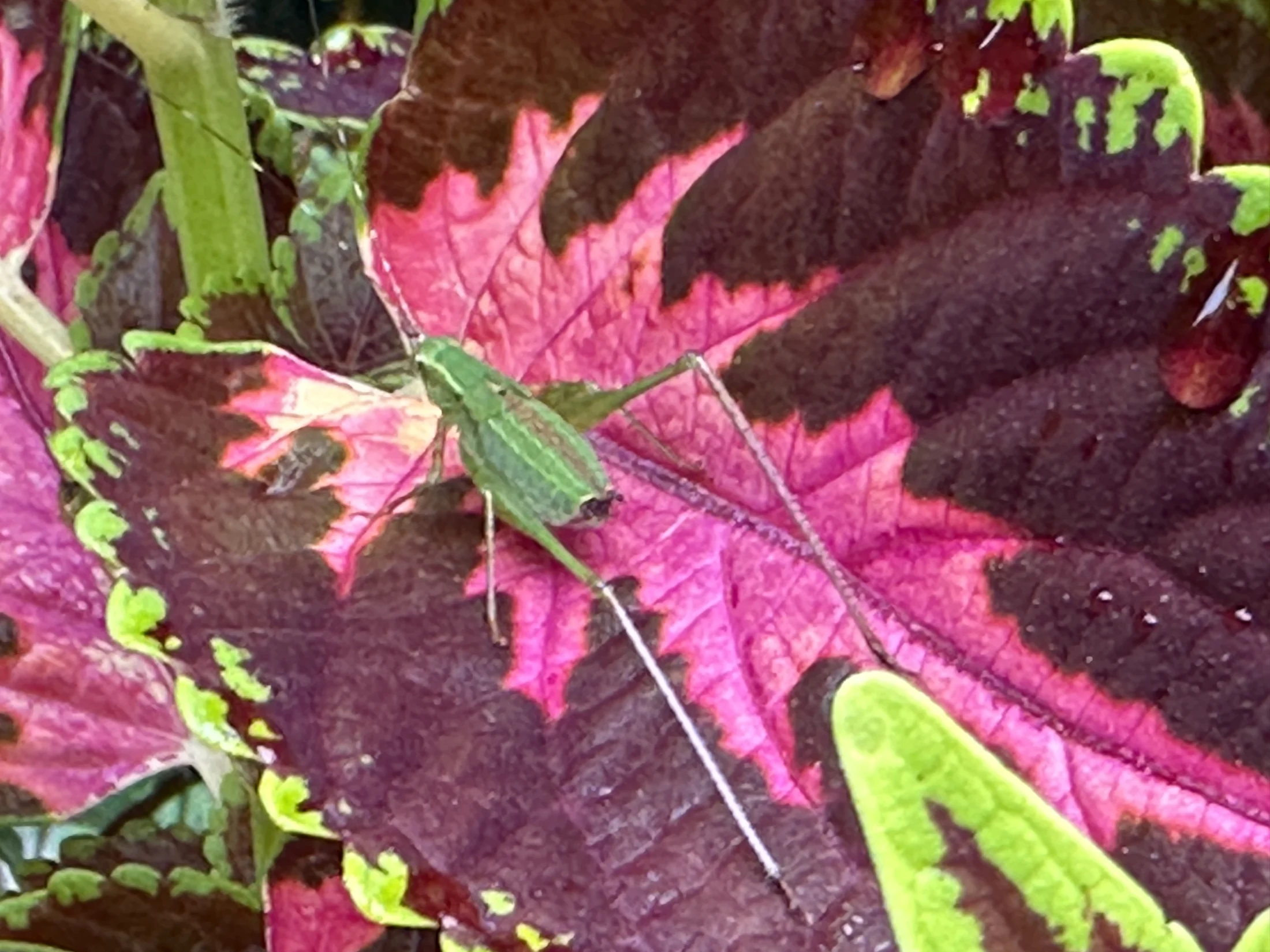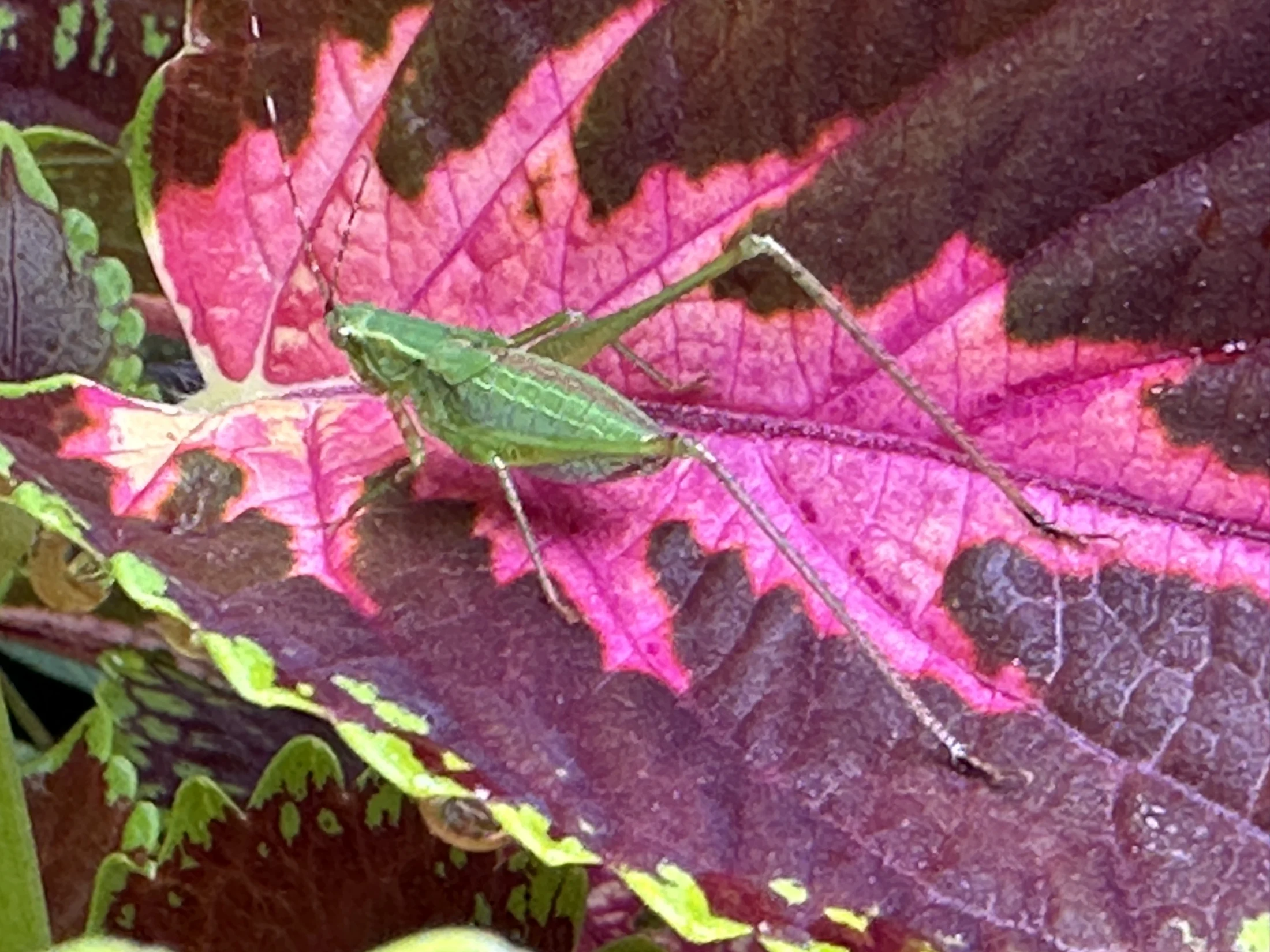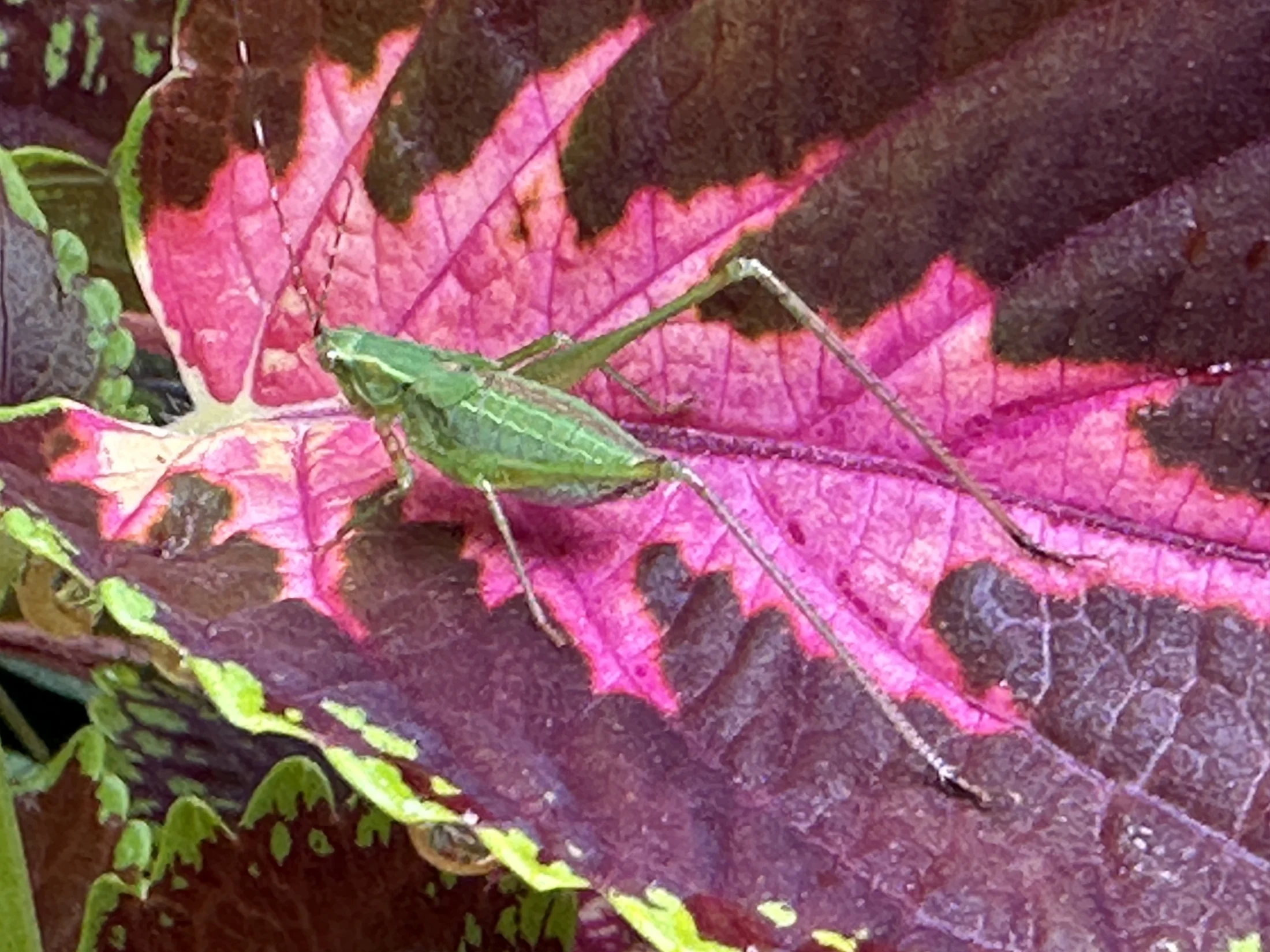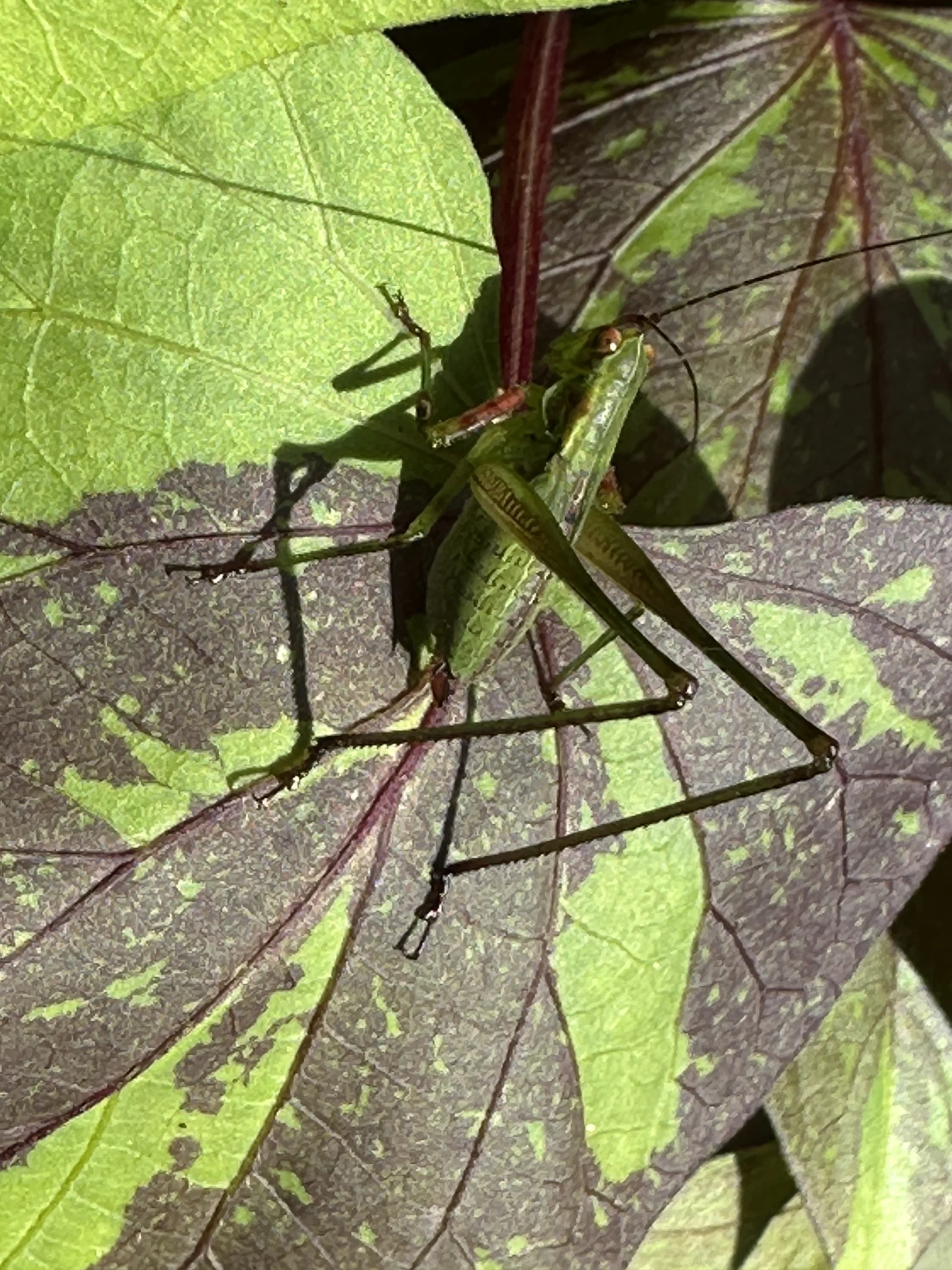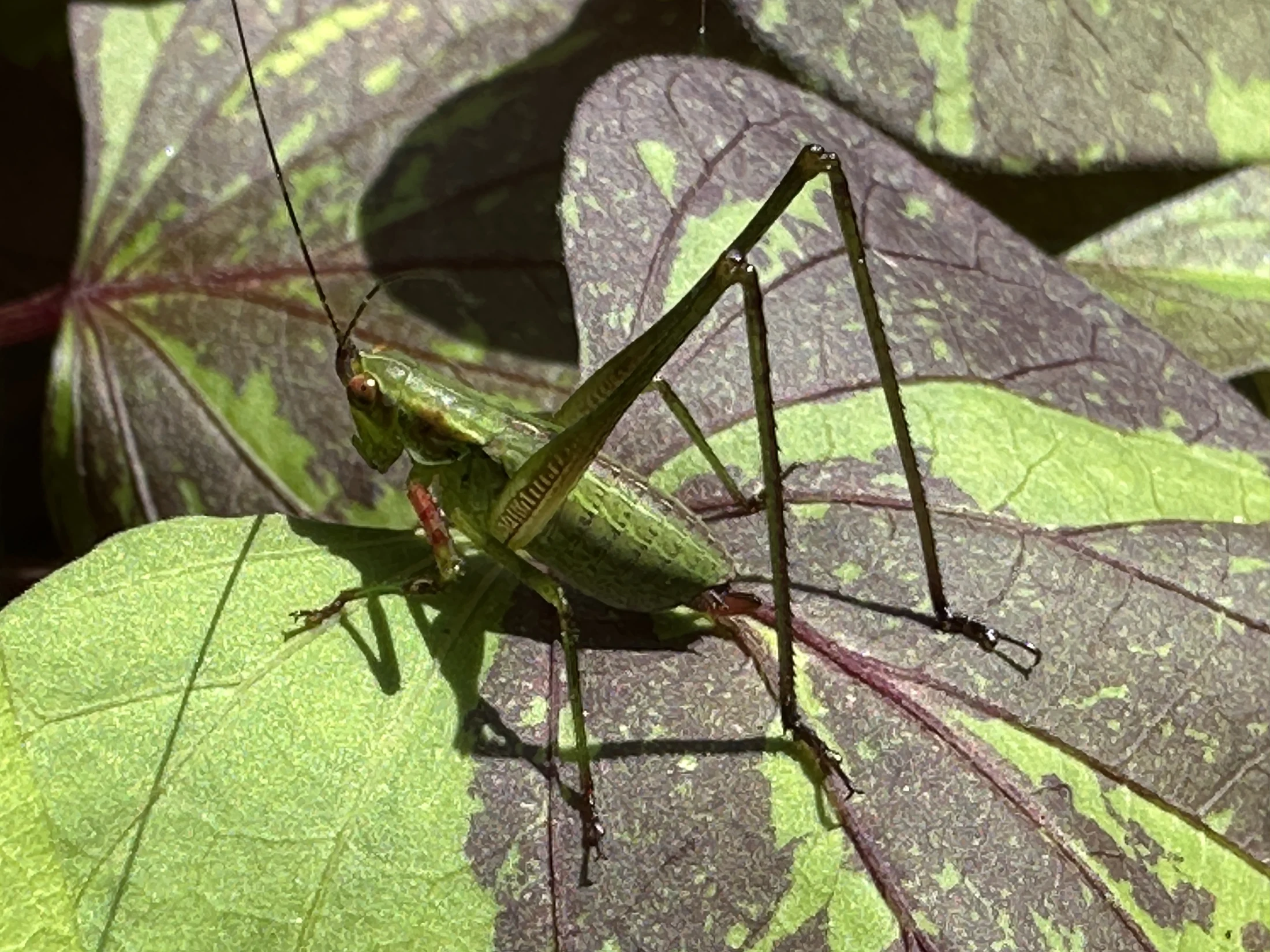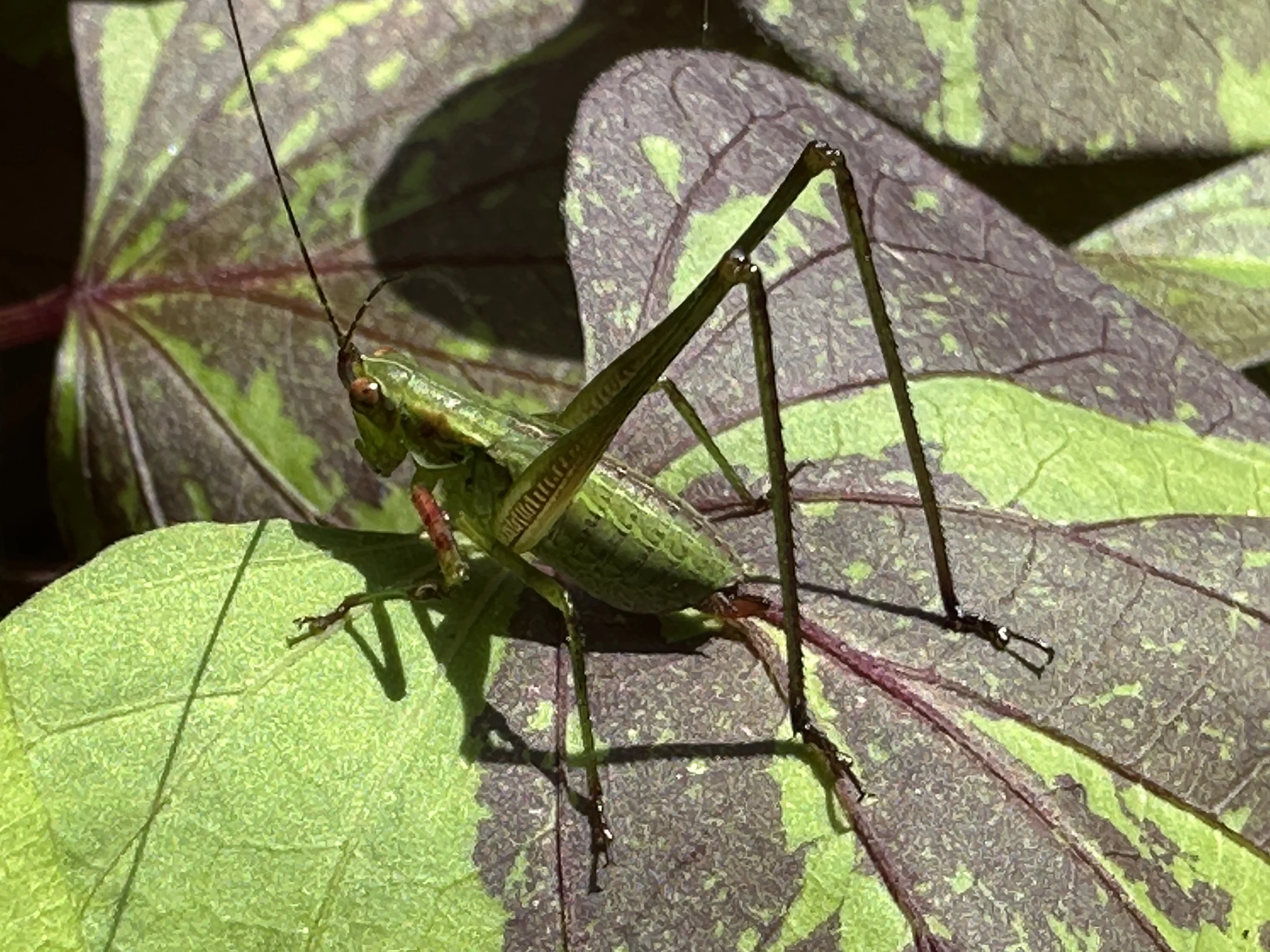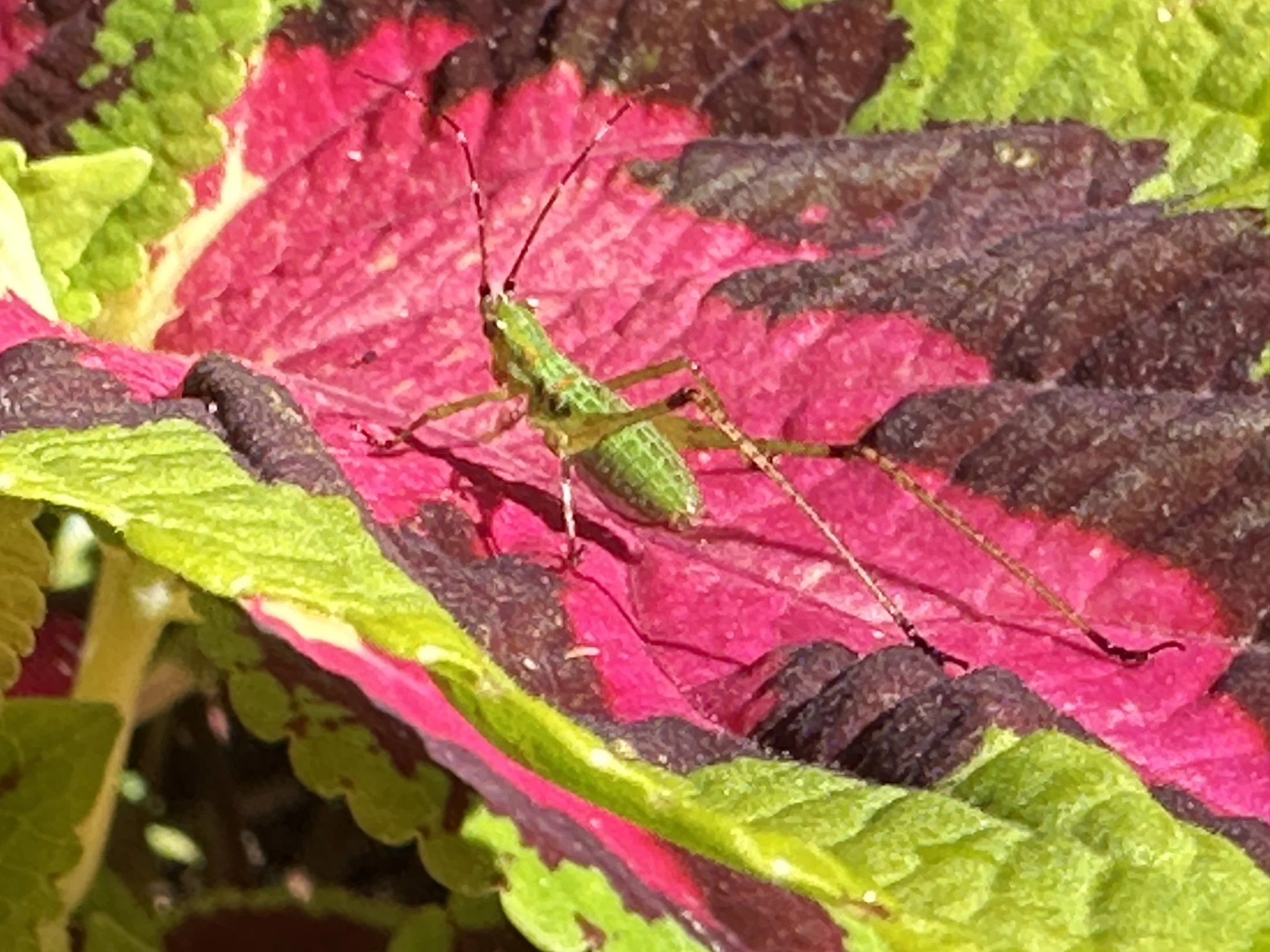
In the landscape.
Plants & places
Garden foliage, here on colorful coleus leaves. All three filename dates place the records in Flat Rock.
A sensible first response
Tolerate modest leaf nibbling and keep diverse vegetation. Photograph an adult or record its song to improve the species identification.
When to look
Observed June 1, August 3 and August 19. Juvenile development and adult calling seasons depend on species and elevation.
Identification
Every image shows exceptionally long threadlike antennae, enlarged jumping hind legs and ordinary walking forelegs. June images show a small spotted nymph; August images show larger green nymphs with developing wing pads. None shows a mantis’s grasping forelegs or elongated neck.
Lookalikes & limits
High confidence applies to katydids, not to a species. Bush katydids such as Scudderia are plausible, but juveniles lack the adult structures and songs used to separate many species. The dates do not prove the same individuals persisted.
In the garden
Many katydids eat plant material; some are omnivores. They also feed birds, spiders and other predators.