
In the landscape.
Plants & places
Irises, especially susceptible garden plantings.
Recognize the damage
Ragged, water-soaked leaf injury precedes tunnels and decay in the rhizome.
Before you act
Inspect spring leaves for mines; after flowering, examine declining plants and their rhizomes.
A sensible first response
Remove old iris tops in late fall. Locate and remove larvae early; discard rotted rhizome sections when dividing and retain healthy planting material.
When to look
Leaf mining begins in spring; rhizome feeding follows in summer; eggs overwinter on old material.
In Western North Carolina
A useful perennial-border diagnosis in WNC; seasonal dates from other states should be adjusted to local growth.
Identification, lookalikes & further notes
Identification
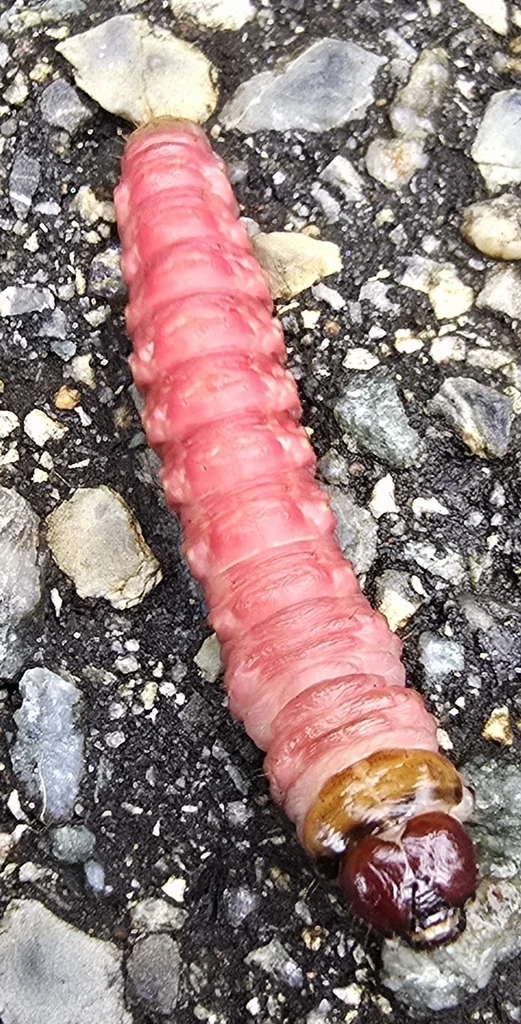
Young larvae mine leaves; mature larvae are pinkish with brown heads and can be found in damaged rhizomes.
Lookalikes & limits
Bacterial soft rot can also destroy rhizomes. Confirm galleries or a larva rather than diagnosing from an odor or wilt alone.
In the garden
Ragged, water-soaked leaf injury precedes tunnels and decay in the rhizome.
What would help next
Record the host plant, date, fresh damage, and a clear photograph of the animal or insect. A damage match narrows the search; it does not establish an identification.