Wildlife & landscape pests · Western North Carolina field companion
Imperial moth
Eacles imperialis
Imperial MothHolly
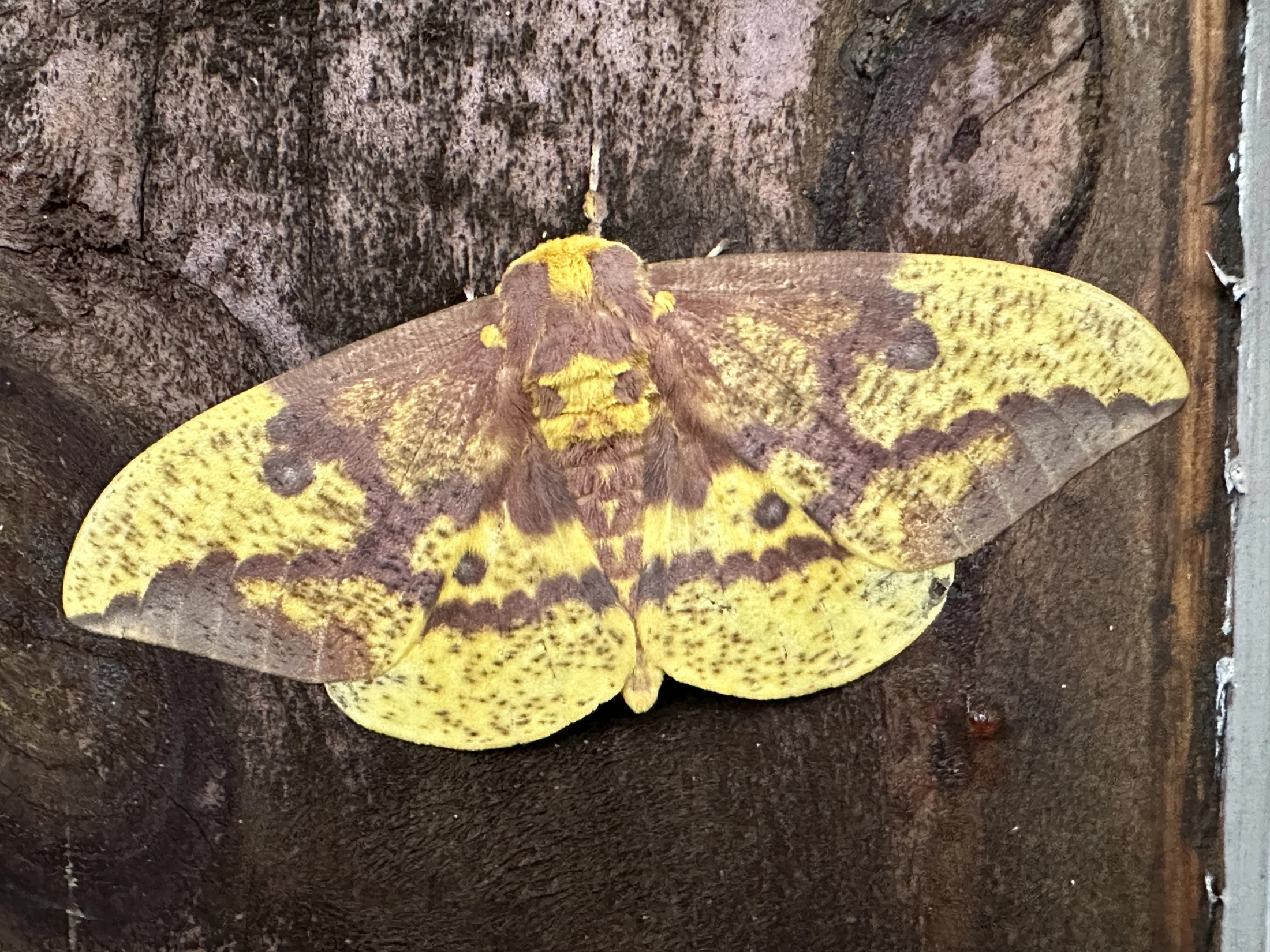
Broad wings dusted in wine-brown over golden yellow give this giant woodland moth the look of a fallen leaf. Both views preserve the full wing pattern.
Record
Holly’s observation · High identification confidence
Wooded neighborhoods and mixed forests with host trees such as oak, pine and maple; recorded in the filename as Henderson County.
A sensible first response
Preserve a mix of native trees and undisturbed soil. A resting adult needs space, not handling or a sugar feeder.
When to look
Photographed July 26. Adults occur in the warm season; the number and timing of broods in North Carolina should not be generalized from this single record.
Identification
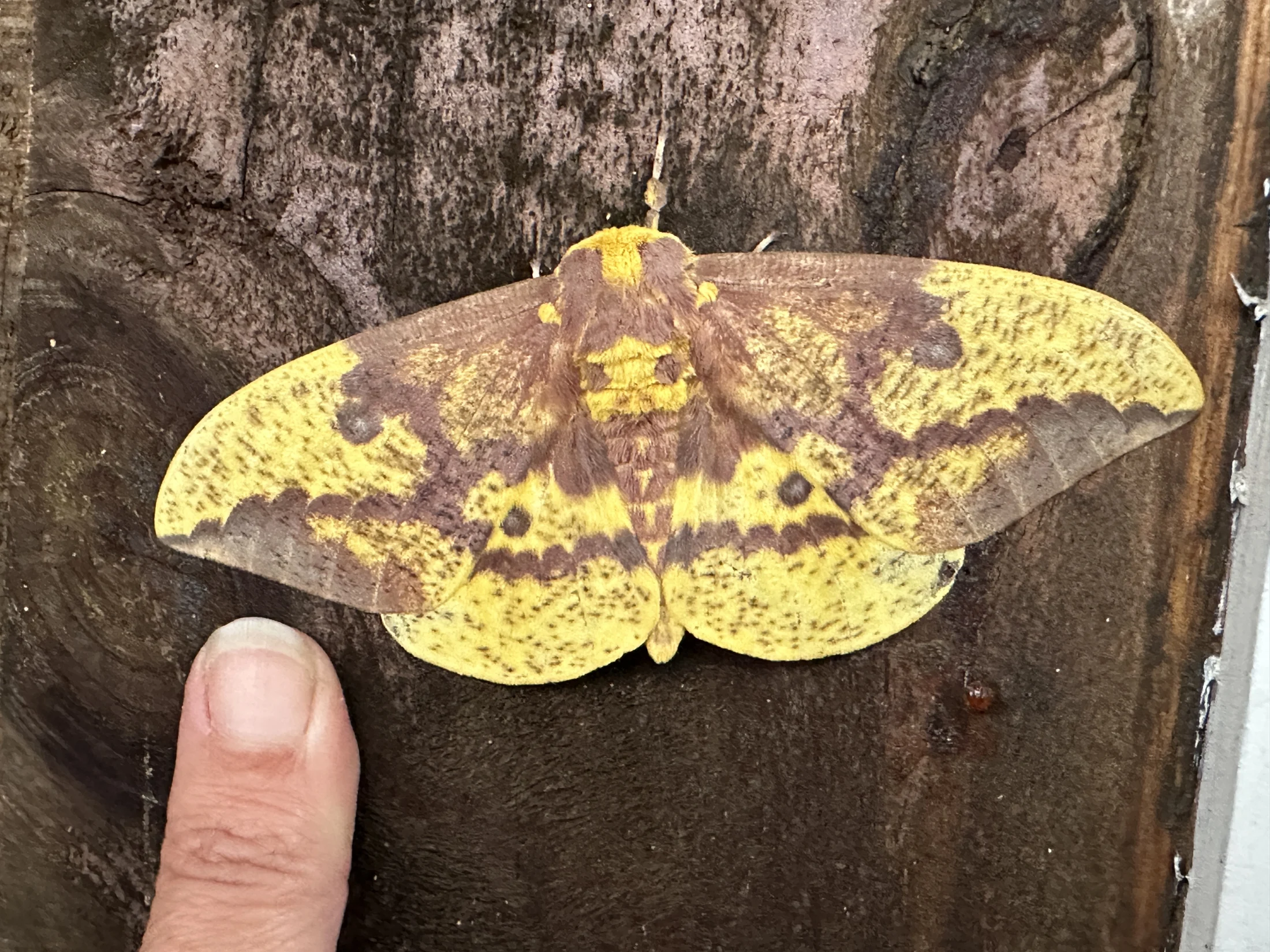
IMG_9738 and IMG_9739 show yellow wings with extensive irregular purple-brown patches, rounded hindwings, paired dark spots, and the same patterned body. Together these are characteristic of the imperial moth.
Lookalikes & limits
The finger in IMG_9739 gives context but is not a calibrated measurement. Subspecies and sex are not assigned from these photographs.
In the garden
A native leaf-eating caterpillar becomes a short-lived adult. Large larvae also provide food for birds and other wildlife.
LOOK CLOSELY
Two views, a closer look.
Place two photographs beside one another. Compare the overall plant with leaves, flowers, or bark when those views are available. Captions identify what each photograph actually shows. Images are not at the same scale; species references may show different cultivars.
Imperial MothHollyImperial MothHolly
Your margin of the garden.
Saved only in this browser on this device. Export your notes from My garden in the library.