
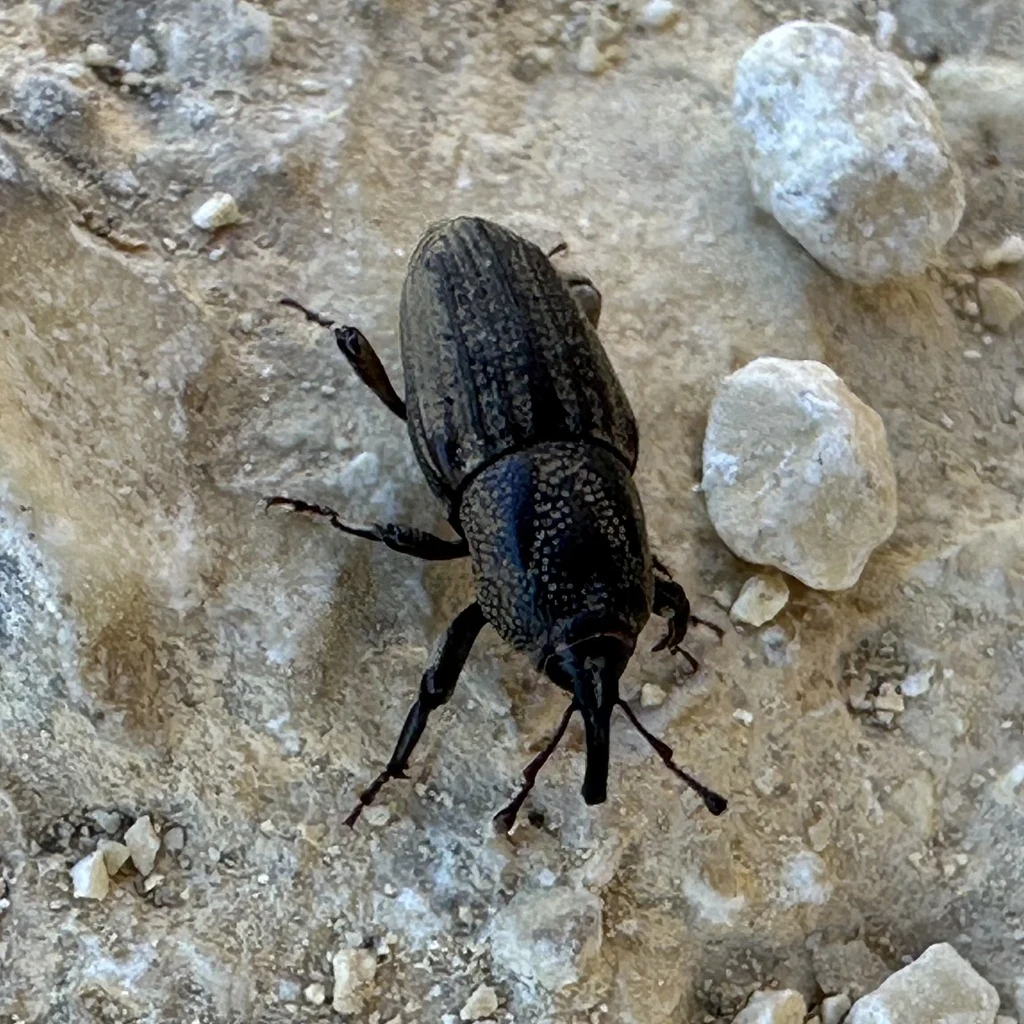
In the landscape.
Plants & places
Especially zoysiagrass and bermudagrass.
Recognize the damage
Yellowing or thinning turf; damaged stems may break readily as larvae feed within them.
Before you act
Inspect stems, crowns, and soil along the advancing patch edge. Look for adults near turf borders, especially after dark.
A sensible first response
Keep turf vigorous without excessive nitrogen. Identify the damaging stage before planning control; stem-feeding larvae and wandering adults require different timing.
When to look
Adults become active in spring; larvae can occur through summer into fall.
In Western North Carolina
Most relevant where warm-season turf is grown in lower-elevation WNC landscapes; not a default explanation for every fescue problem.
Identification, lookalikes & further notes
Identification
Dark, snout-bearing adults have a smooth Y-shaped area behind the head; white larvae have brown heads and no legs.
Lookalikes & limits
White grubs have legs. Drought injury and other billbugs need separating with a specimen and host identification.
In the garden
Yellowing or thinning turf; damaged stems may break readily as larvae feed within them.
What would help next
Record the host plant, date, fresh damage, and a clear photograph of the animal or insect. A damage match narrows the search; it does not establish an identification.