
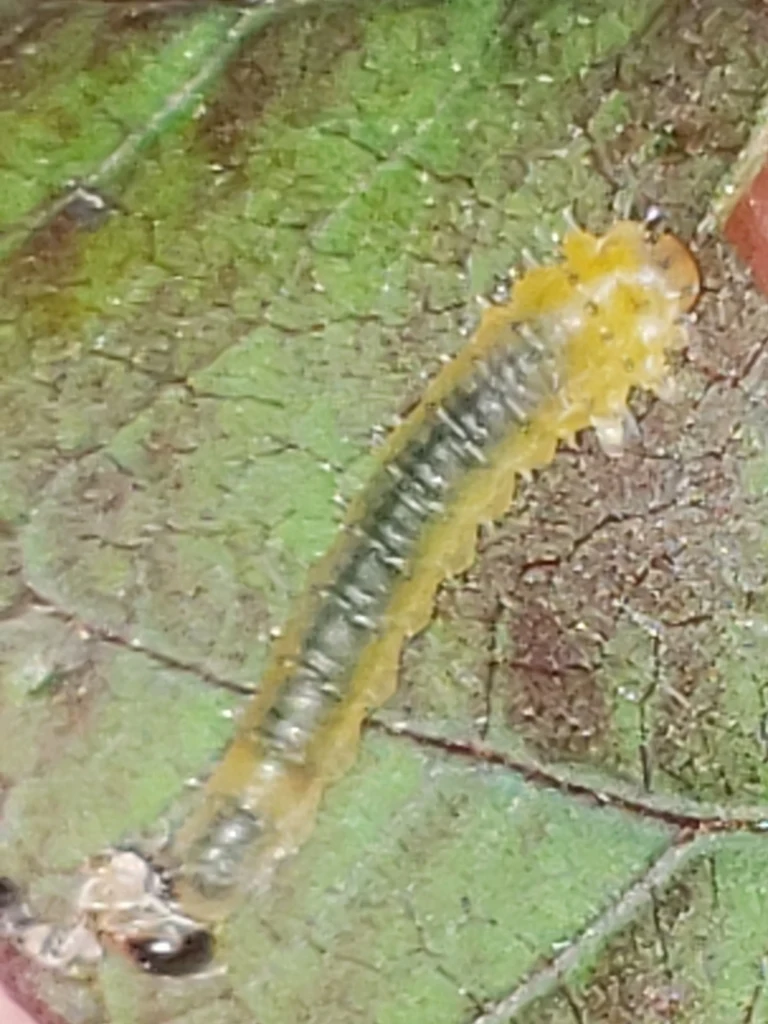
In the landscape.
Plants & places
Herbaceous hibiscus, hollyhock, and mallows; host susceptibility differs.
Recognize the damage
Young larvae scrape foliage; larger larvae chew holes and may skeletonize whole leaves.
Before you act
Inspect lower leaf surfaces and fresh feeding repeatedly; eggs and small larvae can be easy to overlook.
A sensible first response
Remove localized colonies and monitor new foliage. Do not use caterpillar-specific Bt for sawflies; protect useful insects when selecting any further action.
When to look
Late spring through fall, with repeated generations possible.
In Western North Carolina
Useful in mountain perennial borders where hardy hibiscus and hollyhock are grown.
Identification, lookalikes & further notes
Identification
Pale-green sawfly larvae develop dark heads and tiny dark spines; adults are small, dark, flylike wasps.
Lookalikes & limits
Other sawflies and caterpillars need separation by host and close examination. Rose of Sharon is usually not attacked by this species in NC guidance.
In the garden
Young larvae scrape foliage; larger larvae chew holes and may skeletonize whole leaves.
What would help next
Record the host plant, date, fresh damage, and a clear photograph of the animal or insect. A damage match narrows the search; it does not establish an identification.