

In the landscape.
Plants & places
Eastern and Carolina hemlocks.
Recognize the damage
Weak new growth, gray-green needles, thinning foliage, and progressive decline.
Before you act
Turn over several low twigs and check needle bases, then assess new growth across the tree.
A sensible first response
Seek timely advice from an arborist or a regional hemlock-conservation program. Valuable trees may be protectable; do not wait for severe thinning to investigate.
When to look
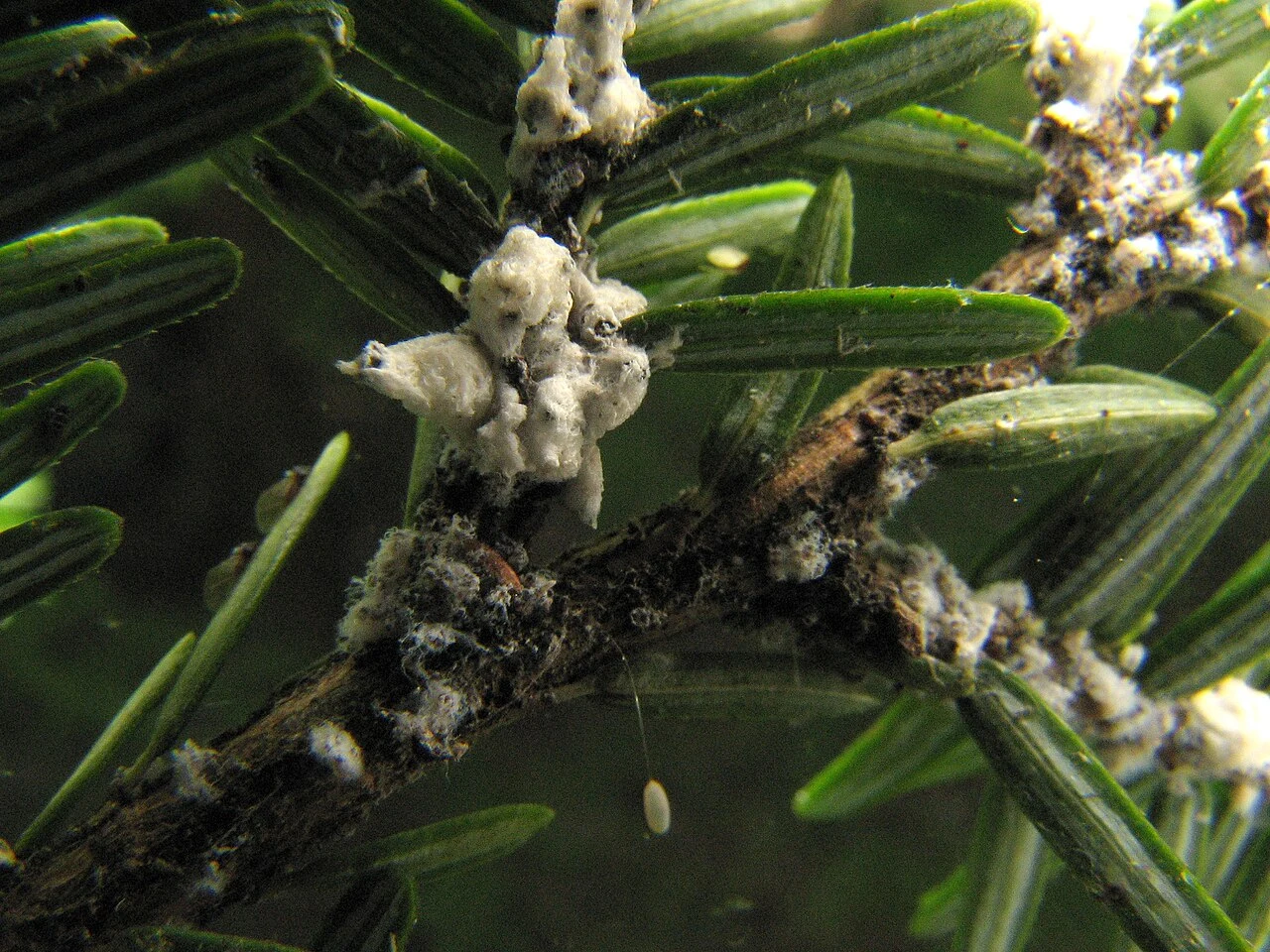
Wool is easiest to recognize during cooler months into spring; visibility and activity change seasonally.
In Western North Carolina
One of the most consequential WNC conifer pests; landscape protection and forest biological control are different management settings.
Identification, lookalikes & further notes
Identification
White cottony coverings cluster where needles meet young twigs, most evident beneath branches.
Lookalikes & limits
Elongate hemlock scale covers needles rather than forming the same twig-base wool; spiders' silk and lichens differ.
In the garden
Weak new growth, gray-green needles, thinning foliage, and progressive decline.
What would help next
Record the host plant, date, fresh damage, and a clear photograph of the animal or insect. A damage match narrows the search; it does not establish an identification.