
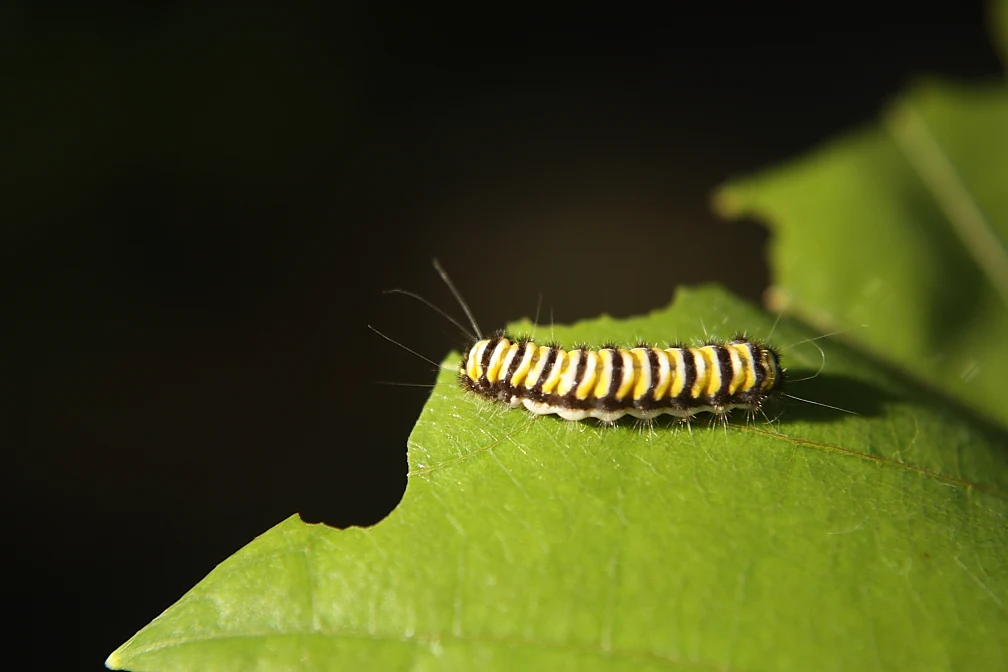

In the landscape.
Plants & places
Grapevines and related hosts such as Virginia creeper.
Recognize the damage
Young larvae feed side by side between veins; older groups can consume most of the leaf.
Before you act
Check the undersides of fresh damaged grape leaves for grouped larvae and eggs; photograph both larvae and their feeding pattern.
A sensible first response
Remove small affected leaf sections bearing colonies where practical. Repeatedly inspect young vines; use a confirmed identification before selecting a caterpillar treatment.
When to look
Growing-season activity; mountain timing differs from Florida's longer season.
In Western North Carolina
An eastern-US reference for WNC grape plantings; inclusion is not a claim that it occurs in every county or garden.
Identification, lookalikes & further notes
Identification
Yellowish larvae have dark spots or bands. Adults are black moths with an orange-yellow collar and narrow wings.
Lookalikes & limits
Japanese beetles also skeletonize grapes. The western grapeleaf skeletonizer is a different species; location and host matter.
In the garden
Young larvae feed side by side between veins; older groups can consume most of the leaf.
What would help next
Record the host plant, date, fresh damage, and a clear photograph of the animal or insect. A damage match narrows the search; it does not establish an identification.