Wildlife & landscape pests · Western North Carolina field companion
Fall armyworm
Spodoptera frugiperda
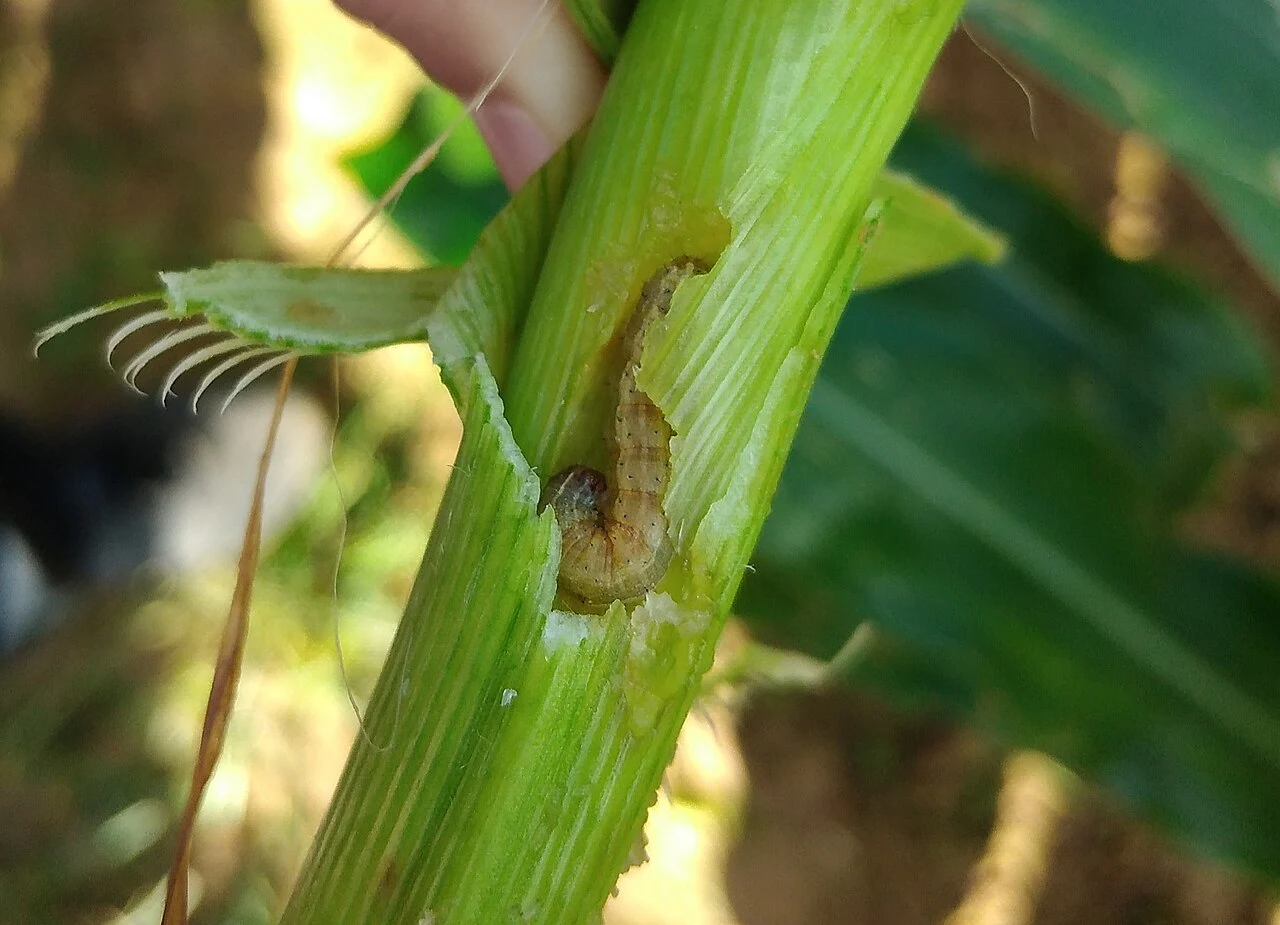
Fall armyworm feeding in a corn stalkWee Hong ↗ · CC BY-SA 4.0Photo contextThe photograph shows a crop host. The same species also feeds on lawn grasses.
A moving front of hungry caterpillars can strip a lawn surprisingly quickly.
Fescue, bermudagrass, other grasses, and tender new turf.
Recognize the damage
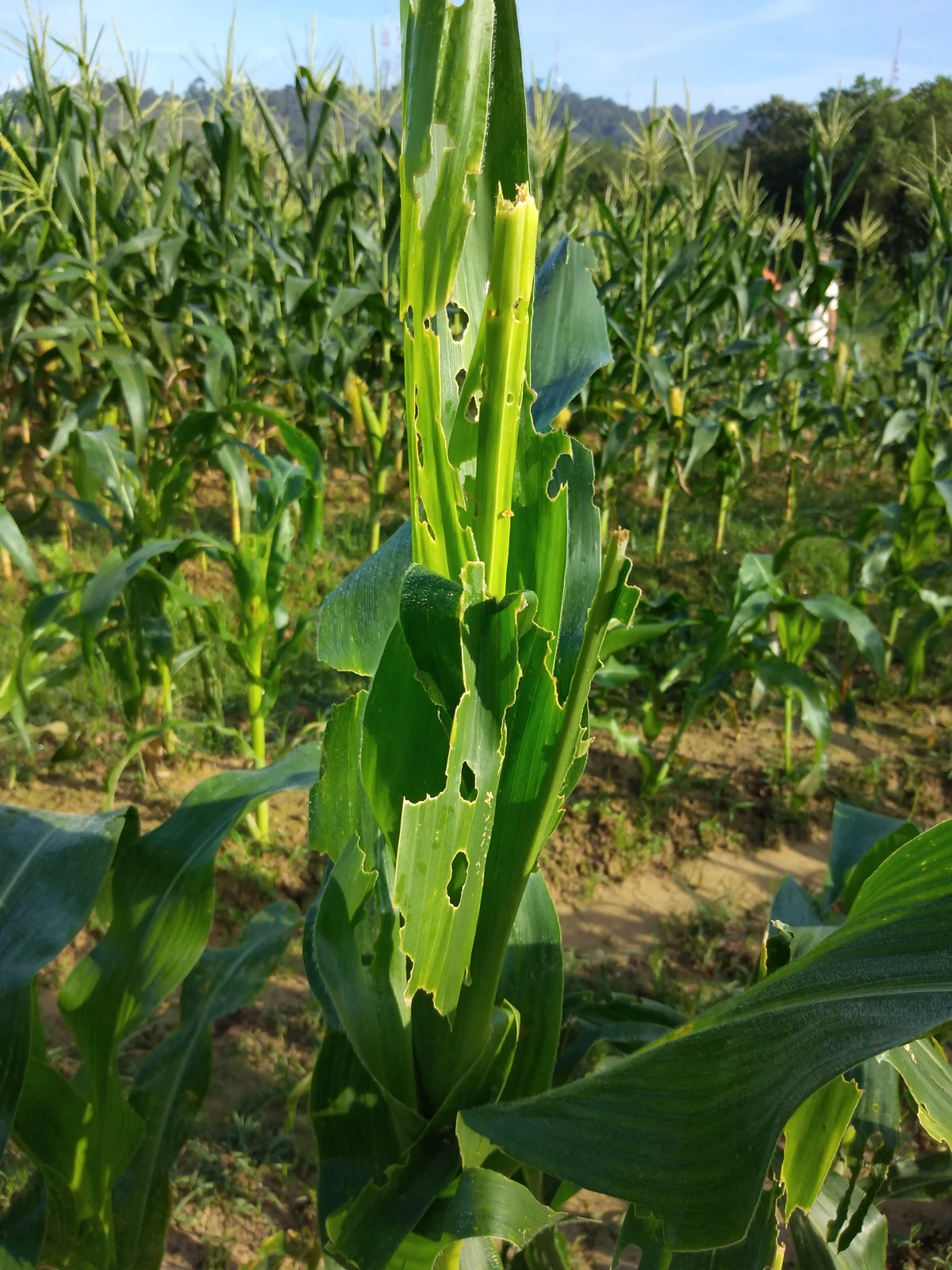
Freshly ragged or missing grass blades and rapidly expanding brown areas, sometimes advancing across the lawn.
Before you act
Inspect fresh injury early or late in the day. Look for caterpillars in the canopy and clusters of eggs on nearby surfaces.
A sensible first response
Recheck quickly when feeding is active. Protect establishing turf by seeking timely Extension advice while larvae are small; a dead-looking canopy may still have living crowns.
When to look
Summer into fall, following northward migration; outbreaks vary greatly by year.
In Western North Carolina
A seasonal outbreak pest in WNC, rather than proof that a lawn was poorly maintained.
Identification, lookalikes & further notes
Identification
Larger larvae often show a pale inverted Y on the head and four dark spots forming a square near the rear.
Lookalikes & limits
Other armyworms and cutworms overlap in color; use head markings and rear spots together, not color alone.
In the garden
Freshly ragged or missing grass blades and rapidly expanding brown areas, sometimes advancing across the lawn.
What would help next
Record the host plant, date, fresh damage, and a clear photograph of the animal or insect. A damage match narrows the search; it does not establish an identification.
LOOK CLOSELY
Two views, a closer look.
Place two photographs beside one another. Compare the overall plant with leaves, flowers, or bark when those views are available. Captions identify what each photograph actually shows. Images are not at the same scale; species references may show different cultivars.
Fall armyworm feeding in a corn stalkWee Hong ↗ · CC BY-SA 4.0Photo contextThe photograph shows a crop host. The same species also feeds on lawn grasses.Maize leaves chewed by fall armywormWee Hong ↗ · CC BY-SA 4.0Photo contextFall armyworm was identified by the source photographer; damage on maize is an example, not evidence of a local infestation. Resized and converted to WebP; full composition retained.
Your margin of the garden.
Saved only in this browser on this device. Export your notes from My garden in the library.


.jpg)